
Planting
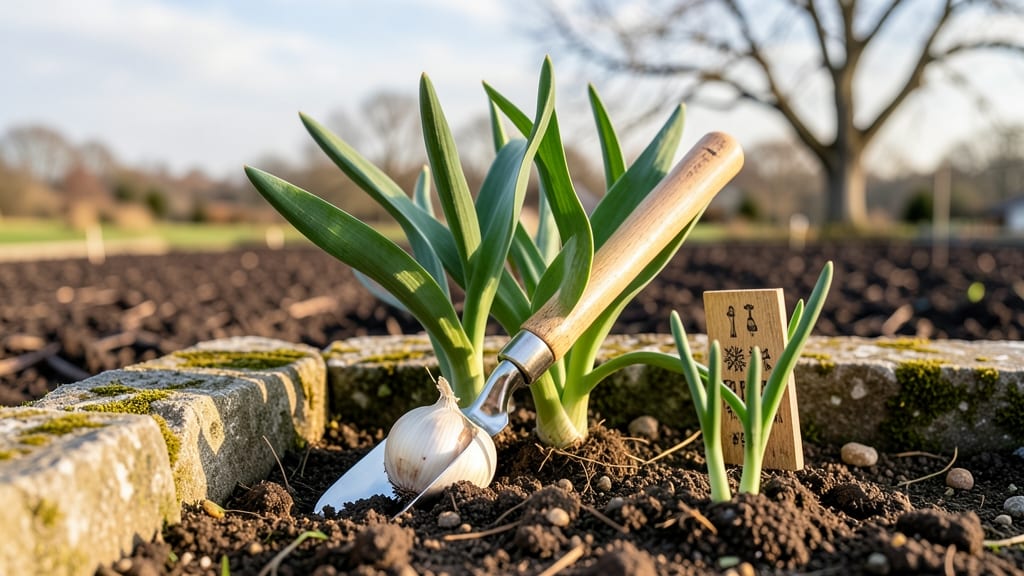
Garlic is a perennial plant in warm climates where it naturally regrows each year from its underground bulb divisions, but gardeners in colder regions typically treat it as an annual because freezing temperatures kill the plant above ground.
This distinction comes down to garlic's cold sensitivity.
While its bulb system can survive mild winters in zones 5-8, hard freezes destroy the above-ground foliage, forcing gardeners to replant each spring. 🌱 In warmer areas like California or the Mediterranean, garlic thrives as a true perennial, producing new shoots from the same bulb year after year.
The key difference lies in how garlic stores energy underground—its cloves act like mini bulbs, each capable of sprouting if conditions remain frost-free.
For those in colder climates, the annual approach still lets you harvest multiple crops from a single planting. The bulb's natural division means each clove could potentially grow into a new plant, but without proper winter protection, this regeneration rarely happens successfully.
This is why gardeners in colder regions often choose hardneck varieties—they're better adapted to survive brief cold snaps that would kill softer-necked types.
💡 In This Article
- Why Garlic Acts Like a Perennial in Warm Climates
- Growing Garlic as a Perennial in Cold Zones
Why garlic acts like a perennial in warm climates
Garlic's perennial nature stems from its unique bulb structure, where each clove contains a miniature plant capable of regrowth. In frost-free zones like California or the Mediterranean, garlic bulbs naturally divide underground each year, producing new shoots from the same root system.
This process mirrors true perennials like asparagus, though garlic's growth cycle is more rapid—typically completing its life cycle in 90-120 days rather than years.
The key difference lies in garlic's cold sensitivity. While its underground bulbs can survive mild winters (down to 20°F), freezing temperatures destroy the above-ground foliage, halting photosynthesis.
In warm climates, this foliage remains active year-round, allowing the bulb to continuously store energy through photosynthesis and carbohydrate production—the same process that fuels perennial growth in plants like rhubarb or strawberries.
What makes garlic's behavior fascinating is its ability to produce multiple bulb divisions from a single clove. In ideal conditions, one bulb can generate 10-20 new cloves over time, each with the potential to sprout.
This natural propagation explains why garlic thrives as a perennial in warm regions—it's not just surviving, but actively expanding its underground network each season. 🌱
Contrast this with true perennials like asparagus, which develop extensive root systems that persist for decades. Garlic's growth is more opportunistic, focusing energy on bulb production rather than long-term root establishment.
This explains why gardeners in colder climates often harvest garlic before it can regenerate—its energy is directed toward bulb formation rather than winter survival.
The botanical term for this is "geophyte"—a plant that stores nutrients underground. Garlic's bulbs act as energy reservoirs, allowing it to regrow quickly in spring. In warm climates, this cycle continues uninterrupted, while in colder areas, the process resets annually due to frost damage.
This fundamental difference in energy allocation explains why garlic behaves as a perennial in some regions but an annual in others.
For example, in USDA Zone 9 (where winters rarely drop below freezing), garlic planted in fall will often resprout the following spring without replanting. The same bulb may produce harvestable crops for 3-5 years before needing division.
This contrasts sharply with Zone 5, where even hardy varieties like 'German White' typically require annual replanting due to winter kill.