
Vegetables
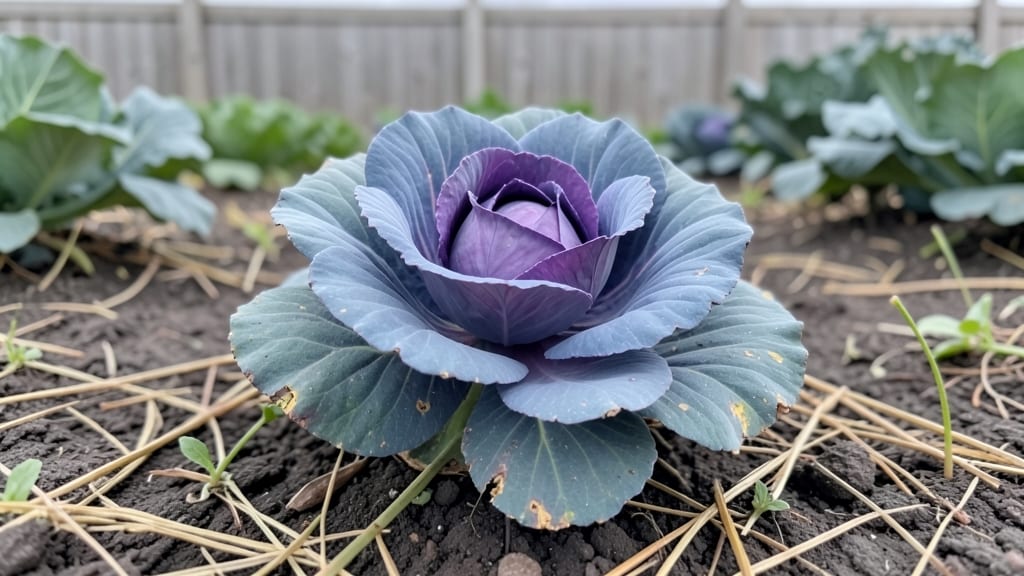
Ornamental cabbage isn't a perennial—it behaves as a biennial or cool-season annual that completes its life cycle in one growing season, though some varieties might survive mild winters with minimal regrowth. Its frost tolerance depends on the specific cultivar, thriving in zones 5-9 as a temporary but striking garden accent.
Ornamental cabbage's short lifespan stems from its botanical classification as a biennial, meaning it typically flowers and sets seed in its second year before dying. 💛 The key difference from true perennials is its inability to regenerate from the same root system—most varieties bolt (send up flower stalks) after their first season unless grown in consistently cool conditions.
This makes it more of a seasonal showstopper than a long-term garden staple, though some cold-hardy selections like 'Osaka Purple' can persist through winter with proper protection.
What sets ornamental cabbage apart is its remarkable frost tolerance, which allows it to maintain vibrant colors even when temperatures drop. Unlike many annuals, it can withstand light freezes, making it ideal for fall gardens in cooler climates. The trade-off?
Its decorative foliage often fades after flowering, which usually occurs in its second year if conditions permit. For gardeners in zones 5-9, this means you can enjoy its striking colors for one full season, with potential for a brief return the following year if winter isn't too harsh.
💡 In This Article
- Ornamental Cabbage Lifespan: Biennial vs. Annual Growth Cycles
- Extending Ornamental Cabbage’s Season: Cold-Hardy Cultivation Tips
Ornamental cabbage lifespan: biennial vs. annual growth cycles
Here's what's happening botanically: ornamental cabbage follows a biennial life cycle, meaning it completes its growth in two stages over two years under ideal conditions. In its first year, it focuses on producing lush, colorful foliage—those vibrant purple, red, or white leaves you love.
The key trigger for its second year is temperature: when daytime temperatures consistently rise above 70°F in spring, the plant detects this warmth and begins bolting (sending up a flower stalk). This process diverts energy from leaf production to seed development, ultimately killing the plant after flowering.
The science behind this involves a plant hormone called florigen, which is produced in response to prolonged warmth.
Once florigen reaches critical levels, the plant's genetic programming shifts from vegetative growth to reproductive mode. 🌱 This is why ornamental cabbage behaves more like a cool-season annual in many climates—it never gets the chance to complete its biennial cycle because warm springs trigger bolting before winter dormancy can occur.
Compare this to true perennials like hostas, which have robust underground rhizomes that regenerate year after year regardless of temperature cues.
What most gardeners don't realize is how dramatically cultivar selection affects lifespan. Varieties like 'Red Dragon' or 'Purple Tower' are bred to delay bolting, sometimes lasting two full seasons in cooler zones (5-7) where spring warmth arrives late.
The difference comes down to their genetic resistance to florigen production—these varieties maintain their decorative foliage longer because they require more prolonged warmth to trigger bolting. In contrast, faster-bolting types may complete their life cycle in just 6-8 months, making them true annuals in warm climates.
Temperature also plays a critical role in winter survival. Most ornamental cabbage varieties can tolerate light freezes down to 20°F, but prolonged exposure to 15°F or below often kills the plant back to the ground.
Here's the catch: while the above-ground foliage may die, some varieties can regrow from the base in spring if protected by 3-4 inches of mulch.
This regrowth isn't true perennial behavior—it's more like a survival mechanism where new shoots emerge from the crown, but the plant remains genetically programmed to bolt and die after flowering.
For comparison, consider how ornamental grasses like fountain grass behave as true perennials. They develop extensive root systems that store energy year-round, allowing them to push new growth from the same base annually.
Ornamental cabbage lacks this root system—its energy storage is limited to the crown and small taproot, which simply can't sustain multiple growing seasons. This fundamental difference explains why most varieties die after one season unless you create microclimates that mimic their native cool, moist conditions.
The exception to this rule occurs in frost-free microclimates or containers that can be moved indoors. In these controlled environments, some varieties may persist for 2-3 years by avoiding the temperature triggers that initiate bolting.
The trade-off is that each year's growth becomes progressively weaker as the plant diverts more energy to reproduction. This is why professional growers often treat ornamental cabbage as an annual—it's more reliable and visually consistent to plant fresh stock each season rather than trying to coax regrowth from older plants.