
Plants
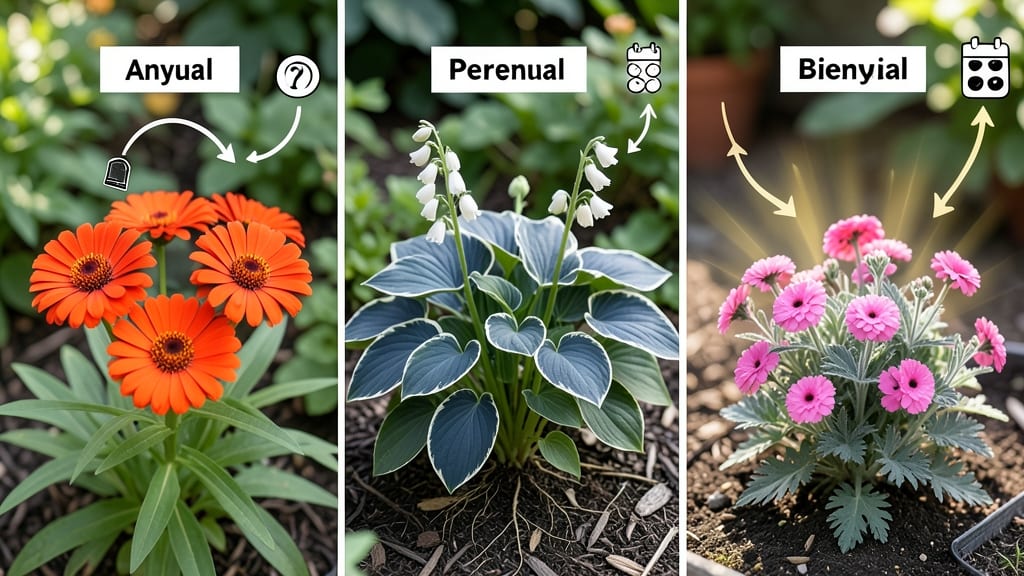
Annual, perennial, and biennial plants each follow distinct growth cycles: annuals thrive and die in one season, perennials regrow year after year, and biennials need two seasons to flower and produce seeds. Recognizing these patterns lets you design gardens that bloom continuously, save money on replanting, and create low-maintenance landscapes.
Understanding these growth patterns isn't just about labeling plants—it's about working with nature's timeline.
Annuals like marigolds or zinnias deliver instant color but require yearly replanting, while perennials such as lavender or coneflowers establish deep roots and return stronger each spring. 🌱 Biennials like hollyhocks or foxgloves have a unique strategy: they focus on leaf growth their first year to store energy for dramatic summer blooms.
This knowledge transforms your garden planning from seasonal guesswork into a strategic, year-round strategy.
For example, pairing short-lived annuals with long-lived perennials creates a "layered" garden that stays vibrant without constant upkeep. I've found that biennials often serve as perfect bridges—plant them in fall for next summer's showstopper displays.
The key is matching your plants' natural rhythms with your gardening goals, whether that's summer-long blooms, winter interest, or pollinator support.
💡 In This Article
- How Plant Life Cycles Determine Growth Patterns
- Choosing the Right Plants for Your Garden’s Climate and Goals
How plant life cycles determine growth patterns
The fundamental difference between annual, perennial, and biennial plants lies in their evolutionary adaptations to survive and reproduce under specific environmental conditions. Annuals like sunflowers or basil have evolved to complete their entire life cycle—from seed germination to flowering, seed production, and death—in just one growing season.
This rapid growth strategy is triggered by photoperiod (daylight length) and temperature cues, typically requiring 60-90 days from seed to maturity. Their seeds contain all the energy needed for quick establishment, often with shallow root systems that maximize above-ground growth.
Perennials, such as peonies or hostas, take a completely different approach by developing specialized storage organs like bulbs, tubers, or deep root systems that survive winter dormancy. These plants prioritize energy storage during their first growing season, allowing them to regrow each spring from the same root structure.
The key mechanism here is their ability to enter a state of dormancy when temperatures drop below 40°F, protecting their vital tissues while above-ground parts die back. This adaptation lets perennials live for decades—some, like creeping charlie, can persist for over 100 years.
Biennials like carrots or parsley have a fascinating hybrid strategy that combines elements of both annuals and perennials. During their first year, they focus on vegetative growth—building up energy reserves in their roots or leaves—while avoiding flowering.
The transition to flowering in year two is triggered by a combination of cold exposure (vernalization) and increasing daylight. This two-year cycle ensures they have enough resources to produce seeds before dying, which is why biennials often thrive in temperate climates with distinct seasons. 🌱
What most gardeners don't realize is how these growth patterns interact with soil microbes. Annuals often rely on fast-acting mycorrhizal fungi that help establish quick root networks, while perennials form long-term symbiotic relationships with beneficial soil bacteria.
The root systems of perennials can extend 6-12 feet deep in some cases, creating their own microclimates that improve soil structure over time. This biological complexity explains why perennial gardens often become more productive and drought-resistant with each passing year.
Temperature plays a particularly critical role in these cycles. Annuals typically require warm soil temperatures (60-70°F) to germinate quickly, while biennials often need a period of cold stratification (typically 4-8 weeks at 35-45°F) to break seed dormancy.
Perennials, meanwhile, have evolved to detect subtle temperature shifts—some species like bleeding heart actually die back completely in summer heat before regrowing in fall, a strategy called "summer dormancy." These precise environmental triggers explain why plants from different regions have such distinct growing seasons.
The physical structure of these plants also reveals their growth strategies. Annuals often have soft, herbaceous stems that can't survive freezing, while perennials develop woody stems or thickened storage organs. Biennials typically have fibrous roots in their first year that transform into more robust structures in year two.
This structural adaptation isn't just about survival—it directly affects how you should handle these plants in your garden. For example, trying to transplant a biennial in its second year is often fatal because its energy is already committed to flowering.