
Aphids
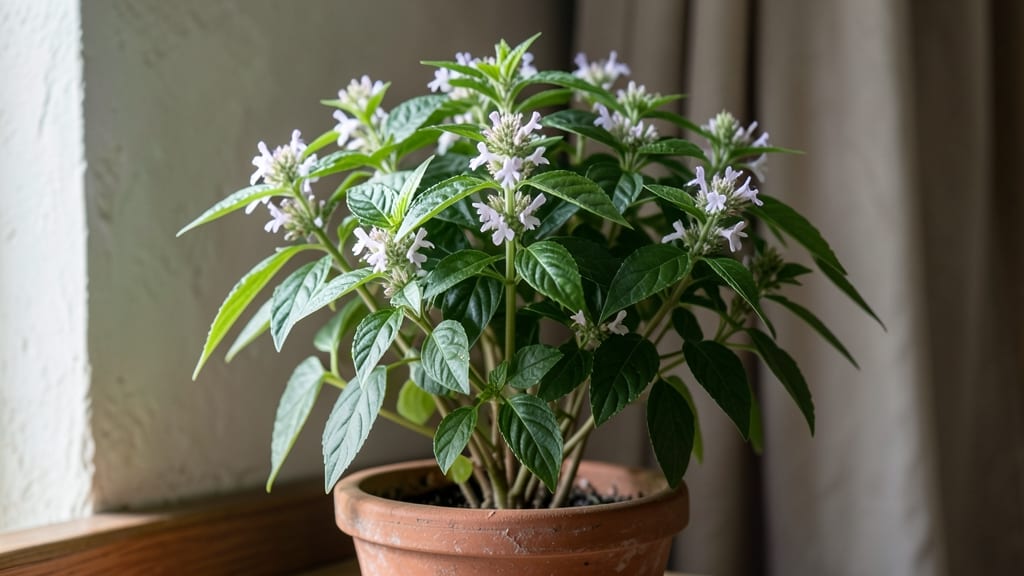
Holy basil behaves as a self-seeding annual or short-lived perennial in cold climates, dying back to the ground during frost but regrowing from seeds or basal shoots each spring. Unlike true perennials, its winter survival depends on soil conditions and environmental factors.
Holy basil's survival strategy is fascinating because it mimics perennial behavior without being one. 🌱 In regions with harsh winters, the plant's above-ground growth wilts and turns brown, making it appear dead—yet its roots or seeds remain dormant until spring.
This is why gardeners often see new holy basil sprouts emerging even after a freeze, proving its clever adaptation to cold climates. The key difference from true perennials like mint lies in its reliance on seed germination rather than persistent root systems.
What sets holy basil apart is its ability to self-seed prolifically, ensuring new plants appear year after year. This makes it behave like an annual in practice, even though it's technically a short-lived perennial.
The plant's resilience is directly tied to soil protection—mulch or heavy ground cover can make all the difference between complete dieback and successful regrowth. I've found that varieties like Tulsi or Sacred Basil handle winter better when given extra insulation.
💡 In This Article
- Understanding Holy Basil’s Dieback Cycle in Winter
- Extending Holy Basil’s Lifespan in Cold Regions
Understanding holy basil’s dieback cycle in winter
The holy basil plant's winter survival hinges on its unique dormancy mechanism. When temperatures drop below 28°F, the above-ground stems and leaves undergo a process called senescence, where chlorophyll breaks down and the plant appears dead.
However, the root system (or sometimes seeds) remains viable, entering a state of physiological dormancy triggered by cold and shortened daylight. This is why you'll often see holy basil "reappear" in spring—it's not truly dead, just waiting for warmer conditions to restart growth. 🌱
This cycle differs from true perennials like mint or oregano because those plants maintain persistent underground stems (rhizomes or stolons) that regrow year after year. Holy basil, however, relies on either basal shoots emerging from the crown or self-seeded volunteers from dropped seeds.
Studies show that holy basil seeds can remain viable in the soil for up to 3 years under ideal conditions, creating a natural renewal system. The plant's ability to regenerate depends heavily on soil moisture retention during dormancy—dry soils accelerate complete dieback.
Temperature thresholds are critical: holy basil can tolerate brief exposures to 15°F if the ground isn't frozen, but prolonged sub-zero conditions without protection will kill even the roots. The plant's native tropical origins explain why it lacks the hardy underground structures of temperate perennials.
What makes this adaptation clever is how it balances energy conservation with reproductive strategy—by dying back completely, holy basil avoids wasting resources maintaining non-essential growth during winter. 💫
Soil composition plays a surprising role in this process. Sandy soils drain quickly and may not provide enough moisture for root survival, while clay or loamy soils retain moisture better, creating a more forgiving microclimate. Organic matter in the soil also buffers temperature fluctuations, protecting roots from extreme cold.
This is why gardeners in colder zones often see holy basil perform better in amended garden beds than in poor native soil.
Here's what happens biologically: As temperatures rise above 50°F in spring, the plant's apical meristems (growth points) reactivate, producing new shoots from either the crown or germinating seeds. The presence of moisture triggers gibberellins—plant hormones that promote stem elongation—while warmer soil temperatures activate root growth.
This synchronized response explains why holy basil often emerges uniformly across garden beds in early spring. 🌿
The key takeaway is that holy basil's "perennial" behavior is more about ecological strategy than botanical classification. Its ability to self-seed means it can maintain presence in gardens indefinitely, even if individual plants only live 1-2 years.
This makes it function like a perennial in practice, despite not meeting the strict botanical definition. The plant's success in temperate climates comes down to this clever balance between dormancy and reproductive persistence. ✨