
Vegetables
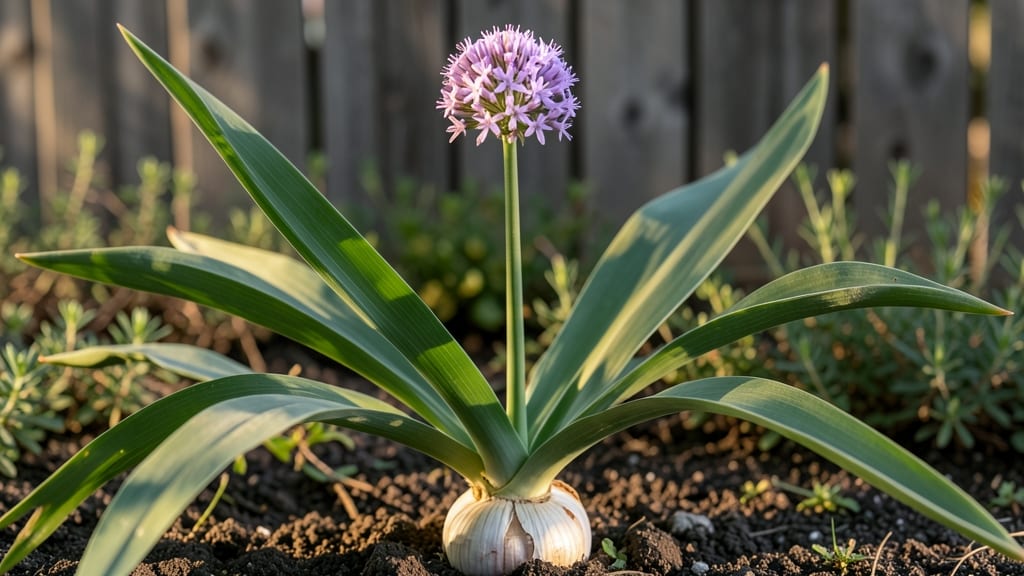
Garlic is a perennial plant, but it’s typically grown as an annual because its edible bulb dies back after harvest. However, under ideal conditions, it can regrow from the same root system year after year, making it a hardy perennial in mild climates.
Garlic's perennial nature comes from its underground root system, which stores energy and can sprout new shoots when conditions are right. 🌱 Unlike true annuals like onions, garlic bulbs don't die completely—they just enter dormancy after harvest.
In warmer regions, gardeners often leave some bulbs in the ground to regrow, creating a self-sustaining crop over multiple seasons.
This dual behavior explains why garlic thrives as both an annual and perennial. When grown as an annual, gardeners harvest the entire bulb, but in perennial cultivation, they might remove only the largest bulbs while allowing smaller ones to remain.
The remaining cloves form new shoots, continuing the plant's life cycle.
💡 In This Article
- How Garlic’s Perennial Nature Works in Gardening
- Growing Garlic as a Perennial: Best Practices for Year-Round Cultivation
How garlic’s perennial nature works in gardening
Garlic's perennial behavior stems from its unique underground structure, where each bulb contains multiple cloves that act as dormant buds. These cloves are connected to a robust root system that stores carbohydrates and nutrients, allowing the plant to survive harsh conditions.
When you harvest garlic, you're typically removing the mature bulb, but the root system often remains intact in the soil, ready to sprout new shoots under the right conditions. 🌱 This persistence differentiates garlic from true annuals like onions, which die completely after harvest.
The key to garlic's perennial nature lies in its bulb division process. Each clove contains a miniature garlic plant, complete with its own root system. When left in the ground, these cloves can regenerate into full plants, producing new bulbs over time.
In contrast, annuals like leeks or shallots rely on seed propagation or must be replanted from seed each year. Garlic's ability to regrow from existing cloves means gardeners can extend its life cycle with minimal effort, especially in mild climates where freezing temperatures don't kill the root system.
Temperature plays a crucial role in garlic's perennial behavior. Most garlic varieties enter dormancy in summer and require a period of cold (40°F or below) to break dormancy and regrow.
This cold requirement explains why garlic thrives as a perennial in USDA zones 5-9, where winters are mild enough to preserve the root system but cold enough to trigger regrowth.
In colder regions, gardeners must either harvest all bulbs annually or use hardier perennial varieties like Silverskin garlic, which have better cold tolerance.
Another distinguishing feature is garlic's scape production. In its second year, garlic sends up a flower stalk called a scape, which can be harvested to encourage larger bulb development. If left unharvested, these scapes produce seed heads that contain thousands of tiny seeds.
However, these seeds rarely produce true-to-type garlic, making bulb division the preferred method for perennial cultivation. This biological quirk ensures garlic's reliability as a perennial crop when managed properly.
Garlic's perennial nature also affects its growth rate. When grown as an annual, gardeners plant cloves in fall and harvest the bulbs the following summer. But as a perennial, the plant continues growing year after year, with each bulb producing multiple offsets (smaller bulbs) that can be replanted.
This creates a self-sustaining cycle where the garlic patch expands naturally, reducing the need for annual replanting. The trade-off is slightly smaller bulbs compared to annual cultivation, but the convenience and reduced labor make perennial growing appealing for many gardeners.
For those curious about the science, garlic's perennial behavior is tied to its monocarpic nature—meaning it produces a single large bulb before entering dormancy. However, unlike true monocarpic plants (which die after flowering), garlic's root system remains viable, allowing it to produce multiple bulbs over time.
This adaptability is what makes garlic such a versatile crop in both annual and perennial growing systems. 🌿