
Flowers
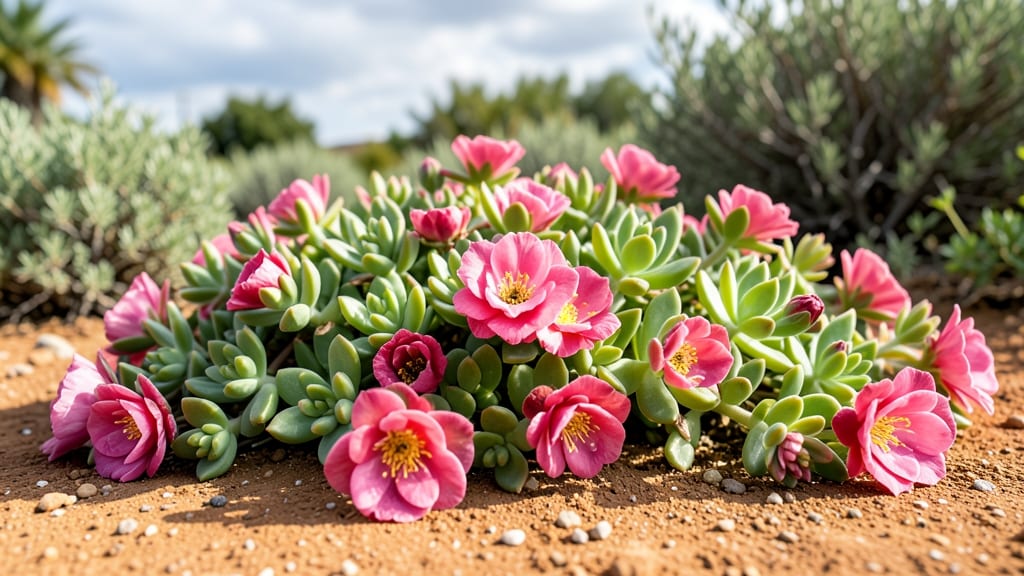
Moss roses behave as perennials in USDA zones 7-10, regrowing each spring from their hardy root systems, but they may act like annuals in colder regions where winter kills their foliage entirely.
These hardy plants thrive as perennials because their roots survive winter's chill, bursting back to life when temperatures rise. 🌱 In colder climates, though, the above-ground growth often freezes back completely, forcing gardeners to replant yearly for continuous blooms.
The key difference lies in their root hardiness—while some varieties can tolerate brief cold snaps, prolonged freezing will still kill them off in marginal zones.
For gardeners in zones 5 or below, selecting cold-tolerant varieties like 'Iceberg' or 'Snowdrift' can improve survival odds, though mulching and overwintering containers remain the best strategies.
The perennial nature of moss roses in warmer climates makes them low-maintenance once established, while colder regions demand more active care to preserve their delicate blooms.
💡 In This Article
- How Moss Roses Survive Winter in Different Climates
- Extending Moss Rose Lifespan in Cold Regions
How moss roses survive winter in different climates
Moss roses (Portulaca grandiflora) rely on a clever survival strategy called dormancy, where their above-ground growth shuts down in cold weather while their roots remain alive. In USDA zones 7-10, these roots can withstand temperatures down to 10-15°F—the same threshold as many hardy perennials like daylilies.
The secret lies in their thick, fleshy roots, which store moisture and nutrients like a built-in battery, allowing regrowth as soon as soil temperatures hit 55°F in spring. 🌱 This explains why they bounce back so reliably in warmer climates.
The transition from perennial to annual behavior happens when winter temperatures drop below 0°F for extended periods. At this point, the roots—though tough—begin to succumb to frost penetration, especially in poorly drained soils.
In zone 6, for example, moss roses might survive 1-2 mild winters before dying back completely, while true annuals like marigolds would simply replant themselves each spring. The key difference is that moss roses' roots can regenerate foliage if winter isn't severe enough to kill them entirely.
What most gardeners overlook is how soil insulation affects survival. In zone 5, where winters average -10°F, moss roses planted in bare ground will likely die back, but those with 4-6 inches of mulch (like straw or shredded leaves) can survive.
The mulch acts like a blanket, keeping root zones 5-10°F warmer than ambient air temperatures. This is why professional growers often recommend overwintering containers—potted moss roses can be moved to protected garages where temperatures stay above 32°F, preserving their roots.
Another critical factor is day length sensitivity. Moss roses are short-day plants, meaning they flower in response to decreasing daylight hours. In colder climates, where winters are longer, this natural cycle can be disrupted if the plant dies back completely.
Without stored energy in the roots, they lack the reserves to restart growth in spring. This is why gardeners in zones 4 and below often treat them as annuals—they replant new seeds each year to ensure consistent blooms, mimicking the plant's natural behavior in its native dry, tropical climates.
For comparison, consider how ice plant (Delosperma), another succulent relative, handles cold. Ice plants can survive to zone 5 with proper mulching, but moss roses—being less drought-tolerant—require more consistent moisture retention in their roots.
The trade-off is their stunning, velvety blooms, which make the extra care worthwhile for gardeners willing to adapt their growing strategies. 💫
Understanding these mechanics helps explain why some gardeners in marginal zones report "partial survival" of moss roses. Often, only the hardiest roots remain, producing sparse regrowth in spring. This is nature's way of ensuring the species persists—even if it means behaving differently in colder environments.