
Planting
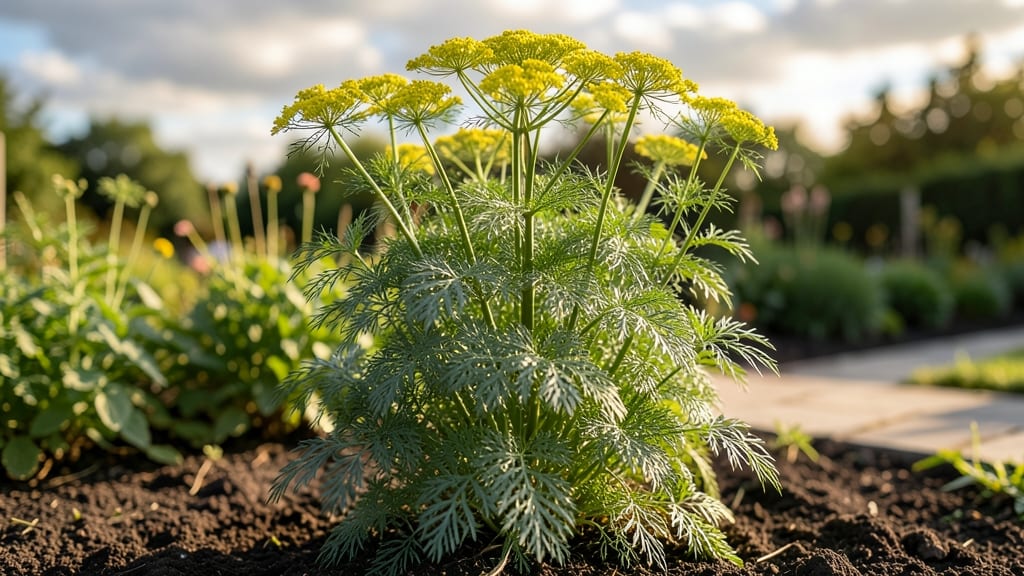
Dill is a biennial plant, not a true perennial, though it may self-seed prolifically and regrow for 2–3 years under ideal conditions. Its hardy taproot and fast reproduction make it behave like a short-lived perennial in many climates.
Technically, dill follows a two-year lifecycle: it grows vegetatively in its first year, then bolts and flowers in the second before dying. 🌱 However, its ability to drop thousands of seeds means new plants often sprout nearby, creating the illusion of perennial behavior.
Many gardeners mistake these volunteer seedlings for returning perennials, but each plant only lives for one full growing season before completing its reproductive cycle.
This biennial nature explains why dill often appears to "come back" each spring—it's not the same plants persisting, but rather their offspring taking over. The taproot system, while sturdy, can't sustain multiple years of growth like true perennials, which is why you'll see dieback after flowering even with favorable conditions.
💡 In This Article
- Why Dill Dies Back Annually Despite Self-Seeding
- How to Extend Dill’s Lifespan in Your Garden
Why dill dies back annually despite self-seeding
Dill's lifecycle follows a biennial pattern where the first year focuses entirely on leaf growth while storing energy in its thick taproot. This root can grow 12-18 inches deep and stores carbohydrates that fuel the plant's second-year flowering phase.
Unlike true perennials, dill's root system lacks the regenerative capacity to produce new shoots year after year—once it flowers, the plant's energy shifts entirely to seed production, causing the foliage to die back permanently.
The cold temperatures of winter act as a trigger for dill's flowering cycle. When exposed to 40-50°F nighttime temperatures for several weeks, the plant's hormonal balance shifts from vegetative growth to reproductive mode.
This vernalization process is what causes dill to bolt (send up flower stalks) in its second year, even if you haven't let it flower the previous season.
The resulting seed heads contain 10,000-20,000 seeds per plant, which explains why dill seems to "come back" annually through self-seeding rather than true perennial regrowth.
What confuses many gardeners is that dill's taproot can persist in the soil for 2-3 years if conditions remain favorable. However, this doesn't mean the original plant is surviving—rather, the root may still be viable enough to produce new shoots if disturbed.
The confusion arises because these new shoots are genetically identical siblings, not the original plant. True perennials like asparagus or rhubarb develop complex root systems with multiple growing points that can regenerate year after year, while dill's single taproot lacks this regenerative capacity.
The dieback you observe each year occurs because dill's energy priorities shift dramatically after flowering. Once the plant allocates resources to seed production, the foliage becomes senescent (programmed to die) to ensure maximum seed viability.
This is an evolutionary trade-off: dill prioritizes reproduction over prolonged leaf production. The aromatic leaves you harvest are essentially the plant's "youth phase," while the flowering stage represents its reproductive maturity and eventual demise.
Consider this comparison: while dill may appear perennial in your garden, it's more accurate to think of it as a short-lived annual with built-in regeneration. True perennials like thyme or oregano can live for decades because they continuously produce new growth from their root systems.
Dill's strategy is different—it's designed to produce as many offspring as possible in a short time frame, then let the next generation carry on the species.
This explains why you might see dill plants in your garden for multiple years without realizing each "plant" is actually a new individual from the previous year's seeds.
Here's what happens biologically during dieback: the plant's chlorophyll production in the leaves stops as nutrients are translocated to the developing seeds. This process is controlled by plant hormones like ethylene and abscisic acid, which signal the leaves to senesce.
Meanwhile, the taproot may remain dormant in the soil for 1-2 years before finally decomposing, but it won't produce new foliage without the hormonal triggers that come with new seed germination.
The sensory difference between these generations is striking. First-year dill leaves are tender with a bright, slightly sweet anise flavor, while second-year leaves (if you let them develop) become more bitter and fibrous.
The flowering stalks themselves have a completely different aroma—earthy and slightly medicinal—reflecting the plant's shift from growth to reproduction. This flavor transformation is a clear indicator of dill's biennial lifecycle in action.