
Flowers
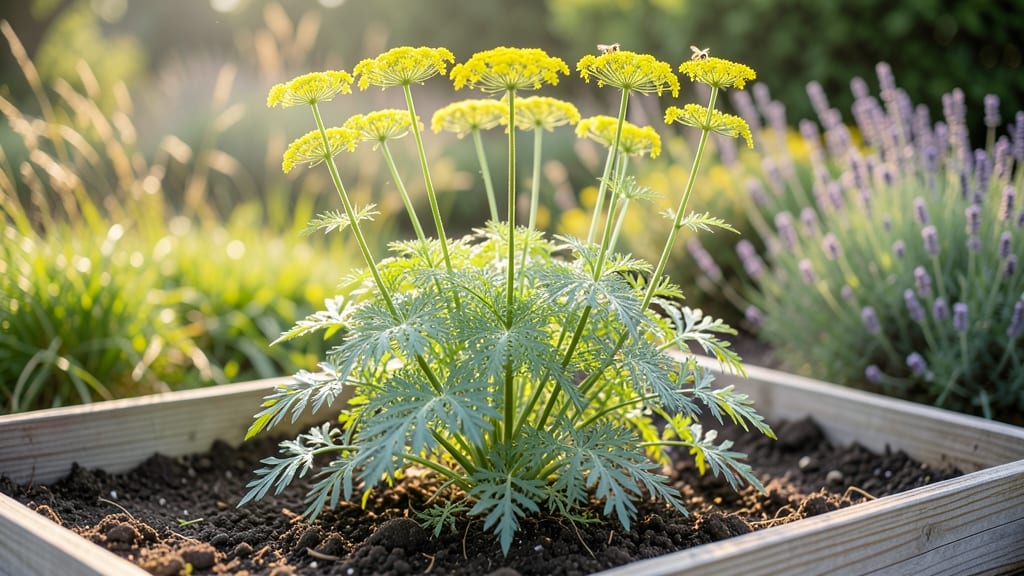
Dill is not a perennial—it completes its life cycle in one growing season, making it a biennial or short-lived herb. While it may regrow from seed each spring, the mature plant typically succumbs to frost without protection.
This means dill behaves more like a cool-season annual than a true perennial. 🌱 Unlike hardy herbs such as rosemary or thyme, which regenerate from woody stems or underground roots, dill's entire structure—including its taproot—freezes and dies in cold climates.
That's why gardeners often treat it as an annual, replanting fresh seeds each spring for continuous harvests.
However, there's a workaround: many gardeners extend dill's lifespan by harvesting seeds before frost or using protective measures like mulching. This mimics perennial behavior without altering the plant's true botanical nature.
💡 In This Article
- Why Dill Dies Back in Winter: The Science of Its Lifespan
- How to Grow Dill Year-Round: Extending Its Lifespan Strategically
Why dill dies back in winter: the science of its lifespan
Dill's winter dieback stems from its biological classification as a biennial plant, meaning it completes its life cycle in two years under ideal conditions.
The key difference from true perennials lies in its taproot system—a single, deep-rooted structure that stores energy but lacks the regenerative capacity of woody stems or rhizomes found in plants like rosemary or asparagus.
When temperatures drop below 25°F (-4°C), this taproot freezes solid, killing the entire plant structure from the ground up.
The frost sensitivity extends to dill's herbaceous stems, which contain minimal woody tissue compared to perennial herbs. True perennials develop thickened stems or underground storage organs (like bulbs or tubers) that can survive winter's harsh conditions.
Dill's delicate stems, by contrast, become brittle and blacken when exposed to prolonged cold, a process called cold-induced necrosis. This explains why even mature dill plants rarely recover after frost, unlike hardy perennials that simply go dormant and regrow in spring.
What most gardeners don't realize is that dill's seed production is its survival strategy. In its first year, the plant focuses on leaf growth, while the second year (if conditions permit) is dedicated to flowering and seed production.
These seeds contain all the genetic information needed to regenerate the plant next spring—this is why dill "comes back" each year from seed, not from surviving roots. The seeds themselves can remain viable in soil for up to 4 years, though germination rates decline after the first winter.
This biennial lifecycle explains why dill's foliage often appears more vigorous in its second year—it's channeling energy into both leaves and flowers simultaneously. The tradeoff is that this dual-purpose growth makes the plant even more vulnerable to frost damage.
True perennials like thyme or oregano, meanwhile, allocate all their energy to underground storage structures, allowing them to regrow annually without relying on seed germination.
There's a fascinating botanical twist: some dill varieties exhibit partial perennial behavior in mild climates (USDA zones 8-10). In these regions, the taproot may survive light frosts, allowing the plant to regrow from the base—though this is more exception than rule.
The key difference is that even in these cases, the plant doesn't develop true woody growth like perennial herbs do. Instead, it relies on a combination of cold tolerance and rapid regrowth from any surviving root tissue.
For comparison, consider how dill's cousin, fennel, handles winter differently. Fennel develops a thick, bulbous base that can survive light frosts, making it behave more like a short-lived perennial. Dill lacks this adaptation, which is why it's classified separately.
This fundamental difference affects everything from planting strategies to harvest timing—dill must be treated as an annual in most climates, while fennel can often be managed as a semi-perennial.