
Flowers
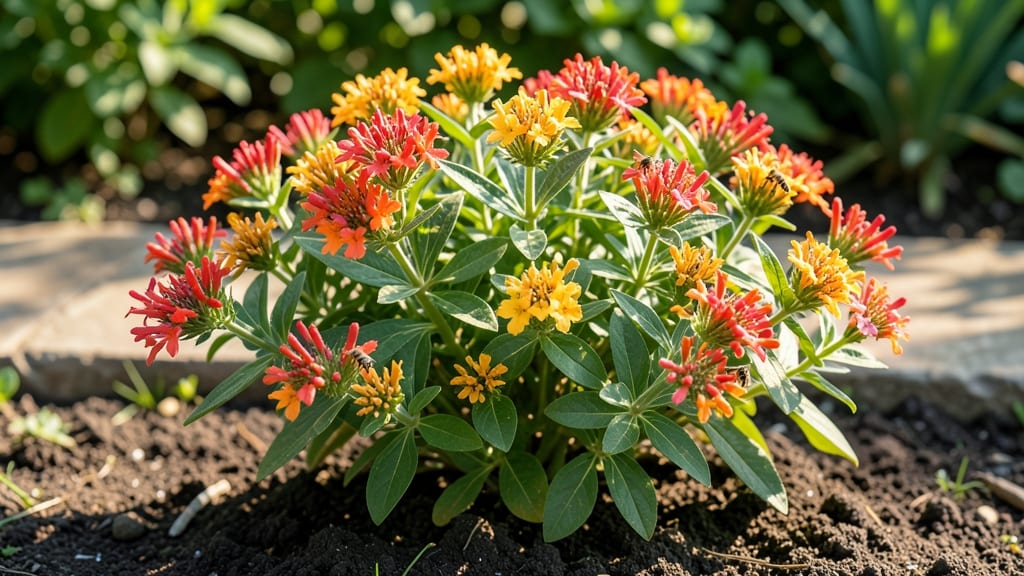
Lantana Camara behaves as a perennial in frost-free zones but functions like an annual in colder regions, where it dies back to the ground each winter only to resprout vigorously from roots or seeds when spring warmth returns.
This behavior stems from its tropical origins—Lantana Camara thrives in USDA zones 9-11, where it maintains lush growth year-round. 🌿 In colder zones, its woody roots and underground stems (rhizomes) survive winter dormancy, allowing it to bounce back each spring.
The key difference from true perennials is its inability to sustain above-ground growth through freezing temperatures, which is why gardeners in northern climates treat it as an annual despite its perennial tendencies.
What makes this plant so resilient is its ability to regenerate from both roots and seeds. Even if you cut it back to the ground in fall, the root system often remains viable until spring.
This adaptability explains why Lantana Camara spreads so aggressively in suitable climates—it's essentially a perennial that's been temporarily "tricked" into behaving like an annual by cold snaps.
💡 In This Article
- Lantana Camara’s Growth Cycle: Perennial vs Annual Behavior
- Extending Lantana Camara’s Lifespan in Cold Climates
Lantana Camara’s growth cycle: perennial vs annual behavior
The key to understanding Lantana Camara's lifecycle lies in its rhizomatous root system, which stores carbohydrates and water during dormancy. When temperatures drop below 28°F, the above-ground foliage blackens and dies, but the roots remain alive underground.
This is why it behaves like an annual in colder climates—it loses its visible structure but preserves its genetic potential through these woody roots. 🌱 True perennials like hostas maintain some above-ground growth through winter, while Lantana Camara's complete dieback creates the illusion of annual behavior.
What sets Lantana Camara apart is its aggressive regrowth mechanism. When spring arrives and soil temperatures reach 55°F, the roots detect warmth and begin producing new shoots within 2-3 weeks. This rapid resprouting explains why gardeners often find it returning stronger than ever after winter.
The plant's native tropical origins mean it evolved to prioritize root survival over above-ground persistence, making it more resilient than many traditional perennials in frost-prone areas.
In frost-free zones (9-11), Lantana Camara maintains its perennial status by continuously producing new growth throughout the year. The difference is stark: while true perennials like peonies develop woody stems that persist through winter, Lantana Camara's stems are herbaceous and cannot withstand freezing.
This biological adaptation explains why it thrives in warm climates but requires special care in colder regions to prevent complete root death.
Consider this comparison: In zone 10, Lantana Camara grows continuously with minimal dieback, while in zone 6, it behaves like an annual due to winter kills. The transition happens at 28°F—the critical temperature where root viability begins to decline.
This threshold explains why gardeners in marginal zones often lose their plants completely if not protected.
The plant's seed production adds another layer to its lifecycle. Even if the roots fail to survive winter, Lantana Camara will often self-seed prolifically in spring, creating new plants from the ground up.
This dual regeneration strategy—through both roots and seeds—explains its reputation as an invasive species in suitable climates. 🌿 The ability to restart from either source gives it an evolutionary advantage over plants that rely on just one method.
What most gardeners don't realize is that Lantana Camara's root systems can remain dormant for up to 6 months in cold climates, waiting for optimal conditions to regrow. This extended dormancy period explains why some plants may not resprout until late spring or early summer, depending on local climate patterns.
The deeper the roots penetrate (often 12-18 inches), the better they survive winter soil temperature fluctuations.