
Diseases
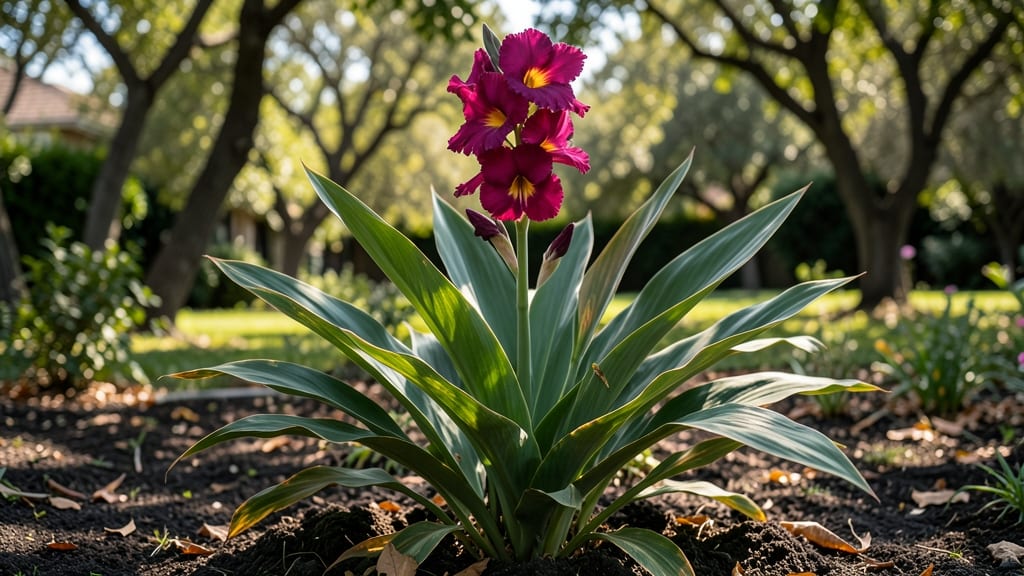
Yes, the canna plant is a perennial in warm climates, where it naturally dies back to the ground each winter but regrows annually from its underground rhizomes. In colder regions, gardeners must dig up and store these rhizomes indoors to protect them from freezing temperatures.
The canna plant's perennial nature depends entirely on climate. In frost-free zones like USDA zones 8-11, these tropical beauties go dormant above ground but survive underground through their thick, energy-rich rhizomes. 🌱 These rhizomes act like natural storage units, holding enough nutrients to fuel new growth once temperatures rise again.
This makes canna a true perennial in warm climates, where it reliably returns year after year with minimal care. The key difference from temperate perennials is that canna's above-ground growth completely disappears in winter, while its roots remain active below the frost line.
For gardeners in colder regions, the challenge shifts to artificial overwintering. The rhizomes must be carefully excavated, cleaned, and stored in a cool, dry place until spring planting.
This annual process transforms canna from a perennial in warm climates to a seasonal plant that requires human intervention to survive northern winters.
The good news is that with proper storage techniques, these rhizomes can remain viable for years, allowing gardeners to enjoy canna's dramatic foliage and vibrant blooms season after season.
💡 In This Article
- Canna Plant’s Natural Dieback and Rhizome Survival Strategy
- How to Overwinter Canna Plants in Cold Climates
Canna plant’s natural dieback and rhizome survival strategy
The canna plant’s perennial nature relies on a clever biological adaptation: its ability to enter dormancy through a process called rhizome-based overwintering. Unlike temperate perennials that maintain some above-ground growth during winter, canna plants completely die back to the ground when temperatures drop below 32°F.
This dieback isn’t a sign of death—it’s a survival strategy. The plant’s energy reserves migrate to its thick, corm-like rhizomes, which store starches and nutrients like a natural battery.
These rhizomes can weigh between 1-3 ounces each, depending on the plant’s maturity, and contain enough fuel to regenerate a full plant the following spring.
What makes this survival mechanism fascinating is how it compares to true temperate perennials. While plants like hostas or peonies maintain some leaf or stem structure through winter, canna plants rely entirely on their underground storage organs.
The rhizomes develop a protective layer that prevents desiccation, allowing them to remain viable even when soil temperatures drop to 25°F. This adaptation explains why canna thrives in frost-free zones (USDA zones 8-11) where it can remain dormant but protected in the soil.
The key difference is that canna’s dormancy is more extreme—it’s not just surviving winter, it’s completely resetting its growth cycle each year.
This annual dieback cycle also explains why canna plants often produce more dramatic foliage and blooms each subsequent year. The rhizomes act like a biological savings account, accumulating more energy with each growing season.
For example, a two-year-old rhizome will typically produce a more robust plant than a first-year specimen because it’s had an extra growing season to build reserves.
This is why gardeners in warm climates often see their canna plants grow taller and more vigorous each year, reaching heights of 3-6 feet with minimal additional care.
However, this survival strategy comes with a critical limitation: canna plants cannot tolerate prolonged exposure to freezing temperatures. When soil temperatures drop below 28°F for more than a few hours, the rhizomes begin to suffer cell damage.
This is why gardeners in colder regions must intervene—without protection, the rhizomes would freeze solid, killing the plant permanently. The good news is that these rhizomes are remarkably resilient when properly stored, often lasting 3-5 years with careful overwintering techniques.
One interesting aspect of canna’s biology is how its growth cycle aligns with seasonal cues. The plant detects temperature drops and begins preparing for dormancy by late fall, typically around October-November in most growing zones.
During this time, the leaves yellow and die back, while the rhizomes become firm and woody. This transformation is your signal that the plant is entering its survival phase.
In frost-free climates, these rhizomes remain dormant but alive in the soil, ready to sprout when daytime temperatures consistently exceed 60°F in spring.
Understanding this natural process helps explain why canna plants are classified as perennials in warm climates but require human assistance in colder regions.
The plant’s entire lifecycle is designed around its ability to reset and regenerate from its underground storage system—a remarkable adaptation that allows it to thrive in tropical and subtropical environments where winter dieback is the norm rather than the exception.