
Vegetables
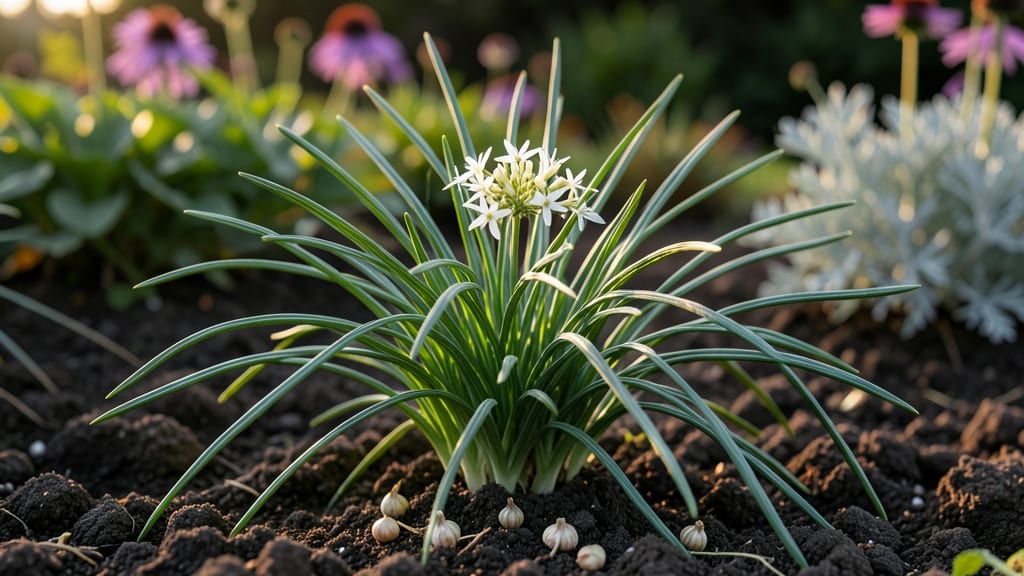
Garlic chives are indeed perennial plants that regrow annually from their robust root system, even after dying back completely in winter. Their cold-hardy nature and underground rhizomes allow them to thrive across USDA zones 3-9 with minimal care.
This hardy herb's survival strategy lies in its underground rhizomes, which store energy through winter dormancy.
Unlike annuals that die completely, garlic chives simply pause growth when temperatures drop, then burst back with fresh green shoots once soil warms. 🌱 The key difference from true chives (also perennial) is garlic chives' milder flavor and faster regrowth—often within weeks of spring thaw in most climates.
Their ability to regenerate makes them perfect for continuous harvesting throughout the growing season.
For gardeners, this means you can plant once and enjoy fresh garlic-scented foliage year after year with proper winter protection. Simply mulch heavily before first frost and avoid cutting back until new growth appears—this preserves the root system's energy reserves.
The plants' resilience extends even to accidental dieback, as long as some roots remain viable.
💡 In This Article
- How Garlic Chives Survive Winter Through Underground Growth
- Year-Round Care Tips for Thriving Garlic Chives
How garlic chives survive winter through underground growth
Garlic chives rely on a specialized underground structure called rhizomes—horizontal, fleshy stems that store carbohydrates and nutrients. These rhizomes, which grow about 1-2 inches below the soil surface, act like natural batteries, converting sunlight energy into stored food during the growing season.
When temperatures drop below 20°F, the above-ground foliage yellows and dies back, but the rhizomes remain dormant yet alive, protected by their insulating soil blanket.
The science behind this survival involves cold acclimation. Garlic chives, like many perennials, undergo a physiological process where their cells produce protective proteins and sugars that prevent ice crystal formation.
Their rhizomes can withstand temperatures as low as -30°F when properly mulched, making them far hardier than annual herbs. 🌱 Unlike true chives (Allium schoenoprasum), which have bulb-like structures, garlic chives' rhizomes spread more aggressively, creating a dense network that regenerates quickly in spring.
What makes garlic chives unique is their rapid regrowth cycle. While true chives may take 4-6 weeks to emerge after winter, garlic chives often shoot up within 2-3 weeks of soil temperatures reaching 45°F.
This speed comes from their rhizomes' ability to sprout multiple shoots simultaneously. The plants' mild garlic flavor also develops more intensely after winter dormancy, as the stored nutrients concentrate in the new growth.
Comparing them to other alliums reveals their resilience. Onions and garlic (both bulb-forming) die back completely above ground but rely on their bulbs for regrowth. Garlic chives, however, combine the best of both worlds—they store energy underground like onions but regenerate foliage like grasses.
Their 3-4 inch tall clumps spread gradually, creating a self-sustaining system that requires minimal intervention from gardeners.
One critical factor in their survival is the timing of dieback. Garlic chives typically senesce (enter dormancy) in late fall when day lengths shorten and temperatures drop. This isn't true death—just a strategic pause.
The rhizomes remain metabolically active at reduced levels, maintaining cell viability until spring warmth triggers hormone signals that restart growth. This dormancy period can last 4-6 months in colder zones but only 2-3 months in warmer southern climates.
Their ability to regenerate even after accidental damage demonstrates their toughness. If you cut back garlic chives too late in fall, leaving no foliage, the rhizomes will still produce new shoots from any remaining viable tissue.
This makes them exceptionally forgiving compared to other perennials that require precise timing for winter care. 💪 The trade-off is their slower initial establishment—young plants may take 2 growing seasons to reach full vigor compared to annual herbs that mature in one season.