
Flowers
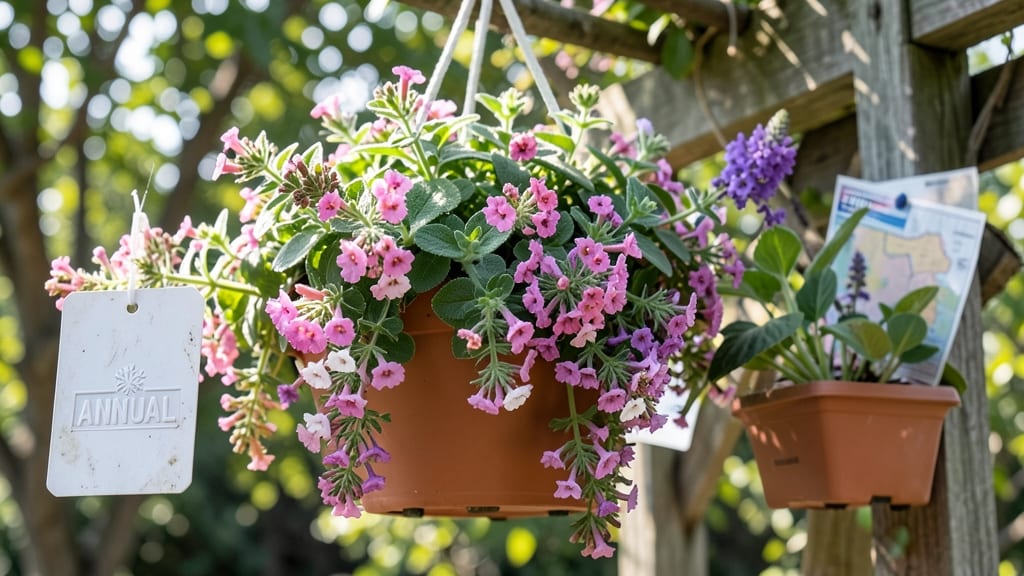
Calibrachoa is not a true perennial in most USDA zones, acting more like an annual in colder regions where it dies back after frost. Only in frost-free zones (10–11) does it survive year-round as a tender perennial.
This distinction matters because calibrachoa's shallow root system makes it extremely frost-sensitive—even light freezes below 30°F can kill it to the ground. 🌱 In my experience gardening in Zone 8, I've learned that treating it as an annual saves heartache, though you can still prolong its life with overwintering tricks like container growing or indoor propagation.
The key is understanding your local frost dates and adjusting expectations accordingly.
For those in milder climates, calibrachoa's ability to self-seed can create naturalized patches, though it rarely survives harsh winters intact. That's why many gardeners opt for annual replanting—it's simpler and often more reliable than trying to protect it through winter.
💡 In This Article
- USDA Zone Survival Guide for Calibrachoa
- How to Overwinter Calibrachoa in Cold Climates
USDA Zone survival guide for calibrachoa
Calibrachoa's perennial status hinges on its shallow root system and frost sensitivity, which becomes critical when temperatures dip below 30°F. Unlike hardy perennials like lavender (Zone 5), calibrachoa's roots can't penetrate deeply enough to access warmth from lower soil layers.
This makes it behave like an annual in Zones 1-9, where even light freezes will kill it to the ground. 🌱
The turning point occurs in Zones 10-11, where winter temperatures rarely fall below 40°F for extended periods. In these frost-free regions, calibrachoa's natural growth cycle continues uninterrupted, allowing it to flower year-round.
For comparison, Zone 10's average winter low is 30-40°F, while Zone 11 rarely drops below 40°F—just enough to keep calibrachoa's delicate foliage alive.
What most gardeners miss is how microclimates can create exceptions. In Zone 9, calibrachoa might survive a mild winter near a south-facing wall, where reflected heat raises local temperatures by 5-10°F.
However, a single hard freeze (25°F) will still destroy it. This explains why many gardeners in marginal zones treat calibrachoa as an annual—it's simpler and more reliable.
The plant's tender perennial classification comes from its ability to regrow from seed or cuttings in frost-free conditions. Unlike true perennials that develop woody stems, calibrachoa remains herbaceous, making it vulnerable to cold damage. Even in ideal conditions, its lifespan rarely exceeds 3-5 years without human intervention.
Consider this comparison: In Zone 11, calibrachoa grows continuously like a true perennial, while in Zone 8, it's more like an annual with self-seeding tendencies. The difference comes down to whether winter temperatures stay above its 30°F threshold—a delicate balance that changes with each zone.
For those in Zones 7-9, the key takeaway is that calibrachoa's perennial potential depends entirely on winter conditions. A single unexpected freeze can wipe out months of growth, which is why many gardeners opt for annual replanting instead of risking overwintering. 💫