
Flowers
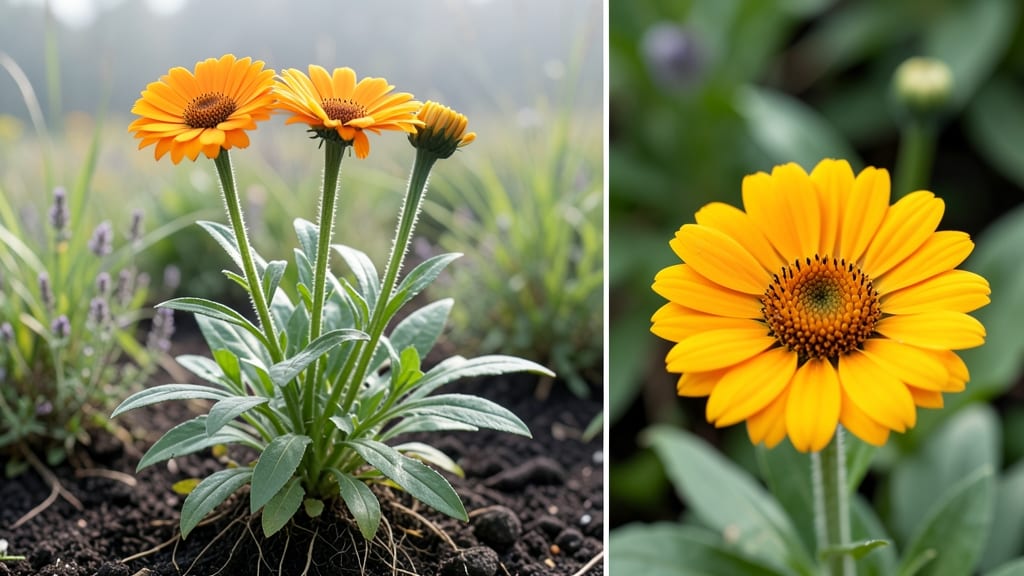
Calendula isn't a true perennial—it acts like a self-seeding annual in most climates, withering to the ground in cold weather before sprouting fresh from seeds each spring. Its persistent regrowth gives it a perennial-like appearance in gardens.
This behavior stems from calendula's hardy taproot system and prolific seed production, which allows it to bounce back year after year without needing replanting. 🌱 While it doesn't survive winter as a true perennial would, its ability to self-sow aggressively creates the illusion of continuous growth.
Many gardeners treat it like a perennial by saving seeds or providing winter protection, which can extend its presence beyond a single growing season.
What makes calendula unique is how its life cycle blends annual and perennial traits. Unlike true perennials that regrow from the same root system, calendula relies on seed germination to restart each season.
This explains why it thrives in garden beds year after year without requiring division or special care—just let the seeds do their work!
💡 In This Article
- Calendula’s Growth Cycle: Why It Dies Back Like a Perennial
- Tips for Treating Calendula Like a Perennial in Your Garden
Calendula’s growth cycle: why it dies back like a perennial
Calendula's winter dieback happens because it's classified as a tender annual, meaning its above-ground growth freezes in cold weather, but its taproot system survives underground. Unlike true perennials that regrow from the same root crown, calendula relies on seeds to restart each season.
The key difference is its prolific seed production—each plant can release 500-1,000 seeds per season, which germinate eagerly when temperatures rise above 50°F (10°C) in spring.
The botanical magic happens in its deep taproot, which stores nutrients and energy through winter. This root system can reach 12-18 inches deep, allowing calendula to access moisture even in dry conditions.
When spring arrives, the seeds germinate rapidly (often within 7-14 days), creating dense patches that fool gardeners into thinking it's a perennial. The bright orange and yellow blooms appear within 60-80 days of germination, completing the cycle.
What makes calendula appear perennial-like is its aggressive self-seeding habit. Unlike annuals that need replanting, calendula's seeds scatter naturally, often 3-6 feet from the parent plant. This creates a multi-year presence in garden beds without human intervention.
The plant's hardiness zone range (3-11) also contributes—it thrives in diverse climates, from coastal California to northern Europe, where it naturally reseeds annually.
Interestingly, calendula's life cycle mirrors that of biennials like carrots or parsley, but with one critical difference: it completes its entire growth cycle in a single season while producing seeds that ensure next year's growth.
This two-phase behavior—vegetative growth followed by seed production—is why it's sometimes called a "short-lived perennial" in gardening circles. The confusion arises because it doesn't die completely like a true annual.
Consider this: while true perennials like lavender or coneflower regrow from the same root system year after year, calendula's seed-based regeneration creates the illusion of permanence. The plant's bright, edible flowers and medicinal properties make this behavior particularly valuable in cottage gardens, where it self-sustains without extra effort. 🌿
The science behind this involves photoperiodism—calendula detects day length changes in late summer, triggering flower production and seed set. This ensures seeds mature before frost, while the taproot remains dormant until spring. The result? A plant that seems to defy classification, blending annual resilience with perennial persistence.