
Vegetables
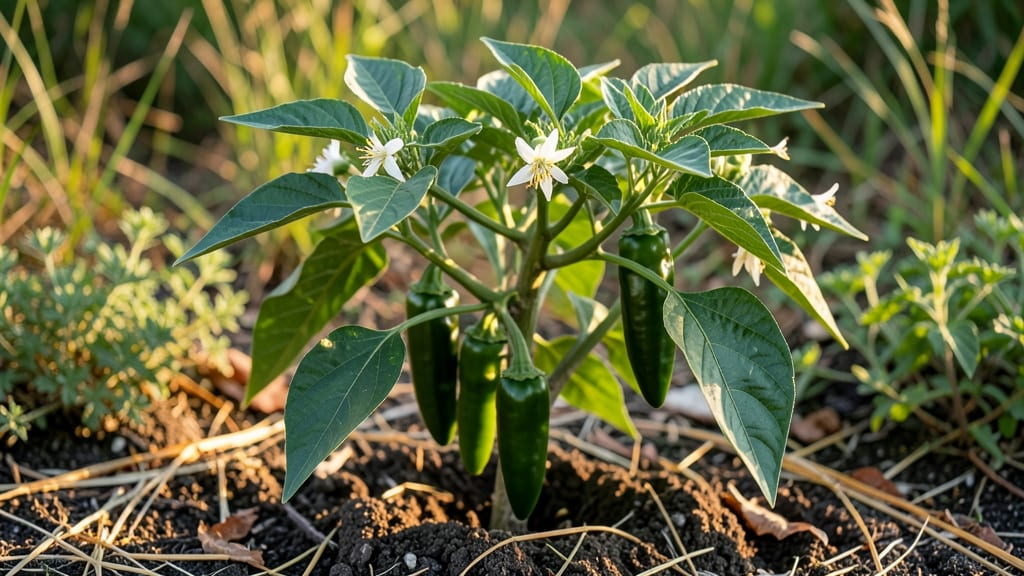
Jalapenos aren't true perennials because they die back completely after fruiting each season, though their roots often persist in frost-free areas. With careful overwintering, they'll regrow for multiple harvests, creating a semi-perennial cycle.
Jalapeno plants behave like annuals in most climates because they redirect energy toward fruit production instead of maintaining above-ground growth through winter. 🌱 The key difference from true perennials (like asparagus) is that jalapenos' stems and leaves wither after harvest, while their root systems remain dormant underground.
This survival mechanism lets them bounce back when conditions improve, though they won't produce fruit until the following growing season.
In warmer regions where temperatures stay above freezing, these roots can survive indefinitely, allowing gardeners to harvest jalapenos for years. The plant's ability to regenerate makes it function almost like a perennial in ideal conditions, though technically it's classified as an annual in most growing zones due to frost sensitivity.
💡 In This Article
- Why Jalapeno Plants Die Back Each Year
- Extending Jalapeno Lifespan: Overwintering Tips
Why jalapeno plants die back each year
Jalapeno plants undergo annual dieback primarily because their energy shifts dramatically after fruiting. When temperatures drop below 50°F and daylight shortens, the plant's metabolic focus shifts from producing peppers to preserving its root system.
This physiological response—called senescence—causes the above-ground stems and leaves to wither, while the roots remain dormant underground. Unlike true perennials like asparagus, which maintain a persistent crown year-round, jalapenos allocate nearly all their remaining energy to root storage for the next growing season.
The critical factor here is temperature sensitivity. Jalapenos originate from warm climates and cannot tolerate prolonged exposure to freezing temperatures (32°F or below). When frost hits, the plant's cell membranes rupture, killing the above-ground portions instantly.
However, the roots—buried 6-12 inches deep—often survive because soil insulates against rapid temperature swings. In frost-free zones (USDA zones 9-11), these roots can persist for years, ready to sprout new growth when conditions warm again.
Energy allocation explains why jalapenos behave differently from true perennials. While plants like rhubarb or artichokes store nutrients in their roots to fuel new shoots immediately, jalapenos exhaust their resources producing fruit.
The plant's reproductive cycle prioritizes seed production (via peppers) over vegetative growth, which is why you'll see dramatic dieback after harvest. This biological trade-off is why gardeners in colder climates often treat jalapenos as annuals, despite their root resilience.
Another key difference lies in the root structure. Jalapeno roots form a fibrous network rather than a thick, woody crown like asparagus. This makes them more vulnerable to soil disturbances but also more adaptable to regrowth.
When spring arrives, the roots detect warmth and moisture, triggering hormonal signals that stimulate new shoot formation. This regrowth process can take 4-6 weeks, during which the plant rebuilds its foliage before flowering and fruiting again.
What most gardeners overlook is how light exposure affects this cycle. Short-day plants like jalapenos need 10-12 hours of daylight to trigger flowering. As winter approaches, reduced sunlight combined with cooling temperatures sends the plant into dormancy.
This dual cue ensures the plant conserves energy until optimal growing conditions return. Without this light-temperature interaction, the dieback wouldn't occur as predictably.
For a practical comparison, consider how a true perennial like strawberry plants behave. Strawberries maintain a persistent crown that produces new leaves and runners annually, even in mild winters. Jalapenos, however, require a full reset each year—unless you intervene with overwintering techniques.
This fundamental difference explains why jalapenos are classified as annuals in most gardening guides, despite their root persistence.
Understanding this cycle helps explain why jalapenos might suddenly reappear in your garden after what seemed like total death. That's not magic—it's the root system's survival strategy kicking in when conditions improve. The key takeaway? Jalapenos aren't failing you; they're following their biological script for survival in seasonal climates. 🌱