
Flowers
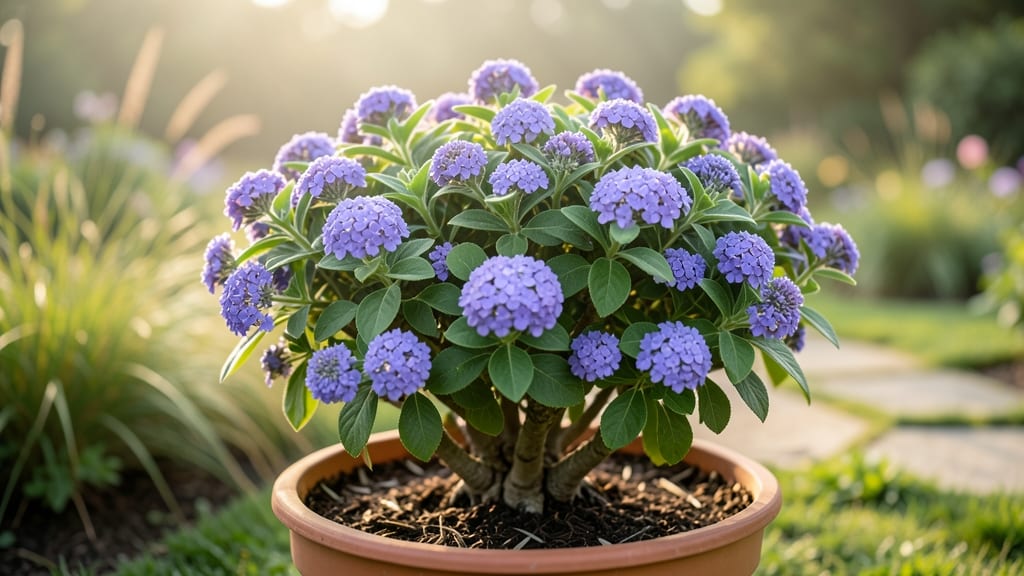
Whether heliotrope grows as an annual or perennial depends entirely on your climate—it thrives as a hardy perennial in warm USDA Zones 9-11, where its tuberous roots naturally overwinter. In colder regions, it typically dies back each frost but can regrow from tubers if protected properly.
Heliotrope's behavior hinges on its tuberous root system, which stores energy like a natural battery. 🌱 In frost-free zones, these roots remain active year-round, allowing the plant to regrow each spring effortlessly.
However, in colder climates, the roots enter dormancy when temperatures drop, and without protection, the plant may not survive the winter. The key difference lies in how well you can mimic the plant's natural habitat—whether through mulching, container gardening, or even digging up tubers before frost hits.
This adaptability makes heliotrope a favorite among gardeners who want flexibility. For example, in Zone 7, you can treat it as an annual or take steps to overwinter the tubers. The plant's ability to regenerate from tubers is what gives it that "annual-but-not-really" reputation.
Understanding this root behavior lets you choose how hands-on you want to be with your heliotrope care.
💡 In This Article
- How Heliotrope’s Tuberous Roots Determine Its Lifespan
- Growing Heliotrope as a Perennial in Cold Climates
How heliotrope’s tuberous roots determine its lifespan
Heliotrope’s lifespan hinges on its tuberous roots, which function like underground energy reserves. These thickened roots store carbohydrates and nutrients—similar to how potatoes or dahlias operate—allowing the plant to survive harsh conditions.
In USDA Zones 9-11, where winters rarely drop below 40°F, the tubers remain active year-round, producing new shoots each spring. The plant’s perennial behavior in these zones is a direct result of these roots avoiding freeze damage. 🌿
The magic happens in the root’s cellular structure: specialized parenchyma cells swell with stored starches, creating a dense, fleshy storage organ. When temperatures rise in spring, these cells convert starches back into sugars, fueling regrowth.
In colder zones (like Zones 5-8), the roots enter dormancy when soil temps hit 50°F or lower, halting growth. Without protection, the tubers can freeze solid, killing the plant entirely.
This is why heliotrope often behaves as an annual in these areas—it dies back to the roots but doesn’t always recover.
Temperature isn’t the only factor—soil moisture plays a critical role. Tubers need well-draining soil to prevent rot during dormancy; soggy conditions accelerate decay. In contrast, sandy loam (with 60% mineral content) mimics the plant’s native Mediterranean habitat, where it thrives as a perennial.
The root’s ability to regenerate from even small fragments (as little as 1-inch pieces) is what gives gardeners hope for revival in colder climates. 💫
Here’s the science: Heliotrope’s tubers contain high levels of phenolic compounds, which act as natural antifreeze agents in mild winters. These compounds lower the freezing point of cellular fluids by 2-3°F, buying time for the roots to survive brief cold snaps.
However, prolonged exposure to below 28°F disrupts cell membranes, leading to irreversible damage. This explains why heliotrope often dies back to the ground in Zone 6 but may resprout if tubers are buried 6+ inches deep in insulated soil.
Consider this comparison: In Zone 10, heliotrope’s tubers grow aggressively, producing 2-3 times more biomass than in Zone 7. The difference? No winter stress. In colder zones, the plant’s energy focuses on survival, not expansion.
This biological trade-off is why heliotrope’s lifespan varies so dramatically—it’s not just about the roots, but how well they’re protected from environmental extremes.
What most gardeners overlook is the timing of dormancy. Heliotrope’s roots begin storing energy as daylength shortens in late summer, preparing for winter.
If you prune back foliage too late (after mid-September), the plant may not have enough time to convert leaves into root starches, weakening its winter resilience.
This is a key reason why late-season fertilizing (with high-phosphorus blends) can backfire—it encourages leafy growth at the expense of root storage. 🌱