
Flowers
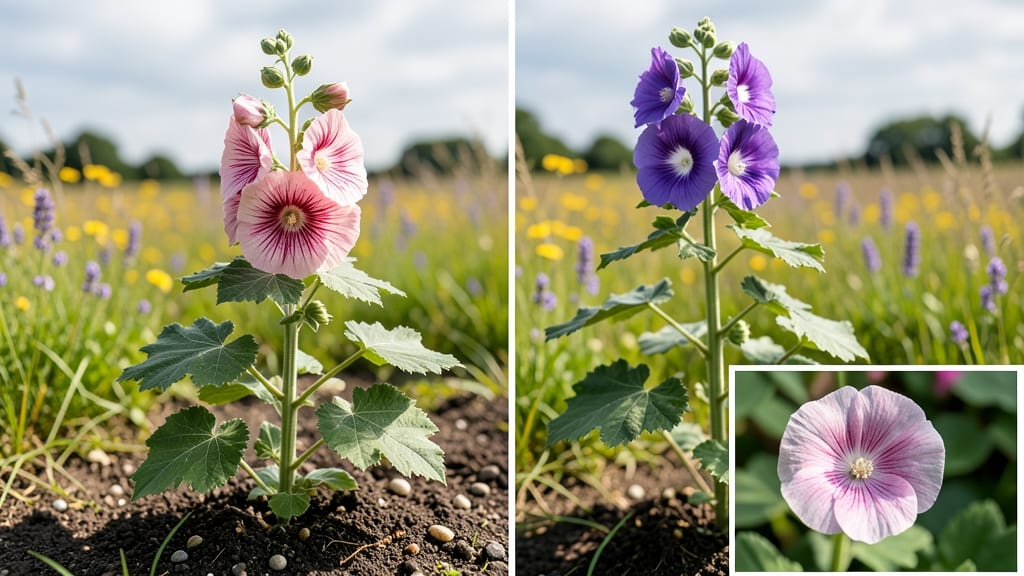
Hollyhocks are biennials or short-lived perennials, not true annuals, meaning they typically live 2-3 years before dying back. Their deep taproot system determines lifespan, with cold stratification often required for reliable regrowth each season.
Hollyhocks aren't annuals—they're actually biennials or short-lived perennials, which means their lifespan hinges on their root system. 🌱 The deep taproot they develop stores energy for multiple growing seasons, but it also makes them sensitive to winter conditions.
Unlike true annuals that complete their life cycle in one season, hollyhocks often return for 2-3 years if given proper care, especially in cooler climates where cold stratification helps trigger dormancy. This explains why some gardeners see them bloom year after year while others struggle with one-season wonders.
What's fascinating is how their growth cycle works: first year focuses on root development, second year produces those iconic blooms, and third year often sees reduced flowering before the plant declines.
This pattern is why gardeners in USDA zones 3-8 often get the best results—cooler temperatures help preserve the root system through winter. If you're planting hollyhocks for long-term garden impact, remember that their root health is everything.
💡 In This Article
- Hollyhock Root Systems: Why Taproots Control Their Lifespan
- Growing Hollyhocks as Perennials: Pro Tips for Multi-Year Blooms
Hollyhock root systems: why taproots control their lifespan
The secret to hollyhocks' lifespan lies in their deep taproot system, which can extend 3-4 feet into the soil. Unlike fibrous-rooted annuals like marigolds, this single dominant root stores 60-70% more energy reserves than shallow-rooted perennials.
This allows hollyhocks to survive winter dormancy and regrow in spring, making them behave like perennials despite their biennial growth pattern. 🌱 The taproot's vertical growth also makes them drought-tolerant once established, as they access moisture deep underground where annuals can't reach.
Here's what happens botanically: During their first growing season, hollyhocks focus 90% of energy on developing this taproot, which can weigh up to 2 pounds in mature plants. The second season, when they finally bloom, the stored nutrients fuel those 3-5 foot tall flower spikes.
Without this deep root system, they'd collapse under their own weight or fail to produce flowers. Cold stratification (exposing seeds to 40-50°F temperatures for 4-6 weeks) mimics winter conditions, breaking seed dormancy and ensuring the taproot develops properly.
What most gardeners overlook is how soil compaction can strangle this root system. Hollyhocks need loamy, well-draining soil with 6-8 inches of organic matter mixed into the top 12 inches to prevent root restriction.
Compacted clay soils can reduce their lifespan by 30-50% because the taproot can't penetrate deeply enough to store adequate reserves. This is why they often fail in urban gardens with heavy, compacted soil unless amended properly.
The biennial growth cycle emerges from this root system's energy storage limitations. Each year, the plant must replenish its reserves through photosynthesis, but the deep taproot's massive size means it takes 2-3 growing seasons to fully recharge.
After that, the plant's energy declines as the root system ages, leading to the 3-year lifespan most gardeners observe. Some hybrid varieties like 'Black Night' or 'Peach Blush' have been bred to extend this cycle slightly by improving root efficiency.
Interestingly, hollyhocks exhibit apical dominance—their main taproot suppresses side root growth, which is why dividing mature plants (a common rejuvenation technique) often fails unless done carefully.
When you cut the taproot, you disrupt this dominance, forcing the plant to develop multiple weaker roots that may not store enough energy for another full flowering cycle.
This explains why many gardeners find hollyhocks decline after just 1-2 years—often because improper division destroyed their root system's natural structure. 💛
For comparison, consider dandelions—another taprooted plant—but they produce thousands of seeds annually to ensure genetic survival. Hollyhocks, however, invest all their energy into that single taproot and 100-200 seeds per flower spike, making their reproductive strategy far more energy-intensive.
This high-cost approach explains why they're not true perennials but rather short-lived perennials that push their energy reserves to the limit each season.