
Companion Plants
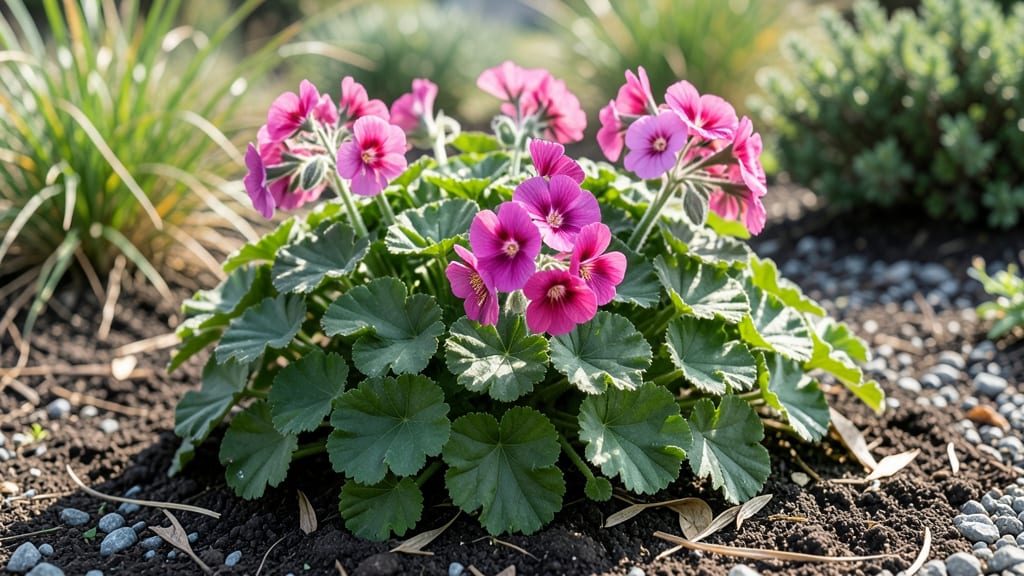
Geranium plants are perennial because their hardy underground rhizomes store nutrients and energy, allowing them to regrow each spring even after frost kills above-ground foliage. Cold-hardy varieties thrive in USDA zones 5-11 with proper winter care.
These hardy plants rely on their underground root systems to survive harsh winters, making them ideal for gardeners in colder climates. 🌱 Unlike annuals that die back completely, geraniums store carbohydrates in their rhizomes during fall, fueling new growth when temperatures rise.
The key to their longevity lies in this natural energy reserve, which also helps them recover from drought or soil stress. Some varieties, like the hardy cranesbill geraniums, can even withstand sub-zero temperatures with minimal protection, proving their resilience in diverse growing conditions.
Understanding this biological mechanism helps gardeners make informed decisions about placement and care. For instance, planting in well-drained soil with adequate mulch can further enhance their winter survival rates. The ability to regenerate from these stored resources is what truly sets perennial geraniums apart from their annual counterparts.
💡 In This Article
- How Geranium Rhizomes Survive Winter Freeze-Thaw Cycles
- Best Winter Care Tips to Protect Perennial Geraniums
How geranium rhizomes survive winter freeze-thaw cycles
Geranium rhizomes act like nature's built-in survival kit, packed with stored starches and sugars that sustain the plant through winter's harshest conditions. These underground stems contain specialized cells called parenchyma, which swell with carbohydrates during autumn, creating a nutrient-rich reserve.
When temperatures drop below 32°F, the rhizome enters dormancy—a state where metabolic processes slow dramatically to conserve energy, similar to how bears hibernate. This adaptation allows hardy varieties to endure months without photosynthesis while maintaining just enough cellular activity to stay alive.
The real magic happens in the rhizome's structure: its thick, fleshy texture contains 15-20% moisture content by weight, which acts as an internal insulator against freezing temperatures.
Unlike delicate annuals, geranium rhizomes can tolerate soil temperatures down to -10°F without permanent damage, thanks to a natural antifreeze protein called dehydrin that prevents ice crystal formation in their cells. 🌿 What's fascinating is how these proteins bind to cell membranes, lowering the freezing point of water within the rhizome by up to 5°F, creating a protective barrier against frost penetration.
This biological resilience explains why hardy geraniums like Geranium macrorrhizum (Bigroot Geranium) thrive in USDA zones 3-8, while tender varieties need winter protection. The rhizome's ability to regenerate shoots from multiple nodes ensures even if some parts freeze, new growth can emerge from surviving sections.
For example, a 3-inch rhizome segment can produce a full plant in spring, demonstrating their remarkable regenerative capacity. This makes them far more forgiving than annuals that must be replanted each year.
Seasonal temperature fluctuations actually benefit geranium rhizomes through a process called cold hardening. When exposed to gradually decreasing temperatures in fall, the rhizomes produce additional protective compounds that strengthen their cell walls.
This is why gardeners in colder zones often see better survival rates with unheeled containers left outdoors—controlled exposure to cold triggers these protective mechanisms. The rhizome's waxy outer layer also reduces water loss during winter, maintaining cellular turgor pressure even when above-ground growth is dormant.
What sets geraniums apart from other perennials is their dual survival strategy: both above-ground stems and rhizomes contribute to winter resilience. While most perennials rely solely on roots, geraniums develop a network of secondary rhizomes that spread horizontally, creating multiple growth points.
This decentralized system means even if one section freezes, others remain viable. For instance, a mature plant might develop 3-5 rhizome nodes per square foot, each capable of producing new shoots when conditions improve.
Understanding this biological mechanism helps explain why some geranium varieties outperform others in cold climates. For example, Geranium sanguineum (Bloodred Cranesbill) thrives in zone 4 with minimal care because its rhizomes store 25% more starch reserves than tender geraniums.
This natural adaptation is what allows gardeners in northern regions to enjoy these vibrant plants year after year without annual replanting. 💛