
Flowers
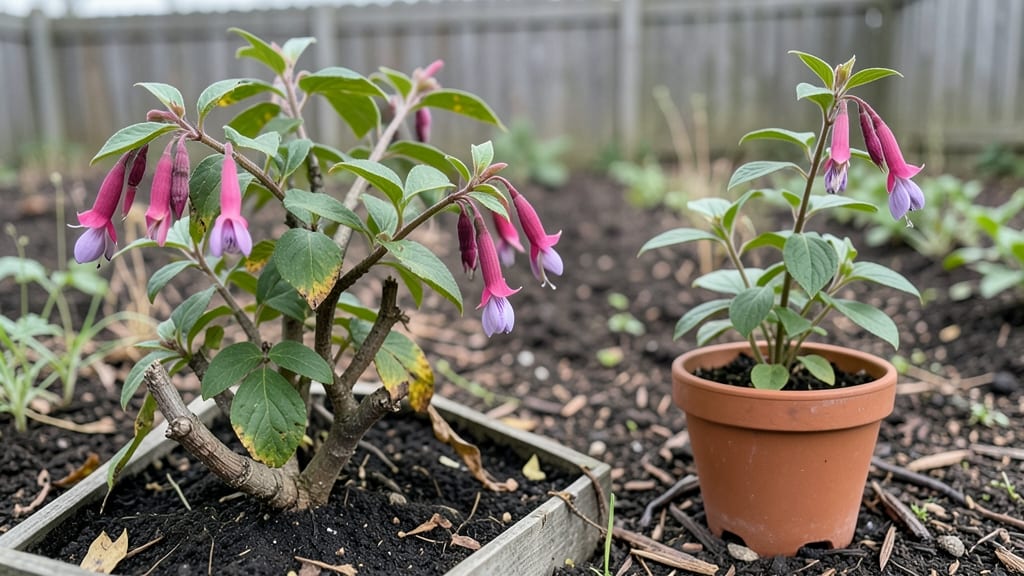
Deciding whether fuchsias are annual or perennial depends on your climate—most gardeners treat them as annuals, but they thrive as perennials in USDA zones 10-12 where frost never occurs. Their long-term survival hinges on winter protection and zone-specific care.
Fuchsias naturally love warmth, which is why they struggle in colder climates. 🌿 In zones 10-12, they can live multiple years because the consistent mild weather prevents frost damage. However, in colder regions, even a light freeze can kill the stems, forcing gardeners to replant each spring.
The key difference lies in how you handle winter—whether you let nature take its course or intervene with protective measures.
For those in marginal zones, overwintering techniques like digging up tubers or moving plants indoors can turn annuals into long-lived perennials. This extra effort pays off with vibrant blooms year after year, proving that with the right care, fuchsias can defy their typical annual reputation.
💡 In This Article
- Fuchsia Lifespan Determined by Climate Zones
- Overwintering Fuchsias to Extend Their Life
Fuchsia lifespan determined by climate zones
The survival of fuchsias hinges on temperature thresholds—specifically, their inability to tolerate frost. These tropical natives thrive in USDA zones 10-12, where winter temperatures stay above 30°F consistently. In these frost-free regions, fuchsias naturally grow as perennials, producing new growth each spring from their established root systems.
The key mechanism here is their woody tuberous roots, which store energy and survive year-round in warm climates.
In colder zones (below zone 9), frost becomes the silent killer. Even light freezes (28-32°F) can blacken fuchsia foliage and stems, but the real damage occurs when temperatures drop below 20°F.
At this point, the stems die back completely, though the roots may still survive if protected by mulch or snow cover. This explains why gardeners in zones 7-9 often treat fuchsias as annuals—the stems simply can't withstand winter exposure.
The science behind this involves cellular damage from ice crystal formation in plant tissues. Fuchsia stems contain high moisture content, making them particularly vulnerable to frost cracks. In zone 10-12, where winter highs rarely dip below 50°F, this damage never occurs.
The plants continue photosynthesizing through mild winters, gradually building biomass for next season's blooms.
Here's what happens in transitional zones like zone 9b (where winter lows might reach 25°F): the stems die, but the roots often survive if protected by 6+ inches of mulch. This creates an opportunity for gardeners to overwinter fuchsias as perennials through strategic protection.
The roots can regenerate new stems in spring, effectively turning a "dead" plant into a reborn perennial with proper care.
Consider this comparison: In zone 11, fuchsias may live 5+ years without intervention, while in zone 6, they'll typically survive only one growing season unless moved indoors. The difference comes down to 30°F—that's the critical threshold where fuchsias shift from perennial to annual behavior. 🌱
What most gardeners don't realize is that even in colder climates, the root crown (the swollen base where stems emerge) contains dormant buds capable of regeneration. With proper overwintering techniques, you can coax these buds into producing new growth, effectively extending your fuchsia's lifespan beyond a single season.
This biological resilience explains why fuchsias remain so popular—with the right climate management, they can defy their typical annual classification.