
Flowers
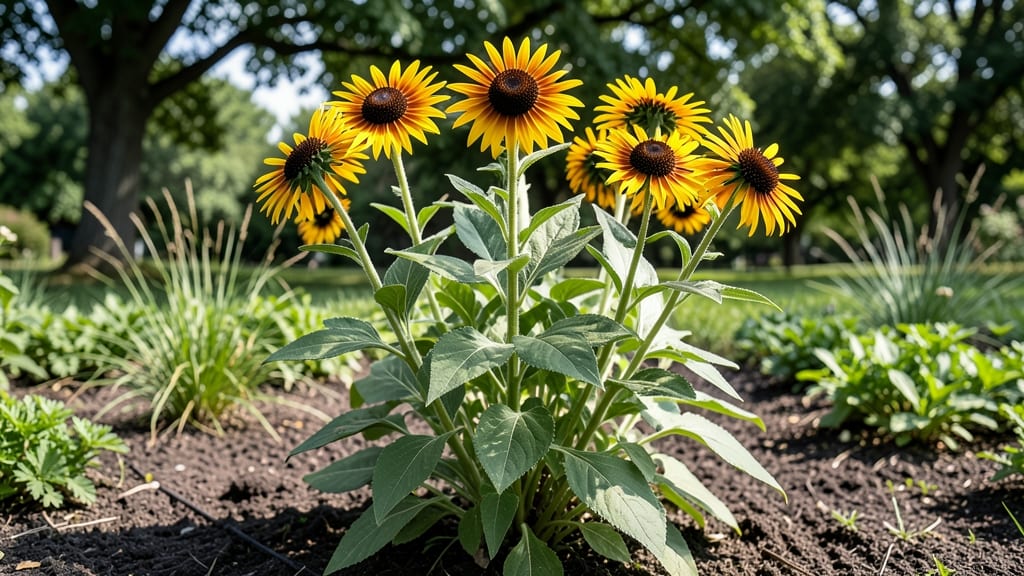
Determining whether rudbeckia grows as an annual or perennial depends on your climate zone: it thrives as a perennial in USDA Zones 3-11 but often dies back to the roots in colder regions, requiring replanting each year. Varieties like Rudbeckia hirta may self-seed prolifically, while others need careful winter protection.
Your local climate plays the biggest role in whether rudbeckia returns year after year. 🌱 In milder zones (like Zones 8-11), these plants develop deep root systems that survive winter dormancy, while colder zones (Zones 3-6) often see them freeze back to the ground.
The key difference lies in their root hardiness—some varieties like black-eyed Susan (Rudbeckia hirta) bounce back stronger from self-seeded offspring, while others need protective mulch layers in winter.
I’ve found that adding a thick layer of straw mulch in late fall can extend perennial growth by 2-3 years even in marginal zones.
Another factor is how you care for the plant after flowering. Deadheading spent blooms encourages new growth and prevents self-seeding in some varieties, while leaving seed heads can provide natural regeneration. For gardeners in colder climates, dividing established clumps every 2-3 years helps maintain vigor and prevents overcrowding.
💡 In This Article
- How Climate Affects Rudbeckia’s Perennial vs Annual Growth
- Tips to Encourage Perennial Rudbeckia in Your Garden
How climate affects rudbeckia’s perennial vs annual growth
The life cycle of rudbeckia hinges on its root system's ability to endure winter temperatures. In USDA Zones 8-11, where winters rarely drop below 20°F, rudbeckia develops robust, deep taproots that store energy for regrowth.
These roots can withstand brief cold snaps because they contain natural antifreeze compounds (like proline and sugars) that prevent cellular damage. 🌡️ In contrast, Zones 3-6 experience harsher winters with prolonged sub-zero temperatures, forcing the aboveground foliage to die back completely while the roots may survive only in protected microclimates.
Variety selection makes a dramatic difference in survival rates. Rudbeckia fulgida (orange coneflower) thrives in Zones 3-9, thanks to its 3-4 inch deep roots that insulate against frost. Meanwhile, Rudbeckia laciniata (cut-leaf coneflower) struggles in Zones below 5 because its thinner roots lack the same cold tolerance.
The key distinction lies in the plant's ability to regenerate from its crown—thicker, more fibrous crowns (like those in R. fulgida) bounce back faster than delicate ones.
What most gardeners overlook is how soil temperature affects root survival. Even in cold zones, roots buried 6+ inches deep stay 10-15°F warmer than surface soil. This is why mulching with 4-6 inches of straw or wood chips can mean the difference between annual and perennial growth.
The mulch acts as an insulating blanket, maintaining root zone temperatures above freezing during brief cold snaps.
Self-seeding behavior complicates the classification. Varieties like Rudbeckia hirta (black-eyed Susan) produce thousands of seeds that germinate readily in spring, creating the illusion of perennial growth when it's actually annual regeneration. These seeds lie dormant in the soil for years, waiting for ideal conditions—often 60-70°F soil temperatures—before sprouting.
This explains why some gardeners assume their rudbeckia is perennial when it's actually relying on seed propagation.
Light exposure also plays a role in winter survival. Plants grown in full sun develop stronger stems and deeper roots than those in shade, giving them better frost resistance. The chlorophyll in sun-exposed leaves produces more carbohydrates during summer, which the roots store as starches for winter energy reserves.
This is why rudbeckia thrives in open meadows but often struggles in dense woodland understories.
Consider this comparison: In Zone 5, R. fulgida with proper mulching may return for 5+ years, while R. hirta might only persist through seed germination. The difference comes down to root hardiness versus reproductive strategy—one invests in longevity, while the other bets on quantity through seeds. 🌱