
Size
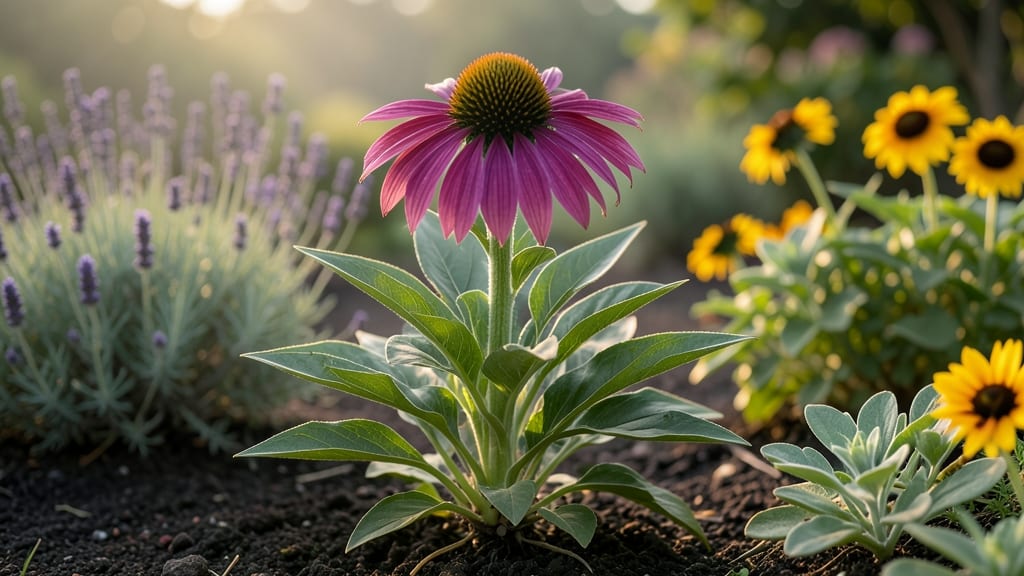
Perennials do grow back every year thanks to their specialized root systems that store nutrients and energy through winter dormancy, allowing them to push new growth when conditions improve. This sets them apart from annuals, which complete their life cycle in a single season.
The reason perennials thrive year after year lies in their underground structures like rhizomes (horizontal stems) and tubers (thickened roots), which act as natural storage units. 🌱 These systems remain active beneath the soil even when above-ground foliage dies back, preserving essential nutrients and carbohydrates.
Unlike annuals that rely on seeds for regeneration, perennials simply "wake up" when temperatures rise, making them ideal for low-maintenance gardens. Proper soil health and seasonal care further enhance their resilience, ensuring consistent returns for decades in many cases.
This biological advantage explains why gardeners often choose perennials for foundation planting—they establish strong root networks over time, reducing the need for replanting. The trade-off? Some species require careful winter protection in colder climates, but their long-term reliability makes them worth the extra effort.
💡 In This Article
- How Perennial Root Systems Enable Yearly Regrowth
- Caring for Perennials to Ensure Reliable Yearly Returns
How perennial root systems enable yearly regrowth
The secret behind perennials' ability to return year after year lies in their specialized underground structures. Unlike annuals that die completely after seeding, perennials develop rhizomes (horizontal stems), tubers (thickened roots), or crowns (compressed stems) that act as living energy banks.
These structures store starches and sugars—up to 20-30% of their dry weight—produced through photosynthesis during the growing season. 🌱 For example, a daylily rhizome can store enough energy to fuel 10-15 feet of new growth the following spring.
During winter dormancy, these root systems undergo a remarkable biological process called antifreeze protein production. Cells in the roots synthesize special proteins that lower the freezing point of water within their tissues by 2-5°C, preventing ice crystal formation that would rupture cell walls.
This adaptation allows perennials like peony roots to survive -15°F to -20°F temperatures while remaining metabolically active at reduced levels. The crown, where roots meet stems, acts as a critical junction—it contains meristematic cells that remain undifferentiated and capable of regenerating both roots and shoots when conditions improve.
What sets perennials apart from annuals is their ability to reallocate resources rather than relying on seed germination. For instance, hostas use their fibrous root systems to redistribute nutrients from older leaves to developing buds during late summer, ensuring the plant enters dormancy with a full "energy reserve."
This contrasts sharply with annuals like marigolds, which must produce seeds and die entirely after their first growing season. The trade-off? Perennials often take 2-3 years to reach full maturity compared to annuals' rapid 6-8 week life cycle.
Seasonal regrowth begins when root temperatures reach 40-50°F, triggering hormonal signals that stimulate bud break. The stored carbohydrates convert to simple sugars through a process called hydrolysis, which fuels the rapid cell division needed for new shoot growth.
This explains why perennials often emerge 2-4 weeks before annuals planted from seed—no germination period is needed. The timing varies by species: bleeding hearts typically break dormancy in early spring when soil temperatures hit 45°F, while black-eyed Susans wait until 50°F for optimal regrowth.
Consider the asparagus crown as a prime example of this system in action. Each crown contains 10-15 buds that can develop into new shoots.
When you harvest asparagus spears, you're actually removing 10-20% of the plant's stored energy, which is why proper harvest management (cutting no more than 1/3 of spears in the first year) is crucial for long-term productivity.
This root-based regeneration explains why established asparagus beds can remain productive for 15-20 years with minimal replanting.
The biological advantage becomes even clearer when comparing perennials to biennials like carrots or onions. Biennials store energy in their roots or bulbs only for one winter, then produce flowers and seeds in their second year before dying.
Perennials, however, maintain this storage capacity indefinitely, provided they receive adequate care. This is why gardeners often refer to perennials as the "workhorses" of the garden—they build year-after-year resilience through their root systems while annuals require constant replanting. 🌿