
Blooming
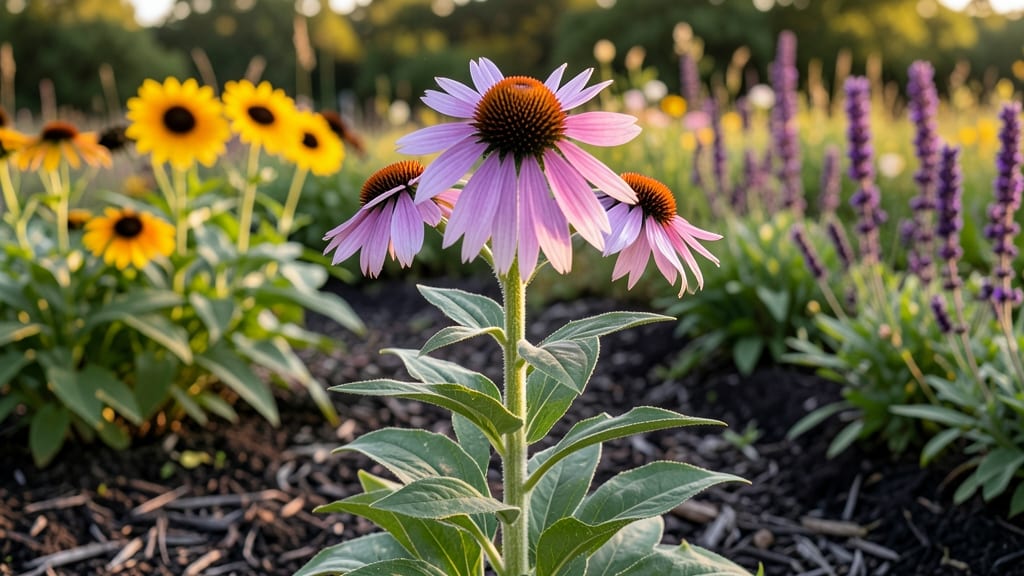
Late summer blooming perennials bring vibrant color to your garden from August through September, featuring resilient plants like coneflowers, black-eyed Susans, and sedum that thrive in full sun to partial shade with minimal maintenance after establishment.
These hardy plants are nature's way of keeping gardens lively when many annuals fade. 🌸 Many late bloomers, like rudbeckia and heliopsis, store energy underground during summer heat, then burst into color as temperatures cool.
Their deep roots also make them drought-tolerant once established, reducing your watering workload. Plus, they're pollinator magnets—bees and butterflies adore their nectar-rich blooms during this critical late-season feeding period.
For best results, plant them in well-draining soil with 3-6 inches of mulch to retain moisture while preventing weeds. Most only need watering when rainfall drops below 1 inch per week, and regular deadheading (removing spent blooms) encourages continuous flowering.
The key is choosing varieties that match your climate zone—some, like asters, handle frost better than others.
💡 In This Article
- Why Late-Season Perennials Keep Gardens Vibrant
- Planting and Care Tips for Long-Lasting Late Summer Blooms
Why late-season perennials keep gardens vibrant
Late-season bloomers like coneflowers (Echinacea) and black-eyed Susans (Rudbeckia) use a clever biological strategy called thermogenesis—they store energy in their deep root systems during the scorching summer months, then redirect that stored glucose to flower production as temperatures dip.
This delayed flowering cycle ensures they bloom when many annuals have already faded, creating a second wave of color. Their ability to photosynthesize efficiently even in 90°F+ temperatures comes from specialized leaf structures that reduce water loss while maintaining productivity.
The secret to their heat tolerance lies in their deep taproots, which can extend 3-5 feet underground.
These roots access moisture and nutrients from deeper soil layers where annuals can't reach, giving them a competitive edge during drought. Sedum (stonecrop), for example, thrives with as little as 1 inch of water per month once established, thanks to its succulent leaves that store water like tiny reservoirs.
This drought resistance makes them ideal for low-maintenance gardens where water conservation is key.
What's even more fascinating is how these perennials attract pollinators during late summer when food sources are scarce. Bee balm (Monarda) produces nectar-rich flowers that bees can detect using ultraviolet patterns invisible to human eyes, while Russian sage (Perovskia) emits a subtle fragrance that lures butterflies from great distances.
Their extended bloom periods—often 6-8 weeks—provide critical sustenance for migrating monarch butterflies and honeybees preparing for winter. This ecological role makes them far more valuable than their ornamental beauty alone.
Comparing growth habits reveals why some perennials outperform others in late summer. Helenium (sneezeweed) grows on sturdy 3-4 foot stems that don't flop like some annuals, while asters develop dense clusters of tiny flowers that create a "sea of stars" effect.
Their ability to handle partial shade (3-6 hours of sun daily) makes them versatile for gardens with mature trees. The trade-off? Some varieties like daylilies (Hemerocallis) may require more frequent deadheading to prevent seed formation, which diverts energy from new blooms.
For gardeners in USDA zones 5-9, selecting perennials with cold hardiness ratings ensures they'll rebloom next season. Coneflowers survive down to -30°F when mulched properly, while sedum thrives in -20°F conditions.
Their ability to regenerate from root crowns means even if the tops die back in winter, they'll return stronger in spring. This resilience explains why they're the backbone of perennial borders worldwide.
The real magic happens when you combine these perennials in color-themed groupings. Purple Russian sage contrasts beautifully with golden black-eyed Susans, while pink asters bridge the gap between summer and fall.
Their layered blooming ensures your garden never looks bare—even in September's cooler mornings when humidity rises and annuals often struggle. 🌿