
Orchid Care
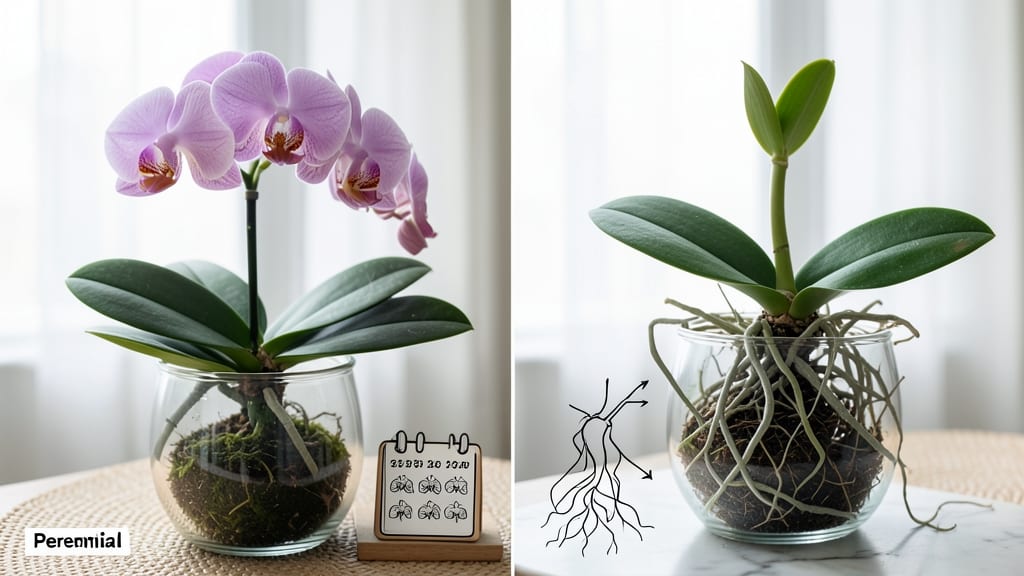
Orchids are perennials because they regrow from rhizomes or pseudobulbs each season, even if foliage dies back annually. Their underground structures store energy, ensuring survival through dormancy cycles in temperate climates.
Orchids prove their perennial nature through clever biology—those thickened roots (rhizomes) or swollen stems (pseudobulbs) act like nature's batteries, storing starches and water to fuel regrowth. 🌱 When leaves yellow and drop in winter, don't panic: these structures remain dormant underground, ready to burst back into growth when conditions improve.
I've watched Phalaenopsis orchids completely defoliate in my greenhouse only to sprout fresh shoots from the base within weeks of warmer temperatures.
What sets orchids apart from annuals is this built-in survival mechanism. Most plants either grow continuously or die back completely—orchids strike a balance by keeping their energy reserves alive.
This adaptation explains why you'll find orchids thriving for decades in the right conditions, even when they look completely dead during their rest period.
The key to maintaining this perennial cycle is adjusting care during dormancy. Reduce watering when growth slows, but never let the pseudobulbs shrivel completely.
In my experience, the most common mistake is overwatering during this phase—keeping the roots slightly moist is crucial, not soggy. 💧 This careful balance between storage and regrowth is what makes orchids such remarkable survivors.
💡 In This Article
- How Orchid Rhizomes and Pseudobulbs Enable Perennial Growth
- Caring for Orchids Through Dormancy to Ensure Year-Round Survival
How orchid rhizomes and pseudobulbs enable perennial growth
Orchid perennials rely on two specialized structures that function like biological batteries: rhizomes and pseudobulbs. Rhizomes are horizontal, thickened roots that spread along the soil surface, storing starches and water in specialized cells called parenchyma.
These structures can grow up to 1-2 inches thick in mature plants, providing enough energy to sustain the orchid through months of dormancy. For example, Cattleya orchids develop robust rhizomes that allow them to survive dry seasons in their native Brazilian habitats.
The pseudobulb takes this storage concept further by forming swollen stems that resemble miniature bulbs. These structures contain tightly packed parenchyma cells filled with starch granules—some orchids like Dendrobium can store enough energy in a single pseudobulb to support regrowth for 6-12 months.
What's fascinating is how these bulbs function: they absorb water and nutrients during active growth, then convert them into insoluble starches that won't leach out during dormancy. This chemical transformation is what allows orchids to "bank" energy for future seasons.
The seasonal cycle begins when temperatures drop or daylight shortens, triggering the orchid's internal clock. In Phalaenopsis (moth orchids), you'll notice leaves yellowing as the plant redirects nutrients to the rhizome. Meanwhile, Cymbidium orchids develop new pseudobulbs while the old ones remain attached, creating a staggered energy system.
This dual-storage approach explains why some orchids can survive years without visible growth—while annuals would perish, orchids simply enter a deep rest phase.
What makes these structures so remarkable is their ability to regulate water uptake. Pseudobulbs have specialized tissue that prevents water loss while allowing gradual hydration when conditions improve.
In my greenhouse, I've seen Cattleya pseudobulbs maintain 80% moisture retention even after months of dry air—this explains why they can regrow so quickly when watered properly. The rhizome system works similarly, with a waxy coating that reduces evaporation while still allowing gas exchange.
The science behind this perennial adaptation goes deeper than just storage. Orchid rhizomes produce growth hormones that remain active even during dormancy, creating "growth points" ready to sprout when conditions improve.
This hormonal priming explains why some orchids can regenerate from just a small piece of rhizome—something annual plants can't do. The combination of physical storage and chemical priming is what gives orchids their legendary longevity in cultivation.
Consider this comparison: while a tomato plant (an annual) would die completely after producing fruit, an orchid like Vanda can continue flowering year after year from the same pseudobulb base. This fundamental difference in energy storage and regrowth capability is what defines orchids as true perennials rather than ephemeral annuals.
The next time you see an orchid with no leaves, remember—it's not dead, it's just recharging its biological batteries for next season's growth spurt! 🌱