
Flowers
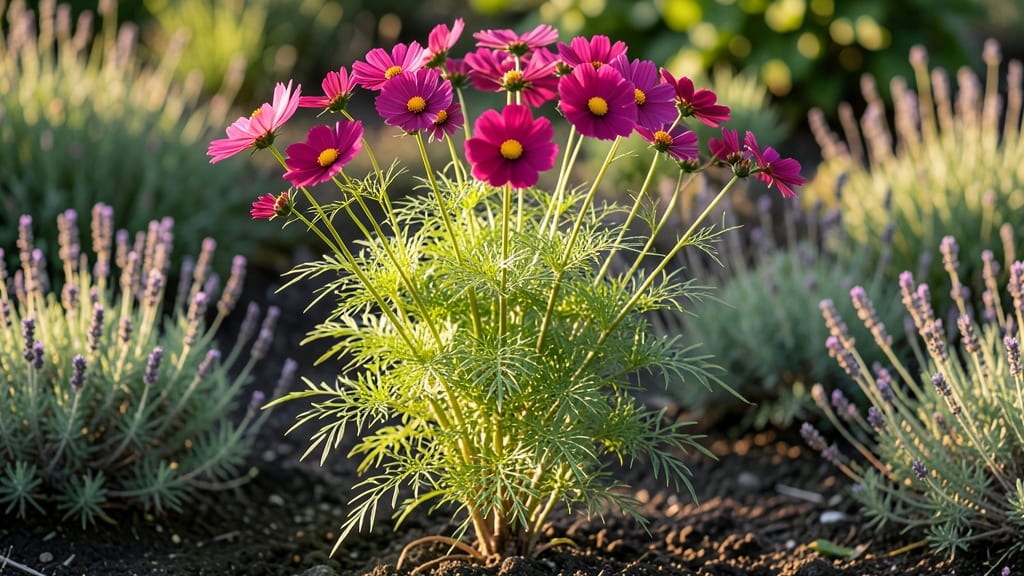
Cosmos flowers act as perennials in warm climates like USDA Zones 9-11, where their sturdy root systems and underground rhizomes allow them to regrow each year. In cooler areas, they die back seasonally but often regenerate through self-seeding, creating multi-year displays. Well-drained soil and full sun are key to their resilience.
This behavior comes down to their unique root structure—cosmos develop both fibrous roots for moisture absorption and thick rhizomes that store energy. 🌱 In frost-free zones, these roots remain active year-round, while in colder climates, the plants enter dormancy but leave behind seeds that sprout prolifically.
The secret to encouraging perennial growth lies in mimicking their natural conditions: loose, fertile soil and at least 6-8 hours of sunlight daily. Even in marginal zones, proper winter mulching can help protect those vital rhizomes.
What's fascinating is how their self-seeding habit creates natural renewal cycles. While not true perennials in colder regions, they often outperform many annuals by returning year after year with minimal effort.
For gardeners in transitional zones, this dual behavior means you get the best of both worlds—perennial reliability combined with the easy propagation of annuals.
💡 In This Article
- How Cosmos Root Systems Influence Perennial Growth
- Climate Zones Where Cosmos Flowers Thrive Year-Round
How cosmos root systems influence perennial growth
The secret behind cosmos flowers' ability to return year after year lies in their dual root system. These plants develop both fibrous roots that spread horizontally just below the soil surface and thick, woody rhizomes that store essential nutrients.
The fibrous roots act like a sponge, absorbing water efficiently even in dry conditions, while the rhizomes serve as energy reserves—think of them as nature's version of a seed bank. This combination allows cosmos to survive drought and regenerate quickly after being cut back.
In frost-free climates like USDA Zones 9-11, these rhizomes remain active throughout winter, continuing to supply the plant with energy for new growth as soon as temperatures rise. The key temperature threshold is around 50°F—when soil temperatures consistently stay above this mark, the rhizomes begin sending out new shoots.
This is why cosmos often bloom continuously in warm winter regions, unlike true annuals that complete their life cycle in one season. 🌱
The difference between true perennial behavior and cosmos' self-seeding strategy becomes clear when you examine their growth patterns. True perennials like peonies or hostas regrow from the same root system year after year, while cosmos plants in colder climates die back completely but leave behind thousands of tiny seeds.
These seeds remain dormant in the soil until conditions are favorable, creating the illusion of perennial growth through natural regeneration rather than persistent root systems.
What makes cosmos particularly resilient is their ability to adapt their growth strategy based on climate. In marginal zones (like USDA Zone 8), gardeners can encourage more perennial-like behavior by protecting the base of plants with 3-4 inches of mulch during winter.
This insulation helps preserve the rhizomes, which can then support earlier spring regrowth. The trade-off is that without this protection, the plants will still die back but often return even more vigorously through self-seeding the following year.
Here's what happens at the cellular level: When temperatures drop below 32°F, the plant's meristematic cells (growth centers) in the rhizomes enter dormancy, halting active growth. However, these cells remain viable, ready to resume activity when conditions improve.
This dormancy mechanism is similar to how many bulbs survive winter, but cosmos take it a step further by combining this with their prolific seed production strategy. 💫
The self-seeding behavior actually works in the garden's favor. A single cosmos plant can produce 500-1,000 seeds, which scatter widely and germinate when soil temperatures reach 60-65°F.
This creates dense stands of flowers that appear perennial to the casual observer, though technically each plant completes its life cycle annually. The result is often more reliable than true perennials in colder climates, where winter dieback can occur.
For gardeners looking to maximize perennial-like performance, the key is to create optimal growing conditions that support both root systems. Well-drained soil with 2-3 inches of organic matter mixed into the top 12 inches provides the perfect environment for rhizome development.
Regular watering during establishment (but not waterlogging) encourages strong fibrous root growth, while full sun exposure (6-8 hours daily) ensures the plant has enough energy to maintain both its root systems and flowering production. ✨