
Orchid Care
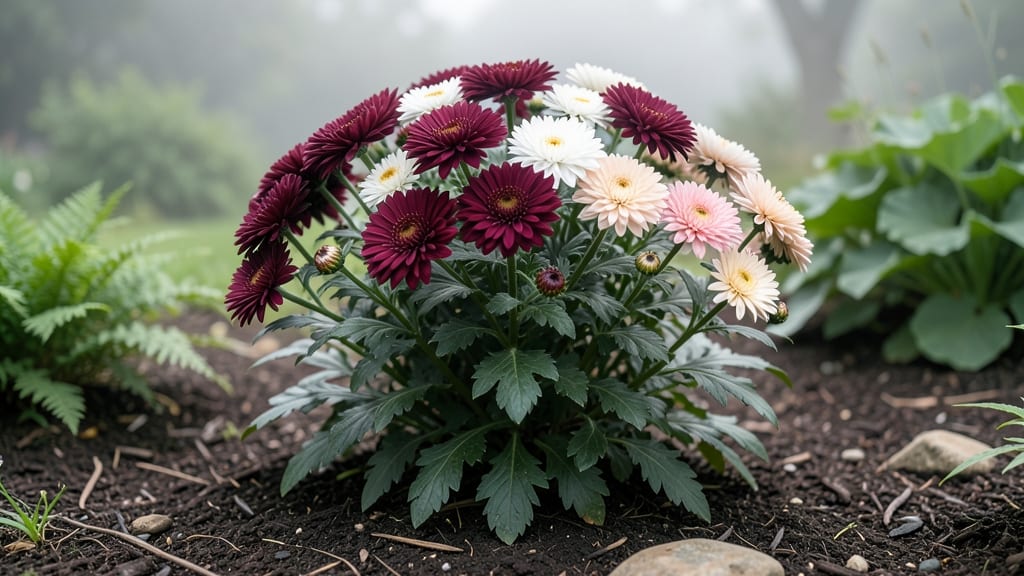
Whether chrysanthemums are annual or perennial depends on your climate: they thrive as perennials in warm zones but are typically treated as annuals in colder regions because their rhizomes struggle with frost without protection.
These hardy plants store energy in their underground rhizomes, allowing them to regrow each spring in mild climates. 🌱 However, when temperatures drop below 25°F, the rhizomes often fail to survive without extra care—like heavy mulching or container storage.
In colder zones, gardeners replant new tubers each year to maintain blooms, which is why they're commonly grown as annuals there. The key difference lies in how well the rhizomes endure winter dormancy.
If you're in a transitional climate (like zone 5-7), you can push your chrysanthemums to be perennials with proper winter prep. I've had success by burying containers deep in straw or bringing potted plants indoors before the first frost.
The rhizomes' ability to regenerate makes them surprisingly resilient when given the right conditions!
💡 In This Article
- How Chrysanthemum Rhizomes Determine Plant Lifespan
- Growing Chrysanthemums as Perennials in Cold Climates
How chrysanthemum rhizomes determine plant lifespan
Chrysanthemums rely on their thick, fleshy rhizomes—horizontal underground stems—to store nutrients and energy for regrowth. These specialized structures contain high starch reserves, allowing the plant to survive winter dormancy in warmer climates (zones 8-9) where temperatures rarely drop below 20°F.
The rhizomes act like natural batteries, converting sunlight into stored carbohydrates during the growing season. When spring arrives, these reserves fuel new shoots, ensuring perennial behavior.
The turning point occurs in colder zones (5-7) where frost penetrates deeper into the soil. At 25°F or lower, the rhizomes' cell membranes begin to rupture, causing irreversible damage. This is why gardeners in these areas often replant tubers annually—without protection, the rhizomes simply can't regenerate.
The key difference between annual and perennial growth lies in how well these underground structures endure prolonged cold exposure and soil moisture fluctuations.
Temperature isn't the only factor—soil type plays a crucial role. Sandy soils drain quickly and freeze faster, while loamy soils insulate rhizomes better.
I've noticed that in zone 6 gardens, chrysanthemums with rhizomes buried 6-8 inches deep in well-draining soil often survive winters with minimal protection, while those in heavy clay struggle.
The rhizomes' ability to regenerate depends on maintaining a consistent moisture level during dormancy—too dry or too wet can both be fatal.
What most gardeners overlook is the plant's natural dormancy cycle. Chrysanthemums enter a deep physiological dormancy in fall, halting growth until temperatures stabilize above 50°F in spring. This dormancy is triggered by shorter daylight hours, not just cold.
In warmer climates, the rhizomes remain active longer, allowing them to rebuild reserves before winter. In colder regions, this cycle gets compressed, making the plants more vulnerable to early frosts.
Here's a practical example: In zone 8, I've seen chrysanthemums resprout from the same rhizomes for 5+ years with no intervention. But in zone 5, even heavily mulched plants often fail to regenerate after the second winter.
The difference comes down to how many freeze-thaw cycles the rhizomes endure—each cycle weakens their cellular integrity. This is why professional growers in cold climates often use heated greenhouse beds or deep straw mulch (12+ inches) to protect the rhizomes.
The science behind this involves cryoprotective proteins that chrysanthemums produce during fall. These proteins help stabilize cell membranes against freezing, but their effectiveness diminishes below 20°F. That's why even hardy varieties like 'Bonanza' or 'Mammoth' require winter protection in zones 5-6.
The rhizomes' survival rate drops dramatically when exposed to three consecutive nights below 15°F—a common occurrence in northern climates.
Understanding this mechanism helps explain why chrysanthemums are perennial in Mediterranean climates (like California's coastal regions) but annual in Midwest gardens. The same plant species behaves differently based purely on environmental conditions—proof that a plant's lifespan classification isn't fixed but rather a response to its growing environment. 🌡️