
Flowers
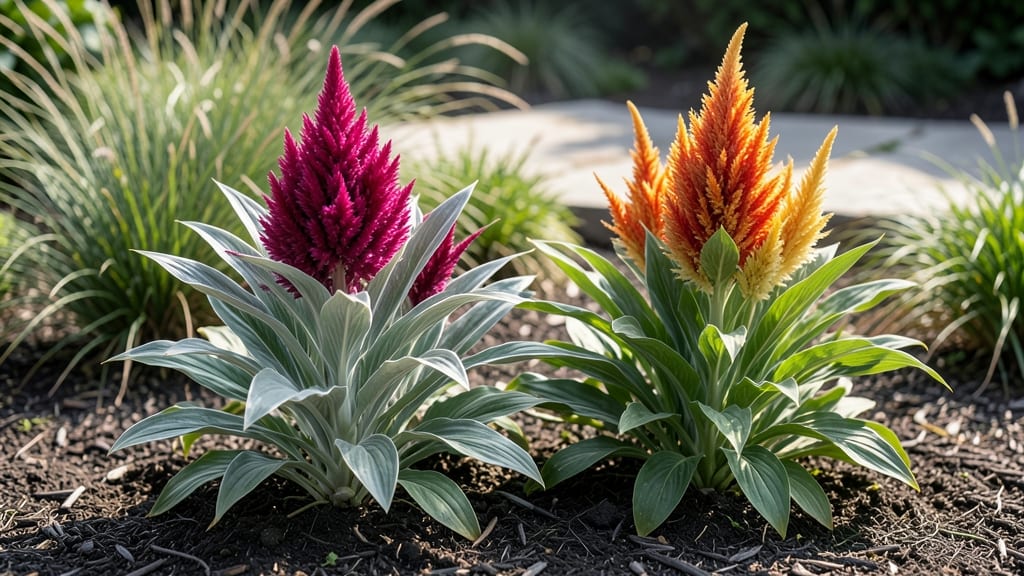
Whether celosia flowers are annual or perennial depends on your climate—most varieties act as annuals, completing their life cycle after seeding, while tropical types may return briefly in warm zones. The key factor is their fibrous root system, which can't store enough energy to survive winter dormancy like true perennials.
Celosia's life cycle hinges on its root structure and energy priorities.
Most varieties focus their energy on seed production rather than storing nutrients in roots, which is why they die back after flowering. 🌱 In tropical climates, some celosia types might persist for a second season because they don't experience freezing temperatures that trigger dormancy.
The fibrous roots simply can't sustain the plant through cold winters like true perennials with thick rhizomes or tubers could.
This botanical quirk means gardeners in cooler regions must treat celosia as annuals, while those in mild climates might get lucky with a few returning plants. The distinction matters when planning garden layouts—annuals need annual replanting, while perennials offer more consistent foliage.
For tropical varieties, overwintering in containers can sometimes extend their life cycle, though they'll rarely behave as true perennials.
💡 In This Article
- Why Celosia Flowers Die After One Season
- Extending Celosia’s Life Cycle in Gardens
Why celosia flowers die after one season
The primary reason celosia behaves as an annual stems from its fibrous root system, which lacks the energy reserves needed for winter survival.
Unlike true perennials—such as peonies or hostas—that store carbohydrates in thick rhizomes or tubers, celosia allocates most of its energy to seed production during its flowering phase. This biological priority ensures the next generation survives, but leaves little stored in roots for regrowth.
Most celosia varieties prioritize reproductive success over vegetative persistence. When temperatures drop below 40°F, the plant’s metabolic processes slow dramatically.
The fibrous roots, which spread horizontally but don’t thicken, simply can’t sustain the plant through freezing conditions. 🌱 In contrast, perennial flowers like daylilies develop thickened root crowns that act as natural energy banks, allowing them to regrow each spring. Celosia’s roots lack this adaptive storage mechanism.
Climate plays a critical role in this life cycle. In USDA Hardiness Zones 8-11, tropical celosia varieties (like Celosia argentea) might persist through mild winters, behaving as short-lived perennials. However, even in these zones, they rarely survive more than 2-3 years without intervention.
The lack of true dormancy means any frost or prolonged cold will trigger die-back, as the plant hasn’t evolved to withstand seasonal stress.
Another key difference lies in water and nutrient uptake. Perennial flowers develop deep, robust root systems that tap into subsoil moisture, while celosia’s fibrous roots remain shallow.
This limits their ability to access stored nutrients during dormancy. 💫 For example, a 1-foot-tall celosia plant might have roots spreading only 12-18 inches wide but just 6-12 inches deep, making it highly vulnerable to temperature fluctuations and drought.
Botanists classify celosia as a monocarpic annual—a plant that flowers, seeds, and dies in one growing season. This strategy maximizes reproductive output in a single cycle, which is evolutionarily advantageous in unstable climates.
The trade-off? Gardeners must replant each year unless they’re in a frost-free region or take active steps to preserve seeds or roots.
To visualize the difference, imagine a perennial like lavender: its woody base stores sugars like a battery, ready to power regrowth. Celosia, by contrast, is more like a firework—bright, brief, and designed to burn out completely after its display. 🔥