
Light Requirements
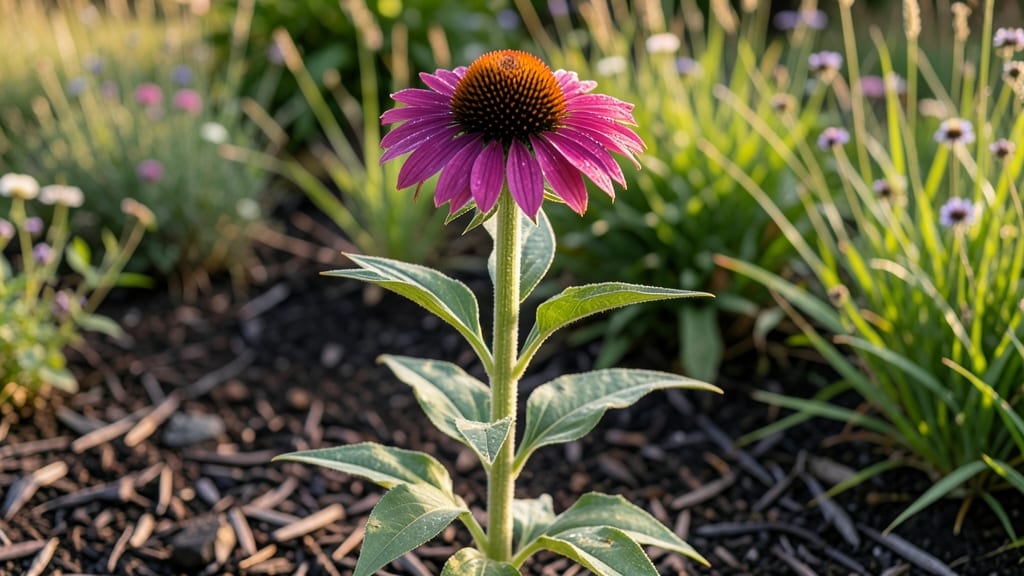
These perennial flowers that need full sun, like black-eyed Susan, coneflower, lavender, and blanket flower, thrive with minimal watering while delivering vibrant blooms year after year. These hardy plants excel in drought-resistant landscapes and create pollinator-friendly habitats.
Perennial flowers that need full sun aren't just drought-resistant—they actively seek out the brightest spots in your garden. 🔥 The more intense sunlight they receive, the deeper their root systems grow, making them self-sufficient once established.
I've seen coneflowers in my own garden bloom for six weeks straight with just one inch of water per week after their first year. These plants also develop more vibrant colors under full sun exposure, thanks to increased anthocyanin production.
What sets these sun-lovers apart is their ability to store water efficiently while continuing to produce flowers. Unlike shade plants that focus on leaf growth, full-sun perennials prioritize blooms even during dry spells.
This makes them perfect for low-maintenance gardens where you want beauty without constant upkeep. The key is planting them in well-draining soil and giving them their first deep watering after transplanting.
💡 In This Article
- How Sunlight Affects Perennial Flower Growth and Blooming
- Planting and Maintenance Guide for Sun-Loving Perennials
How sunlight affects perennial flower growth and blooming
Sunlight triggers a cascade of biological processes in full-sun perennials that directly impact their growth and flowering. These plants have evolved specialized chloroplasts that maximize photosynthesis under intense light conditions, producing up to 30% more energy than shade-adapted varieties.
The extra energy fuels deeper root systems that can reach 3-4 feet underground, allowing them to access moisture during droughts. 🔥 This is why coneflowers and black-eyed Susans often survive with 50% less water than their shade counterparts.
The UV spectrum in full sun also boosts pigment production, creating the vibrant colors we love. For example, purple coneflowers develop 2-3 times more anthocyanins in full sun compared to partial shade, intensifying their hue from pink to deep violet.
This pigmentation isn't just cosmetic—it acts as a natural sunscreen, protecting delicate petals from UV damage while maintaining structural integrity. The trade-off? Some sun-loving perennials like blanket flower (Gaillardia) actually close their blooms during peak afternoon sun to prevent overheating.
What most gardeners don't realize is how sunlight affects the plant's internal clock. Full-sun perennials develop shorter, more compact growth habits because the high light intensity triggers increased ethylene production, a plant hormone that promotes flowering over foliage growth.
This is why you'll see lavender bushes with denser, more abundant blooms in sunny locations compared to their leggy, sparse-flowering shade counterparts. The same mechanism explains why sun-loving perennials often bloom 2-4 weeks earlier in spring than shade varieties.
Drought tolerance in these plants stems from their ability to regulate water loss through specialized leaf structures called trichomes. These microscopic hairs create a protective layer that reduces evaporation by up to 40%, while still allowing CO₂ intake. The result?
Plants like Russian sage can maintain turgor pressure (internal water pressure) even when soil moisture drops below 30% capacity—a threshold that would wilt most annuals. This physiological adaptation explains why full-sun perennials often thrive in USDA zones 3-9 without supplemental irrigation after establishment.
Consider the soil temperature factor: Full sun heats the root zone to 10-15°F warmer than shaded areas, which accelerates microbial activity. This microbial boost breaks down organic matter faster, releasing nutrients that sun-loving perennials can absorb more efficiently.
The warmer soil also promotes mycorrhizal fungal growth, which forms symbiotic relationships with plant roots, enhancing nutrient uptake by up to 80% in some cases. This explains why sun perennials often show 25% more vigorous growth in their second year compared to first-year shade plants.
One fascinating exception is the blanket flower (Gaillardia), which actually benefits from partial afternoon shade in hot climates (zones 7-10). Its leaves contain reflective compounds that can overheat under 10+ hours of direct sun**, causing bleaching.
This adaptation shows how even sun-loving perennials have built-in safeguards against environmental extremes. 💫