
Flowers
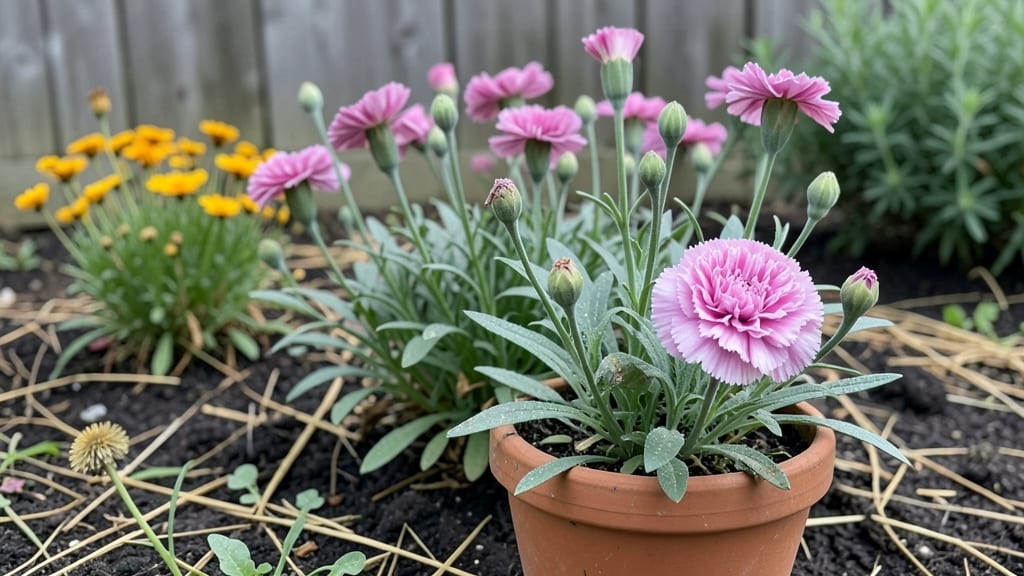
Deciding whether carnation plants are annual or perennial depends on your climate—most act as annuals but can become perennials in zones 8-11 with proper winter care. Hardy varieties may regrow from roots even after cold dieback.
Carnations thrive as annuals in most gardens because they struggle to survive freezing temperatures, which kill their tops but leave roots intact. 🌱 In warmer regions like Southern California or Florida, they naturally return year after year.
The key difference lies in varieties: Dianthus barbatus (sweet William) often handles cold better than Dianthus caryophyllus (classic carnations), though neither is truly cold-hardy without protection. For gardeners in cooler zones, overwintering with mulch or greenhouse care can trick these plants into behaving like perennials.
What sets carnations apart is their adaptability—while they won’t survive harsh winters outdoors in most of the U.S., their roots can persist for years if protected. This makes them semi-perennial in practice, especially when grown in containers that can be moved indoors during cold snaps.
The trade-off? Their blooms may be less vigorous after overwintering, but the roots provide a head start each spring.
💡 In This Article
- How Climate Affects Carnation Plant Lifespan
- Tips for Extending Carnation Growth Beyond One Season
How climate affects carnation plant lifespan
The lifespan of carnation plants hinges on temperature thresholds and frost exposure. These plants originate from Mediterranean climates where winters rarely drop below 40°F, making them highly sensitive to cold.
When nighttime temperatures fall to 28°F or lower, the above-ground growth of most carnations freezes solid, but the roots often survive if protected. This is why they behave as annuals in regions like the Midwest or Northeast—gardeners replant each spring without realizing the roots might still be alive underground.
In USDA zones 8-11, where winters rarely dip below 10°F, carnations naturally act as perennials. The mild, frost-free winters allow their root systems to remain active year-round, producing new growth in early spring.
For example, in Southern California's zone 10, established carnation plants can continue blooming sporadically through winter if given consistent moisture. The key difference between annual and perennial behavior comes down to whether the plant's energy is diverted to winter survival (perennial) or focused entirely on spring growth (annual).
Variety selection plays a critical role in cold tolerance. Dianthus barbatus (sweet William) generally handles cooler temperatures better than Dianthus caryophyllus (true carnations), with some sweet William varieties tolerating brief exposures to 20°F without permanent damage. However, even these hardier types will suffer leaf burn at 15°F.
The classic Dianthus caryophyllus varieties, prized for their showy blooms, typically die back completely when temperatures drop below 32°F, explaining why they're rarely grown as perennials outside warm climates.
Here's what happens at the cellular level during cold exposure: Carnations lack the antifreeze proteins found in true perennials like peonies. Instead, their cells begin to dehydrate as ice crystals form in the soil, disrupting water uptake.
This is why mulching with 4-6 inches of straw or leaves becomes critical—it insulates the roots, maintaining soil temperatures above 30°F even when air temperatures plunge. Without this protection, the root systems weaken, reducing the plant's ability to regenerate in spring.
The science of carnation hardiness also involves their growth habit. Unlike woody perennials that store energy in thick stems, carnations are herbaceous—all their energy goes into leaf and flower production during the growing season. When winter arrives, they lack the structural reserves to sustain themselves through freezing conditions.
This is why even in zone 7, where some gardeners successfully overwinter carnations, the plants often emerge smaller and less vigorous than their annual counterparts.
What most gardeners don't realize is that carnation roots can remain viable for 2-3 years underground even after the tops die back. I've seen this firsthand in zone 8 gardens where neglected carnations resprouted the following spring from roots that had lain dormant through winter.
The secret lies in maintaining consistent soil moisture—dry roots are more susceptible to cold damage than those kept evenly moist throughout winter.
For those in marginal zones (7-8), the difference between annual and perennial behavior often comes down to a 3-5°F temperature variation. A single hard freeze (15°F) can turn a potential perennial into an annual, while mild winters (25°F) may allow the plant to persist.
This explains why coastal areas often have more success with perennial carnations—the maritime influence moderates temperature extremes. 🌿