
Orchid Care
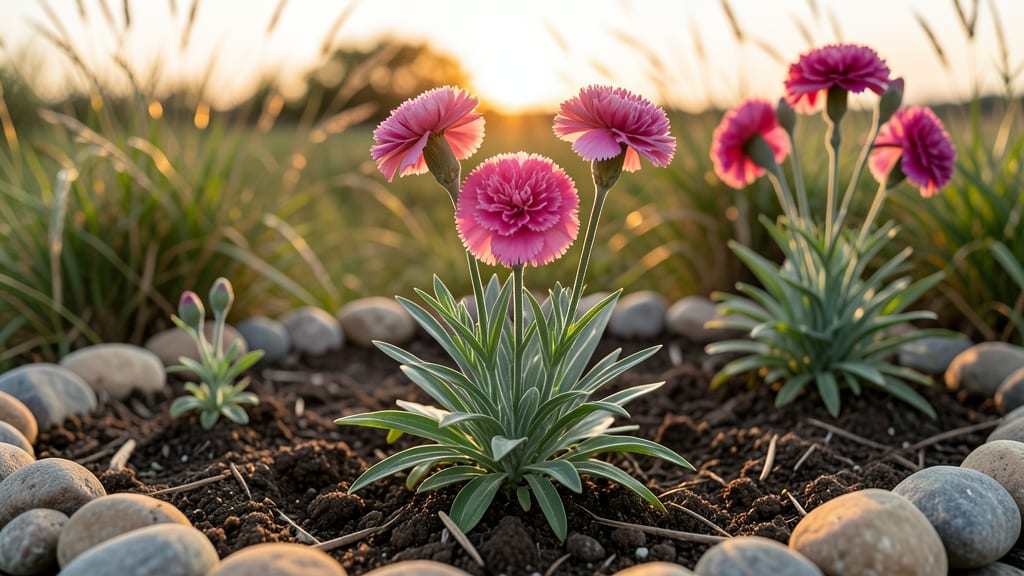
Carnations are perennials in warm climates but often grown as annuals in colder regions due to frost sensitivity. Their lifespan depends on temperature, with some varieties surviving multiple years if protected from winter dieback.
Whether carnations thrive as perennials or annuals comes down to your local climate.
In warmer zones like USDA 8-11, these plants naturally return year after year, sending up fresh blooms each spring. 🌸 However, in colder regions where temperatures drop below 20°F, the roots often die back completely—leading gardeners to treat them as annuals.
The key difference lies in their ability to survive dormancy; with proper winter protection like thick mulch or container insulation, even northern growers can coax perennial behavior from their plants.
What's fascinating is how this dieback cycle works: carnations store energy in their roots during warm months, then rely on that reserve to regrow when conditions improve. This explains why you might see "annual" labels at nurseries—many plants sold there are simply perennial varieties pushed to their frost limits.
For those in cooler climates, choosing hardier varieties like 'Iceberg' or 'Cinderella' gives you the best chance at extending their lifespan beyond a single season.
💡 In This Article
- Carnation Plant Lifespan: Climate and Growth Cycle Factors
- How to Extend Carnations as Perennials in Cold Climates
Carnation plant lifespan: climate and growth cycle factors
Carnations are naturally hardy perennials in their native Mediterranean climate, where winter temperatures rarely drop below 30°F. Their lifespan hinges on the USDA hardiness zones: in zones 8-11, they thrive year-round, often living 5-7 years with proper care.
The secret lies in their root system, which stores carbohydrates during warm months to fuel regrowth when temperatures rise—similar to how peonies survive winter dormancy. 🌱
In colder zones (4-7), the real challenge is winter dieback. When temperatures fall below 20°F, carnation roots can suffer irreversible damage, especially if the ground freezes solid. This explains why gardeners in Minnesota or New York typically treat them as annuals—the plants simply don't survive the harsh winters.
Even in zone 7, where winters are milder, unprotected plants may only last 2-3 years before succumbing to frost.
The growth cycle works like this: carnations bloom prolifically in spring/summer, then enter a semi-dormant state in fall. Their leaves yellow and die back as they redirect energy to root storage.
In warm climates, this cycle repeats annually with minimal intervention. But in colder areas, this natural dormancy becomes a survival gamble—unless you provide protection. 🌡️
What most people don't realize is that carnations have two main growth phases: the above-ground blooming phase and the below-ground storage phase. The roots continue metabolizing even when tops are dead, maintaining a 5-10% moisture content to prevent desiccation.
This is why mulching with 4-6 inches of straw or leaves can make the difference between annual and perennial behavior in marginal climates.
Variety selection plays a crucial role too. Some carnations, like the 'Chabaud' series, are bred specifically for cold tolerance and can survive down to 15°F with protection. Others, like 'Spray' varieties, are more tender and rarely make it through northern winters.
The key is matching your climate to the right cultivar—what thrives in California's 70°F winters won't necessarily survive Chicago's -10°F spells. 🌍
Even in warm climates, carnations have a natural lifespan limit. After 5-7 years, their root systems weaken from cumulative stress, and they produce fewer blooms. This is why professional growers often replace plants rather than trying to extend them indefinitely.
The trade-off between annual and perennial behavior comes down to one simple equation: warmth + protection = perennial potential. 🌿