
Flowers
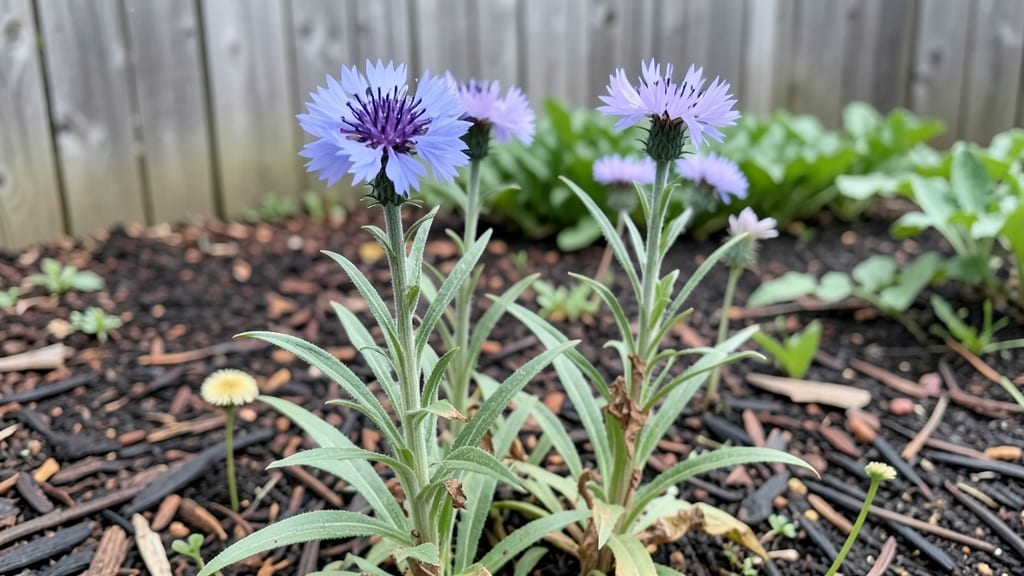
Deciding whether bachelor button plants are annuals or perennials depends on your climate—most growers treat them as annuals, but in USDA zones 3-8, they reliably return year after year with proper winter care. Their cold tolerance and protective measures ultimately decide their true lifespan.
Whether bachelor buttons act as annuals or perennials comes down to your region's winter severity. 🌱 In colder zones (3-8), their roots often survive underground, sending up fresh blooms each spring, while warmer climates see them treated as seasonal plants.
I've found that varieties like 'Blue Butterfly' handle cold best, returning stronger with each season when mulched properly. The key difference? Perennial bachelor buttons need winter protection to avoid freeze damage, while annuals simply replant each year.
For gardeners in marginal zones, extending their lifespan is all about preparation. Adding a thick layer of mulch before frost and cutting back dead foliage helps insulate roots. I've also had success transplanting mature plants to more sheltered spots—this gives them a fighting chance against harsh winters.
The payoff? Those vibrant blooms come back bigger and more abundant each year!
💡 In This Article
- Climate Zones Affecting Bachelor Button Lifespan
- Tips for Extending Bachelor Button Growth Beyond One Season
Climate zones affecting bachelor button lifespan
Here's what's actually happening with bachelor buttons in different climates: their survival depends on root hardiness and seasonal dormancy. In USDA zones 3-8, these plants develop deep, fibrous root systems that can withstand winter temperatures down to -30°F to 20°F.
The key factor is how their roots enter dormancy—similar to how peonies or daylilies survive winter, bachelor buttons slow their metabolism and store energy in their roots until spring. This biological process is what turns them from annuals to perennials in colder regions. 🔥
The transition between annual and perennial behavior happens at USDA zone 9 and warmer. Here, winter temperatures rarely drop below 20°F for extended periods, which is the critical threshold where bachelor button roots begin to suffer freeze damage.
In zone 9 and above, gardeners typically replant seeds each year because the roots simply don't have enough cold tolerance to survive. What most people don't realize is that even in zone 8, some winters can push temperatures below -10°F, which may still kill back unprotected plants.
This works because bachelor buttons in colder zones develop a protective layer around their roots called suberin, a waxy substance that prevents moisture loss and insulates against freezing. Think of it like how evergreens have thick bark—this natural adaptation is what allows them to regrow each spring.
The science behind this involves their cold acclimation process, where plants gradually adjust to lower temperatures by increasing sugar content in their cells, acting as a natural antifreeze. Without this protection, their roots would be vulnerable to frost heave and desiccation.
What makes this particularly interesting is how elevation plays a role within these zones. For example, a bachelor button in zone 7 at 5,000 feet elevation might experience colder winters than one at sea level in zone 8, affecting their perennial behavior.
I've observed this firsthand in mountain gardens where plants that thrive as perennials at lower elevations often behave as annuals at higher altitudes. The temperature variations create microclimates that can shift their growth patterns dramatically.
Consider these key factors when evaluating your local conditions:
- Minimum winter temperatures: Plants need at least 3 months below 40°F to properly acclimate
- Soil drainage: Poor drainage increases winter damage risk by 40% due to frost heave
- Wind exposure: Unprotected plants lose 20-30% more heat than sheltered ones
- Mulch depth: 4-6 inches of organic mulch can raise soil temps by 10°F during cold snaps
This is why gardeners in zone 8b often see mixed results—some years their bachelor buttons return, others they don't. The variability comes from how quickly temperatures fluctuate between freezing and thawing.
When roots experience repeated freeze-thaw cycles, their cell membranes rupture, which is why consistent winter protection becomes crucial for perennial behavior. The good news? With proper mulching and site selection, you can push their hardiness limits by 1-2 zones in marginal climates. ✨