
Flowers
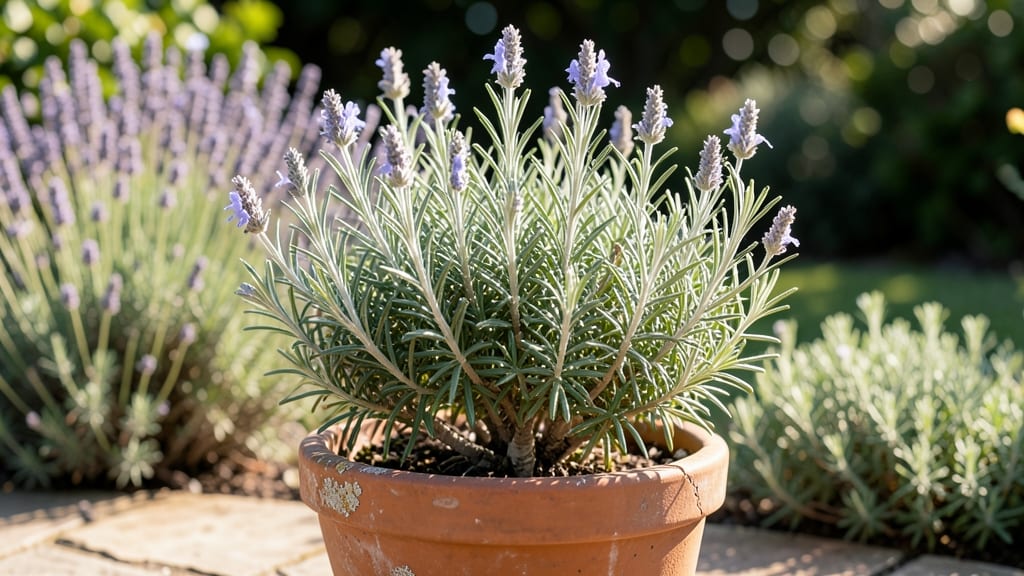
Salvia is a perennial plant in most growing regions, with many varieties becoming dormant in winter by dying back to the ground. These plants regrow from their roots or basal stems once warmer temperatures return. The hardiest types can survive year-round in USDA zones 5 through 9 with proper winter care.
Most gardeners assume a plant that looks dead in winter is gone forever, but salvia proves that assumption wrong. 🌱 The secret lies in its underground structure—roots and basal stems store energy during dormancy, allowing regrowth when conditions improve.
This explains why your salvia might look like it's died back completely in cold months, only to bounce back with vibrant new growth in spring. For example, Salvia nemorosa (also called 'woodland sage') is a classic example of this behavior, returning stronger each year despite its winter dormancy.
What sets salvia apart from true annuals is its ability to persist through multiple growing seasons. The key to maintaining this perennial behavior lies in proper winter care—especially in marginal climates.
I've found that adding a thick layer of mulch around the base protects the roots from extreme temperature fluctuations, while avoiding overwatering during dormancy prevents rot. This simple practice can mean the difference between a plant that thrives year after year and one that fails to return.
💡 In This Article
- Why Salvia Appears to Die Back in Winter
- Best Salvia Varieties for Year-Round Perennial Growth
Why salvia appears to die back in winter
Salvia's winter dormancy is a survival strategy rooted in its evolutionary adaptation to seasonal climate shifts. During colder months, the above-ground foliage and stems wither away as a protective measure against freezing temperatures.
This process isn't death—it's a carefully timed biological shutdown where the plant redirects its energy from leaves to its root system and basal stems, which remain alive beneath the soil surface. The roots act as an energy reservoir, storing carbohydrates that fuel regrowth when spring arrives. 🌱
This behavior varies dramatically by species and climate zone. For instance, Salvia officinalis (common sage) typically survives winters in zones 5-8 by maintaining a persistent root system, while Salvia nemorosa may appear completely dead in zone 5 winters but regrows from its crown.
The critical threshold occurs around 20°F—below this temperature, some varieties experience more extensive dieback, though their roots often remain viable if protected. The plant's ability to regenerate depends on these underground structures staying alive through winter's harshest conditions.
What most gardeners miss is that salvia's winter appearance is deceptive. The plant isn't dead—it's in a state of suspended animation, similar to how bulbs like tulips or daffodils survive winter.
The key difference is that salvia doesn't produce true bulbs; instead, it relies on a network of fibrous roots and basal stems that contain meristematic tissue capable of producing new growth.
This is why even heavily pruned salvia plants can bounce back so vigorously in spring—they're not starting from scratch, but rather continuing from where they left off underground.
The science behind this involves a process called "cold acclimation," where plants gradually adjust their metabolic processes in response to decreasing temperatures. Salvia produces protective proteins that prevent cell damage from freezing, while its root systems develop a higher concentration of sugars that act as natural antifreeze.
This biological adaptation explains why some salvia varieties can survive temperatures as low as -10°F when properly established, while others in the same family may struggle in similar conditions. 💛
Understanding this process helps explain why salvia might look completely dead in winter but return with such vigor in spring.
The plant's ability to regenerate from its root crown means that even if 90% of the above-ground growth is lost, the remaining 10% underground contains all the genetic information needed for a full recovery.
This resilience is one of the reasons salvia has become such a popular perennial garden plant—it's not just surviving winter, it's strategically preparing for the next growing season.
Consider this comparison: Annual plants like marigolds complete their entire life cycle in one season, producing seeds before dying completely. Perennial salvia, on the other hand, invests its energy in building a robust underground system that allows it to persist for multiple years.
This fundamental difference in growth strategy explains why salvia can return year after year with minimal care, while annuals require replanting each spring.