
Plants
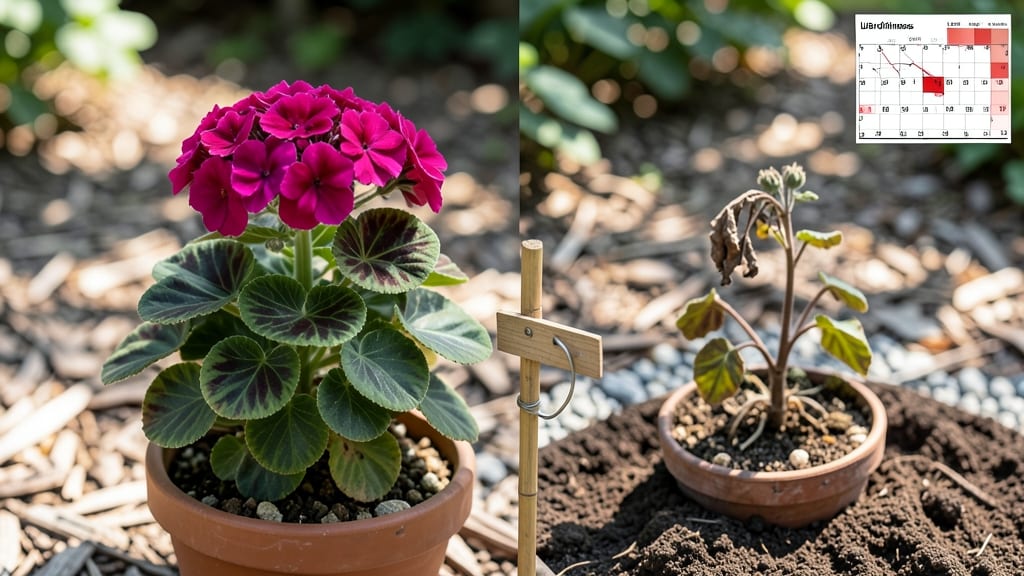
Zonal geraniums are not true perennials in cold climates—they die back to the ground each winter but regrow from the roots when temperatures warm, acting like hardy annuals in frost-prone zones. Mulching helps protect their crowns during winter dormancy.
Zonal geraniums behave like seasonal plants in cold regions—their above-ground growth freezes back to the soil each winter, but their roots survive underground. 🌱 This makes them act more like hardy annuals than true perennials, which retain foliage year-round.
The key difference lies in their root systems: while perennials like lavender regrow from protected crowns, zonal geraniums rely on stored energy in their roots to rebound when spring arrives.
In practice, this means gardeners in USDA zones 5–10 can still enjoy these vibrant plants year after year, but they’ll need to provide extra protection during freeze events. The regrowth process begins when soil temperatures consistently stay above 50°F, signaling the roots to push new shoots upward.
💡 In This Article
- Why Zonal Geraniums Die Back in Winter
- How to Overwinter Zonal Geraniums Successfully
Why zonal geraniums die back in winter
Zonal geraniums (Pelargonium zonale) are native to South Africa's mild climate, where they thrive year-round without dormancy. Their tender roots—unlike true perennials—struggle when exposed to consistent temperatures below 25°F.
Frost triggers a biological shutdown: the plant's cells release protective sugars to prevent ice crystal damage, while the above-ground stems become woody and brittle. 🌡️ This is why you'll see the foliage blacken and collapse in late fall, even in USDA Zone 6.
The key difference from hardy perennials like lavender lies in their crown structure. True perennials have thick, insulated crowns that survive winter exposure, while zonal geraniums rely on a 2-3 inch deep root zone that stores starches.
When soil temps drop below 40°F for more than 2 weeks, these roots enter dormancy but remain alive—unlike annuals, which die completely. This is why they rebound in spring, though often more slowly than their first-year growth.
What most gardeners miss is the temperature gradient that triggers regrowth. New shoots emerge when soil warms to 50°F for 3+ consecutive days, but air temps must stay above 55°F to prevent frost damage to tender new growth.
This explains why spring regrowth can be patchy: if late frosts hit after shoots appear, the plant may need to restart its cycle. 🌱
Comparing to hostas (true perennials) helps clarify: hostas push up fresh foliage from their crowns even when snow covers the ground, while zonal geraniums wait until soil warmth signals safety. This delayed response is why they're often called "half-hardy" perennials—they bridge the gap between annuals and true cold-hardy plants.
The trade-off? Their vibrant blooms reward patient gardeners who protect their roots.
One critical factor is moisture retention during dormancy. Dry soil accelerates root stress, while consistently moist (but not soggy) conditions help preserve stored energy. This is why mulching with 4-6 inches of straw (not leaves, which compact) is essential—it insulates while allowing airflow to prevent rot.
The science here is simple: frozen roots can't access water, but a thick mulch layer maintains a 5-10°F warmer microclimate at the soil surface.