
Flowers
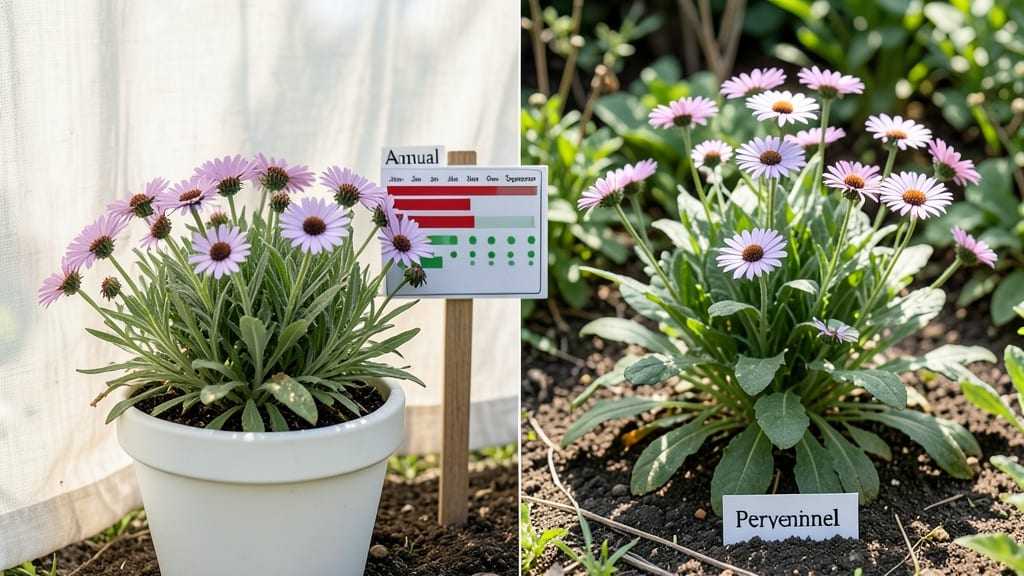
Deciding whether osteospermum grows as annual or perennial depends on your climate: they thrive as perennials in USDA zones 7-11, returning yearly from roots, but act as annuals in colder regions where frost kills them back to the ground.
This distinction comes down to hardiness—osteospermums in warmer zones survive winter dormancy, while those in frost-prone areas need replanting each spring. 🌱 The key difference lies in their root systems: perennials develop deep, cold-resistant roots that regenerate after frost, whereas annuals must be replanted from seed or cuttings.
Varieties like 'Cape Town' show better cold tolerance than others, but even they may struggle below zone 7 without protection.
For gardeners in colder climates, the choice isn't just about annual vs. perennial—it's about extending the plant's lifespan through overwintering techniques like mulching or container storage. In milder zones, proper pruning before winter helps harden roots for regrowth.
The plant's ability to bounce back depends entirely on how well it survives that critical frost period.
💡 In This Article
- How Osteospermum Survives Winter in Mild Climates
- Extending Osteospermum’s Lifespan in Cold Regions
How osteospermum survives winter in mild climates
The secret to osteospermum's perennial success in USDA zones 7-11 lies in its deep root system, which can extend 12-18 inches below the soil surface. These roots act like a biological battery, storing carbohydrates during summer growth to fuel regrowth after frost.
When temperatures drop below 28°F, the plant enters a controlled dormancy—its above-ground foliage dies back to conserve energy, while the roots remain alive in a state of suspended animation.
This survival mechanism is similar to how daylilies or coneflowers handle winter: the plant prioritizes root health over foliage. In zone 7, osteospermum roots can endure 10-15°F for short periods, while zone 11 varieties tolerate near-freezing temperatures with minimal damage.
The key difference between hardy varieties like 'Cape Town' and tender types is their root insulation—the former develops thicker, waxier root coatings that resist moisture loss during cold snaps.
What most gardeners don't realize is that osteospermum's regrowth timing depends on soil temperature, not air temperature. Roots begin active growth when soil reaches 55-60°F, typically 2-3 weeks before last frost dates.
This delayed response explains why some plants appear "dead" in early spring but resprout within 4-6 weeks—their roots were already preparing for regrowth while the ground was still cold.
The plant's dormancy cycle also involves hormonal changes: abscisic acid levels rise during frost exposure, triggering the shutdown of above-ground growth while preserving root cell integrity. This biochemical response is what allows osteospermum to "wait out" winter conditions that would kill annual varieties outright.
In contrast, tender types lack this hormonal regulation, making them more susceptible to cold damage.
Visual cues help identify hardy varieties: look for plants with darker green foliage and thicker stems—these traits often correlate with better cold tolerance. The 'Cape Town' series, for example, maintains its vibrant purple blooms longer into fall, suggesting stronger root reserves.
Even in zone 7, these varieties can survive winters with 1-2 inches of mulch protecting the soil surface.
One fascinating adaptation is the plant's ability to "reset" its growth cycle after frost. When temperatures warm above 40°F, osteospermum roots begin synthesizing new shoots from their basal meristems—growth points located just above the root crown.
This process is triggered by a combination of warmth and increased daylight, creating the classic spring "explosion" of new growth that perennial gardeners love.