
Flowers
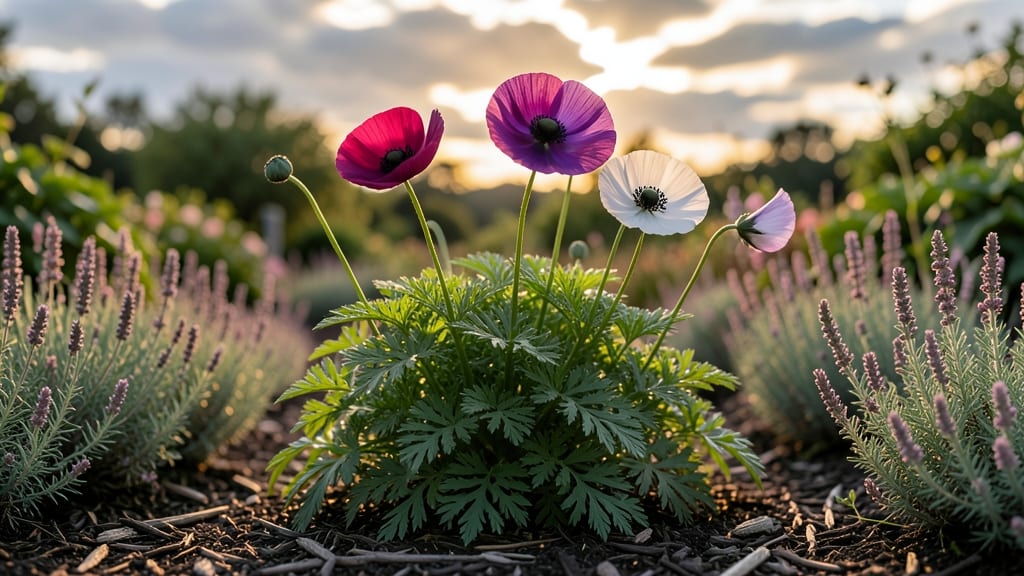
Windflowers aren't true perennials—they act like annuals or short-lived perennials, fading after flowering and often returning only when conditions are perfect. Their survival hinges on climate, soil quality, and how well you care for them, with some types sprouting back from roots during mild winters.
These flowers follow a clever survival strategy. 💛 After blooming, they appear to die back completely, but many varieties store energy in underground tubers or roots—allowing them to regrow when temperatures warm up.
In colder climates, their lifespan may last just one season, while milder regions sometimes see them return year after year. The key difference from true perennials is their reliance on seasonal dormancy rather than consistent above-ground growth.
Think of them as nature's way of conserving energy—like a plant version of hibernation. This adaptation helps them thrive in unpredictable environments, though it means gardeners must provide extra care during their dormant phase to encourage strong regrowth.
Proper soil prep and winter protection can make all the difference in whether they'll bounce back next spring.
💡 In This Article
- Why Windflowers Die Back and How They Regrow
- Caring for Windflowers to Extend Their Lifespan
Why windflowers die back and how they regrow
Windflowers (Anemone hupehensis) follow a fascinating survival strategy that sets them apart from classic perennials. After their vibrant blooms fade, they enter a natural dormancy phase where foliage wilts and dies back completely. This isn't true death—it's a clever energy-conservation tactic.
The plant redirects nutrients to underground storage organs: thickened roots or tubers that can store starches for months. These structures can survive down to 20°F (-7°C) in some varieties, though hardiness varies by cultivar.
The regrowth process begins when soil temperatures reach 50-55°F (10-13°C) in spring. Hormonal signals trigger the tubers to sprout new shoots, with roots extending first to establish stability before leaves emerge. This two-phase growth pattern explains why windflowers often appear "dead" for months yet return reliably in favorable climates.
The process mirrors deciduous trees' annual cycle but occurs on a much shorter timeline—typically 6-8 weeks from dormancy to full regrowth.
What makes this lifecycle unique is the plant's ability to "reset" after flowering. Unlike true perennials that maintain above-ground growth year-round, windflowers prioritize reproduction over survival during their active season.
This explains why they produce such abundant blooms—each flower contains 20-30 seeds—as a genetic insurance policy for the next generation. The tradeoff is their reliance on perfect conditions for tuber survival, which is why some gardeners in colder zones treat them as annuals despite their perennial classification.
Climate plays the biggest role in determining whether windflowers will return. In USDA zones 5-8, they typically regrow annually with proper care, while in zone 4 or colder, they may only survive if protected by 10-12 inches of mulch or container growing.
The key difference from true perennials is their complete above-ground dieback—even the stems collapse, leaving only the hidden storage organs alive. This adaptation allows them to survive drought periods by shutting down all non-essential functions during harsh conditions.
Here's what's happening at the cellular level: During dormancy, the plant's meristematic cells (growth centers) remain active but dormant in the tubers. These cells contain specialized proteins that protect against freezing and dehydration. When temperatures rise, these proteins degrade, allowing normal growth hormones like auxin to resume activity.
This biological mechanism explains why windflowers often regrow more vigorously in their second year—after building up stronger tuber reserves during their first season.
Consider this comparison: A true perennial like hosta maintains its foliage year-round, while windflowers follow an annual's reproductive cycle but with perennial root systems. This hybrid strategy gives them the seed production advantages of annuals while retaining the soil-holding benefits of perennials.
The result is a plant that can dominate garden spaces with its 3-4 foot height and 2-3 foot spread while still conserving energy through dormancy.