
Flowers
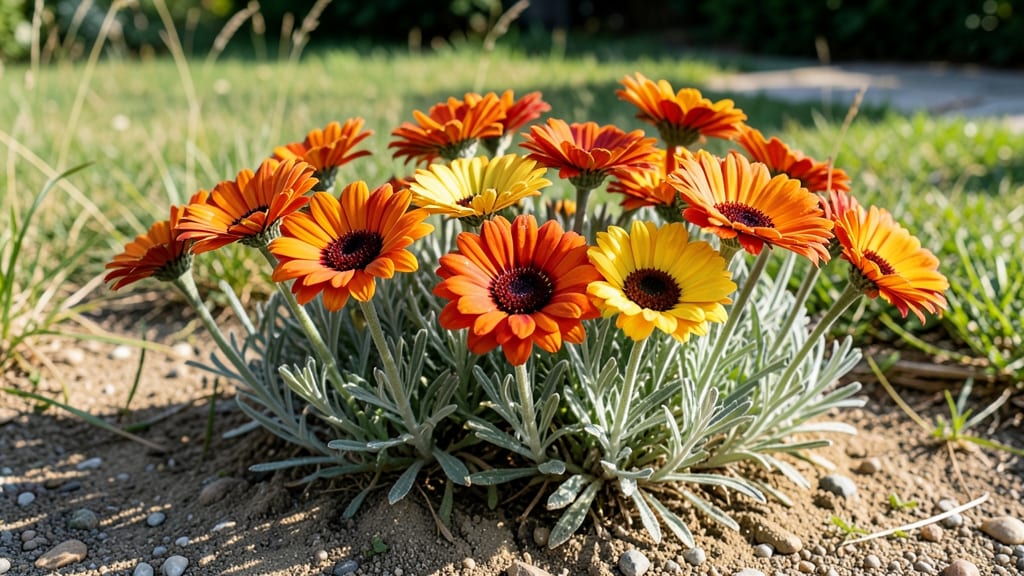
Gazanias are not true perennials in most climates, as they die back annually in colder months but often regrow from roots or self-seed in warmer zones. Their lifespan depends on temperature, soil, and care—some survive multiple seasons with proper winter protection or in frost-free regions.
Gazanias are classified as tender perennials, meaning they behave like annuals in colder zones but can persist through mild winters in frost-free areas. 🌱 The key lies in their root systems—some varieties develop deep roots that survive light freezes, allowing regrowth when temperatures warm.
In colder regions, these plants often return through self-seeding rather than from established roots, which is why they're frequently treated as annuals despite their potential longevity.
What sets gazanias apart from true perennials is their frost sensitivity. Even a light frost can kill back foliage, but the roots or seeds may still hold viability. This makes them perfect for gardeners in USDA zones 8-11, where they can thrive year after year with minimal intervention.
In colder climates, a little extra care—like mulching or container overwintering—can turn these "annuals" into semi-permanent garden stars.
💡 In This Article
- Why Gazanias Act Like Perennials in Some Regions
- How to Extend Gazania Lifespan in Cold Climates
Why gazanias act like perennials in some regions
Gazanias are classified as tender perennials because they possess the biological capacity to regrow from roots or self-seed, but their ability to do so hinges entirely on climate. In USDA zones 8-11, where winter temperatures rarely drop below 20°F, gazanias can survive year-round.
Their deep, fibrous root systems store energy during dormancy, allowing them to push new growth when conditions improve—much like true perennials.
The magic happens in their dormancy mechanisms. Gazanias enter a state of semi-dormancy when nighttime temperatures fall below 50°F, slowing metabolic processes but preserving root viability. Unlike true perennials, however, their above-ground growth dies back completely when exposed to frost, which is why they're often misclassified as annuals.
This frost sensitivity explains why gardeners in colder regions must take special measures to protect them.
Root development plays a critical role in their survival strategy. Varieties like Gazania rigens produce robust root systems that can penetrate 12-18 inches deep, accessing moisture and nutrients even during dry spells.
These roots contain stored carbohydrates that fuel regrowth in spring—a process similar to how peonies or daylilies persist through winter. The deeper the roots, the greater the plant's resilience to environmental stress.
Self-seeding is another survival tactic that blurs the line between annual and perennial behavior. Gazanias produce thousands of tiny, wind-dispersed seeds that can remain viable in the soil for 2-3 years.
This means even if the parent plant dies back, new gazanias may emerge in subsequent seasons without any gardener intervention. In frost-free climates, this creates the illusion of a perennial garden feature.
What most gardeners overlook is how soil temperature affects regrowth timing. Gazanias won't sprout until soil temperatures reach 60°F at a 4-inch depth—this is why they often appear to \"come back\" later than true perennials.
The delay gives the impression of annual behavior, when in fact it's just a timing difference in their life cycle. 🌱
Consider this comparison: A true perennial like lavender might lose leaves but keep its woody stems intact through winter, while gazanias lose 100% of their foliage and rely entirely on roots or seeds for renewal.
This fundamental difference in winter survival strategy explains why they're classified separately, even though they share some perennial characteristics.
The bottom line is that gazanias are nature's shape-shifters—they adapt their growth patterns based on climate. In ideal conditions, they behave like perennials; in harsh winters, they revert to annual behavior. Understanding this dual nature is key to growing them successfully in any region. ⚡