
Plants
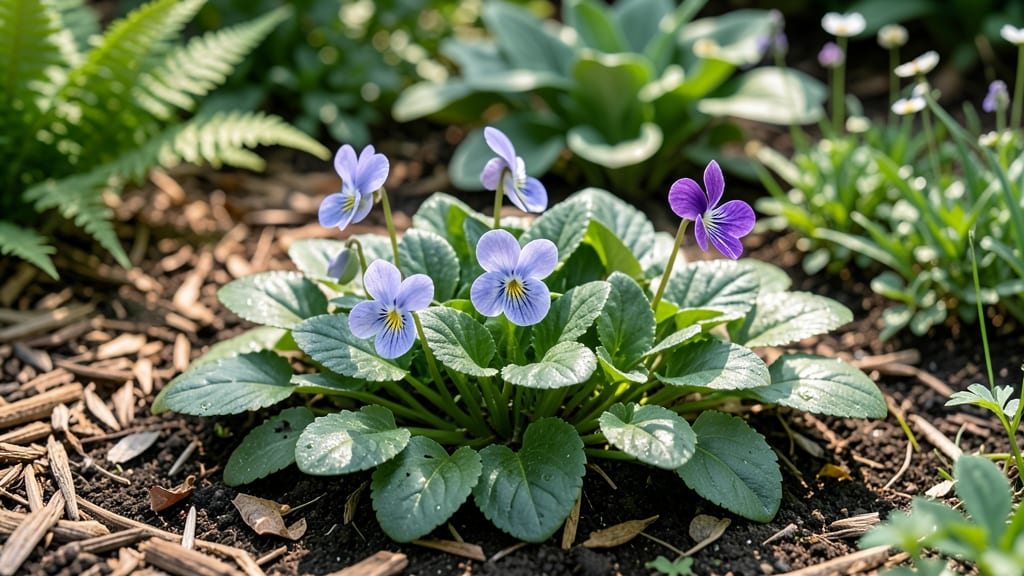
Violets are perennials that return season after season in most climates, even though their foliage may wither or disappear entirely during winter months. Their underground roots remain alive, ready to sprout fresh growth when temperatures rise. Different varieties tolerate cold to varying degrees.
This perennial behavior makes violets uniquely resilient compared to annuals that complete their entire life cycle in one season. 🌱 The key to their survival lies in how they adapt to seasonal changes—many species enter a natural dormancy phase when temperatures drop, conserving energy while their root systems stay active just below the frost line.
What's fascinating is how some varieties, like the hardy Viola sororia, can withstand 20°F winters, while others need protection in colder zones.
For gardeners, understanding this cycle means you can plan for their seasonal comeback rather than treating them as seasonal plants. Mulching with straw or leaves in late fall helps insulate the roots, while spring fertilization supports their rapid regrowth.
The timing of their rebloom—often in early spring—makes them one of the first signs that winter's over.
💡 In This Article
- How Violet Perennial Growth Works Through Dormancy
- Caring for Violets in Different Climates
How violet perennial growth works through dormancy
Violet perennials rely on a sophisticated survival strategy called dormancy, where above-ground growth shuts down during cold months while the root system remains active. This process is triggered by daylight length and temperature drops—typically when nights consistently fall below 40°F.
The plant's leaves and stems wither as a protective measure, reducing water loss and preventing frost damage, while the roots store carbohydrates and nutrients for spring revival. This is why your violets might look completely dead in winter but spring back to life with vibrant foliage.
The root system plays a critical role in this cycle. Violet roots contain specialized cells that can survive freezing temperatures down to 10°F in hardy species, thanks to a natural antifreeze-like compound called proline.
This amino acid accumulates in root tissues during fall, lowering the freezing point of cell fluids. For comparison, tender varieties like Viola cornuta (tufted violet) need protection when temperatures drop below 15°F.
The soil's moisture level also matters—well-draining soil prevents root rot during winter thaw cycles, while waterlogged conditions can be fatal.
What makes violets unique is their ability to regrow from just a small root fragment. Even if you accidentally dig up a clump, the roots can regenerate entire plants given proper conditions.
This resilience explains why violets often return in garden beds where they've been planted for years, even if you didn't actively protect them. The regrowth trigger is typically consistent soil temperatures above 50°F combined with increasing daylight hours, which signals the plant to resume photosynthesis and shoot growth.
Soil conditions significantly influence dormancy success. Violets thrive in slightly acidic to neutral soil (pH 6.0-7.0), which enhances nutrient uptake during regrowth. Organic matter like compost improves soil structure, helping roots access moisture and oxygen even during winter.
In contrast, heavy clay soils can suffocate roots when saturated, while sandy soils may dry out too quickly. The ideal balance creates a microclimate where roots stay protected but not waterlogged.
Here's how different species compare in their hardiness:
- Hardy varieties: Viola sororia (common blue violet) survives 20°F winters with no protection
- Moderately hardy: Viola odorata (English violet) needs 10-15°F protection (mulch or frost cloth)
- Tender varieties: Viola tricolor (wild pansy) requires 25°F protection in colder zones
The science behind this adaptability lies in violets' hemicryptophyte growth habit—they produce renewal buds at or just below the soil surface, protected from extreme cold. This positioning allows them to emerge quickly once temperatures stabilize, often within 2-4 weeks after the last frost. 🌱