
Plants
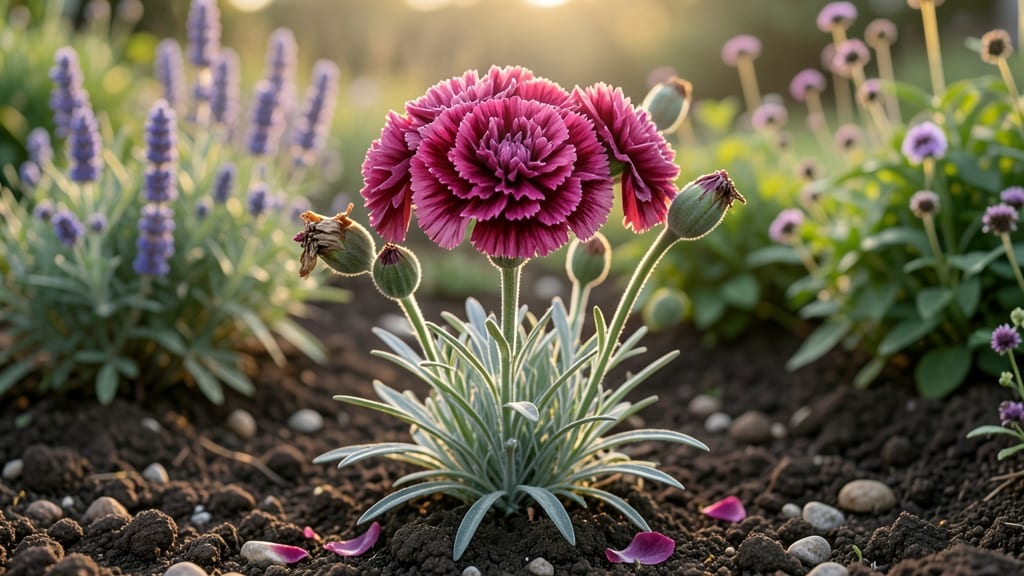
Carnations are not true perennials in most climates, though they die back annually in cold weather. With proper care, they may regrow from the roots in spring, but frost-sensitive varieties often require replanting each season for year-round blooms.
Carnations act more like tender perennials—they survive winter by going dormant, but their roots often struggle in freezing temperatures. 🌱 In warmer regions (USDA zones 8-11), they may naturally regrow each spring, while colder climates force gardeners to treat them as annuals or use protective measures.
The key difference lies in their root systems: while some varieties can endure light frost, most carnations simply can't handle prolonged freezing, which is why replanting becomes necessary in harsh winters.
This behavior explains why you'll see carnations sold as annuals in nurseries—it's a practical approach for gardeners who want blooms without the uncertainty of winter survival.
However, with the right variety selection and winter care, you can coax them back year after year, making them behave almost like perennials in your garden.
💡 In This Article
- Why Carnations Die Back in Winter and How Climate Affects Their Longevity
- Extending Carnations’ Blooming Season: Perennial-Like Care Techniques
Why carnations die back in winter and how climate affects their longevity
Carnations (Dianthus caryophyllus) behave like tender perennials because their roots and stems contain high moisture levels that freeze and rupture at temperatures below 25°F.
This sensitivity stems from their Mediterranean origins, where they evolved in mild climates with cool winters but rarely extreme frost. 🌡️ When temperatures drop below 20°F for extended periods, the cell walls in carnation stems and leaves rupture, causing the plant to appear dead—even though the roots may still live if protected.
This dieback is nature's way of conserving energy, but it's not the same as true perennials like peonies, which have deep, insulated root systems that survive -20°F winters.
The USDA Plant Hardiness Zone map reveals why carnations struggle in most U.S. gardens. Varieties like the popular ‘Sim’ series thrive in zones 8-11, where winters rarely drop below 10°F.
In colder zones (5-7), even well-established plants face 80-90% mortality without protection. 🌍 The critical threshold is 28°F: below this, carnation foliage turns black within 24 hours, though roots may survive if insulated.
This explains why garden centers sell them as annuals—they're betting on spring regrowth that often doesn't happen in northern climates.
Climate plays a surprising role in carnation longevity through soil temperature. Carnations need soil to stay above 45°F for root regrowth in spring. In regions with late frosts (like zone 6b), this delay can prevent new shoots from emerging before summer heat arrives.
The solution? Planting in raised beds with black plastic mulch raises soil temperatures by 5-8°F, creating microclimates that mimic their native Mediterranean conditions. This technique turns carnations from annuals into near-perennials in marginal climates.
What most gardeners miss is how carnation varieties differ in cold tolerance.
The ‘Iceberg’ series, for example, handles 20°F better than ‘Chou Chou’ varieties, which bolt (flower prematurely) when stressed by cold. 🌸 This genetic variation means selecting the right cultivar can extend your carnations' life by 2-3 years in borderline climates. The trade-off?
These hardier varieties often produce smaller blooms—about 30-40% fewer flowers per stem than their frost-sensitive cousins.
Another climate factor is humidity. Carnations despise soggy roots, which is why they struggle in Pacific Northwest winters where wet, cold soil accelerates root rot. In contrast, dry climates like Arizona's low desert (zone 9b) allow carnations to overwinter with minimal protection.
The secret? Well-draining soil with 50-70% sand content prevents the waterlogging that turns carnation roots mushy within 7-10 days of winter rains.
For gardeners in zones 4-6, understanding these climate interactions means carnations can become true perennials with one key adjustment: overwintering them in containers. Moving potted carnations to a garage (where temps stay 35-45°F) preserves roots for 90% regrowth rates in spring.
This container method turns what would be a $15 annual plant into a $25 perennial investment over three years.