
Plants
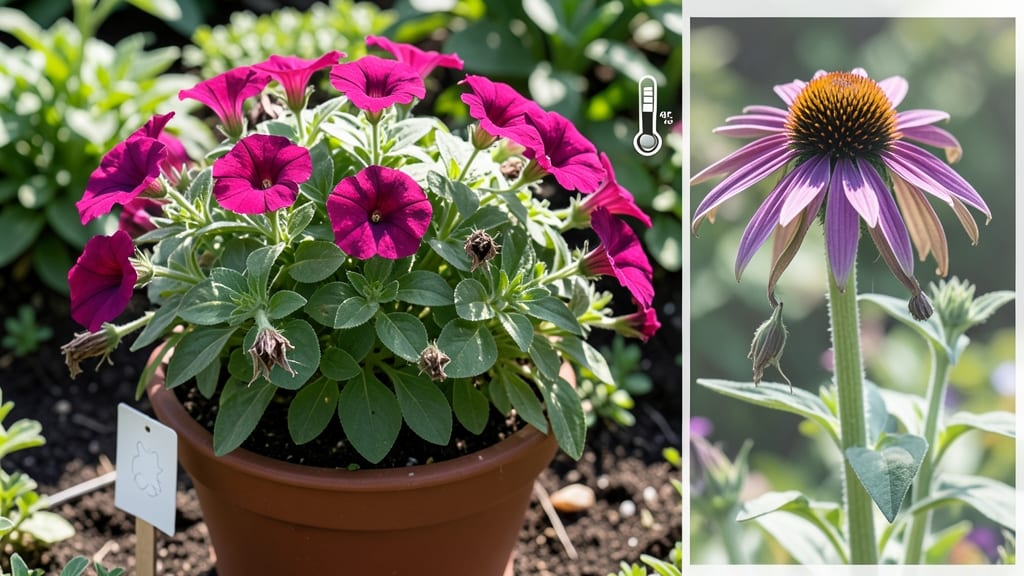
Supertunias aren't true perennials—they die back completely in cold weather but regrow each spring from their roots when conditions warm up, behaving more like hardy annuals or short-lived perennials.
This dieback behavior sets them apart from classic perennials like coneflowers, which maintain foliage year-round. 🌱 The key difference lies in their tropical origins—supertunias thrive in summer heat but lack the cold-hardiness of native perennials.
With proper winter protection like mulching and strategic pruning, you can coax multiple seasons of blooms from the same plants, though they may eventually decline after 2-3 years without division.
What makes this particularly interesting is how their growth pattern mirrors annuals in colder zones. Many gardeners treat them as seasonal plants, planting fresh tubers each spring while others experiment with overwintering techniques.
The trade-off? Their vibrant blooms and prolific growth make them worth the annual investment for seasonal color displays.
💡 In This Article
- Why Supertunias Die Back in Winter
- Winter Care Tips to Extend Supertunia Longevity
Why supertunias die back in winter
Supertunias originate from tropical regions where temperatures rarely drop below 50°F—their stems and foliage simply can't withstand freezing conditions. When winter arrives in colder climates, the above-ground growth blackens and collapses, but the roots remain dormant underground, protected by a natural insulating layer of soil.
This behavior contrasts sharply with true perennials like coneflowers, whose roots and stems are adapted to survive -20°F winters with minimal protection.
The key difference lies in their growth cycle: supertunias store energy in thickened underground stems (called tubers) during winter, similar to dahlias. However, unlike true perennials, these tubers lack the cold-hardiness of woody stems or deep root systems.
In USDA zones 7-10, they often survive winters with just light mulch, but gardeners in zones 5-6 typically need to dig up and store tubers or provide heavy insulation to prevent complete die-off.
What's fascinating is how their regrowth works—when spring temperatures reach 55°F, the tubers detect warmth and begin producing new shoots. This process can take 4-6 weeks, during which the plant appears completely dead.
The timing of this regrowth is directly tied to soil temperature at 4-inch depth, not air temperature—a critical factor for gardeners planning their spring planting schedule.
This dieback pattern creates a unique challenge compared to annuals like marigolds, which reseed themselves. Supertunias require more active management: gardeners must monitor winter conditions and decide whether to protect existing plants or start fresh each season.
The trade-off? Their ability to produce 3-5 feet tall plants with continuous blooms from early summer to frost makes them worth the effort for seasonal color displays.
Botanically, supertunias are classified as "tender perennials"—a category that includes plants like cannas and caladiums. Their lifespan typically spans 2-5 years before the tubers weaken, requiring division or replacement.
This makes them more like short-lived perennials than true long-term garden staples like hostas, which can thrive for decades with minimal care.
For gardeners in marginal zones, the decision to overwinter supertunias comes down to one key factor: how much effort you're willing to invest in protection versus simply replanting fresh tubers each spring.
The science shows that even with perfect winter care, the plants may not reach their full potential in subsequent years compared to fresh starts.