
Plants
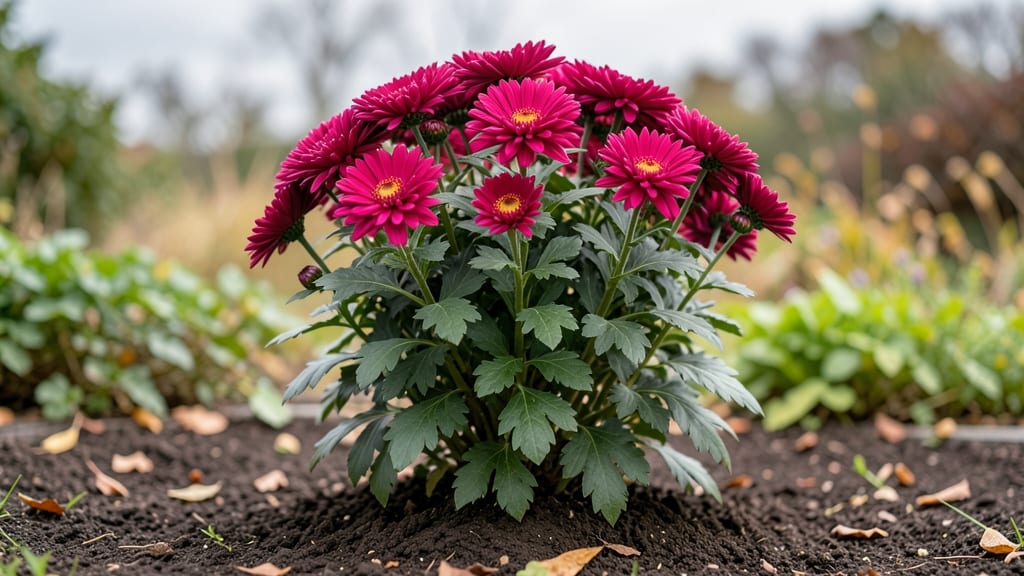
Mums are perennials in USDA Zones 7-11, where they naturally survive winter dormancy and regrow each spring. In colder regions, they're often sold as annuals because frost typically kills their foliage, though their roots can persist with proper care.
This distinction comes down to hardiness—mums are genetically adapted to mild winters, where they enter a natural dormancy phase rather than dying completely. 🌱 In frost-prone areas, their above-ground growth may blacken, but the root system often survives if protected with thick mulch or winter blankets.
Many gardeners successfully coax perennial behavior by selecting cold-tolerant varieties like 'Autumn Joy' or 'Purple Dome,' which handle marginal zones better than standard types.
What's fascinating is how temperature triggers this cycle: when nights dip below 20°F, most mums shut down growth to conserve energy. This isn't failure—it's survival strategy! With the right preparation, you can break the annual cycle and enjoy those cheerful blooms for multiple seasons.
💡 In This Article
- Why Mums Die Back in Winter (And How Zones Affect Growth)
- Extending Mum Longevity: Planting and Care for Multi-Year Blooms
Why mums die back in winter (and how Zones affect growth)
Mums exhibit a natural dormancy cycle triggered by temperature drops below 40°F, where their foliage blackens and appears dead. This isn't failure—it's a survival adaptation from their native East Asian habitats where mild winters (20-40°F) signal seasonal rest.
The key difference between perennials and annuals lies in root hardiness: perennial mums store energy in underground tubers that can regenerate when temperatures rise, while annuals lack this resilience.
USDA Zones 7-11 provide ideal conditions for perennial growth because winter temperatures rarely drop below 10°F, preventing complete root death. In Zone 6 (-10°F to 0°F), frost penetrates deeper, often killing roots without proper protection.
The critical threshold is -15°F: below this, even cold-hardy varieties like 'Autumn Joy' may fail to regrow. 🌱 This explains why nurseries sell mums as annuals in colder regions—they're banking on the fact that most gardeners won't provide winter protection.
The biological mechanism involves ethylene gas production during cold exposure, which signals cells to shut down photosynthesis and redirect resources to roots. This process creates a "brownout" appearance, but the root system remains metabolically active until spring.
What most gardeners miss is that this dormancy requires 6-8 weeks of consistent cold to complete—planting too late in fall (after October 15) can prevent proper hardening.
Zone-specific examples show dramatic differences: In San Diego (Zone 10), mums bloom continuously with minimal care, while in Chicago (Zone 5), even mulched plants may fail to return. The 3°F difference between Zones 6 and 7 can mean the difference between perennial success and annual treatment.
Cold acclimation begins when night temperatures stay below 50°F for 10+ days, making late summer planting crucial for southern gardeners.
Here's what happens biologically when temperatures drop below 20°F:
- Foliage: Cells rupture from ice crystal formation, causing blackening
- Roots: Antifreeze proteins (like those in winter wheat) protect cellular structures
- Energy reserves: Starches convert to sugars for root survival
The misconception that mums "die" in winter stems from observing only the above-ground portion. In reality, their survival depends on how well the root crown (2-3 inches below soil) is insulated.
A 4-inch layer of straw mulch can raise soil temperatures by 5-10°F, making the difference between perennial success and annual failure in marginal zones.