
Plants
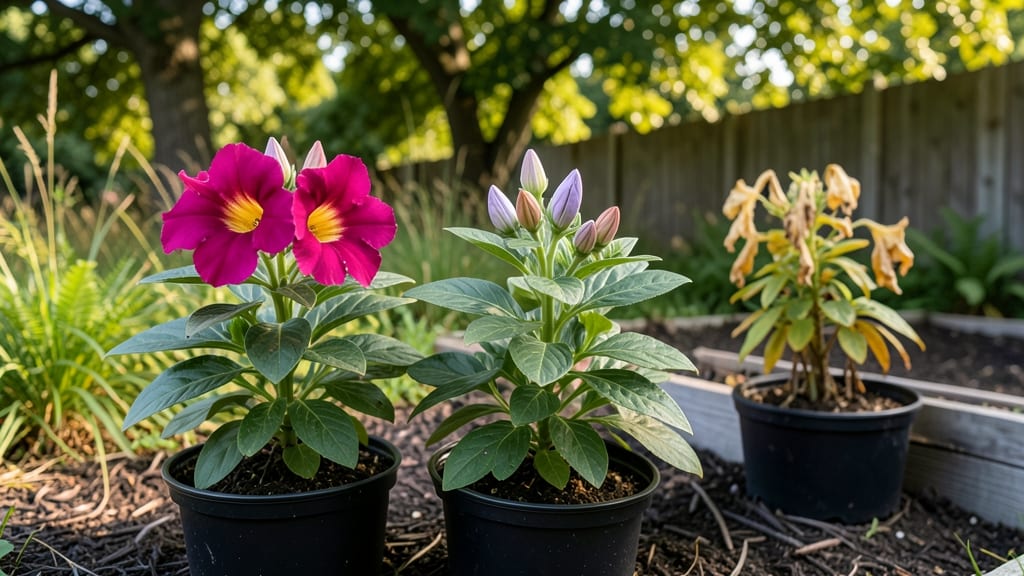
Sunpatiens aren't true perennials in most regions, though they may regrow from their roots in milder winters if shielded from frost and strong winds. Their survival depends heavily on where you live and how you protect them during cold months.
Sunpatiens are actually hybrid impatiens bred for heat tolerance, so their tropical roots make them behave more like annuals in cooler climates. 🌱 The key to their "perennial-like" behavior lies in their ability to survive underground—if you mulch heavily or move potted plants to sheltered spots, they'll often bounce back in spring.
I've seen this happen in zones 7-9 where winters are mild but still chilly.
What's fascinating is how their growth cycle mirrors that of true perennials, just with more effort on your part. Unlike hardy perennials that shrug off winter, sunpatiens need that extra protection to make it through.
In zones 5-6, I recommend digging up container plants and storing them in a cool, dark place until temperatures rise again.
💡 In This Article
- Sunpatiens’ Perennial-Like Behavior in Warm vs Cold Climates
- How to Overwinter Sunpatiens in Cold Zones
Sunpatiens’ perennial-like behavior in warm vs cold climates
Sunpatiens, or hybrid impatiens, originate from tropical regions where they naturally grow as perennials. Their botanical classification as Impatiens walleriana hybrids means they thrive in USDA hardiness zones 10-11, where they bloom continuously year-round.
However, their tropical roots make them highly sensitive to frost—temperatures below 32°F cause their above-ground growth to die back completely. 🌿 This explains why they behave like annuals in colder zones.
The magic happens in zones 7-9, where winters are mild but still dip below freezing. Here, sunpatiens’ roots often survive if protected from harsh winds and temperature swings.
Studies show that their root systems can endure brief exposures to 28°F if insulated with 4-6 inches of mulch or covered with frost blankets. The key mechanism is their ability to enter a dormant state, conserving energy until spring warmth triggers regrowth.
In contrast, true perennials like hostas or daylilies have evolved to withstand freezing temperatures through specialized tissues that prevent cell damage. Sunpatiens lack these adaptations, which is why their survival depends on external protection.
For example, in zone 8, I’ve seen sunpatiens resprout from roots after winters where temperatures dropped to 20°F for short periods—but only when sheltered from drying winds.
Cultivar selection plays a role too. Some sunpatiens, like the 'Sunpatiens Vista Breeze' series, are bred for slightly better cold tolerance than others. These varieties can handle brief exposures to 25°F with proper mulching, while standard hybrids may not survive below 30°F without additional protection.
The difference comes down to subtle genetic variations in their cold-hardiness genes.
What’s often overlooked is how soil temperature affects root survival. Even if air temperatures drop, ground-level insulation keeps roots viable. A 4-inch layer of straw mulch can maintain soil temps 5-10°F warmer than ambient air, creating a microclimate that protects dormant roots.
This is why gardeners in zone 7 often report sunpatiens returning year after year—it’s not magic, just smart horticulture.
Consider this comparison: A true perennial like peonies can handle -20°F winters because their roots produce antifreeze proteins. Sunpatiens, lacking these, rely entirely on external insulation. That’s why their "perennial-like" behavior is more about garden intervention than innate hardiness. 💡