
Plants
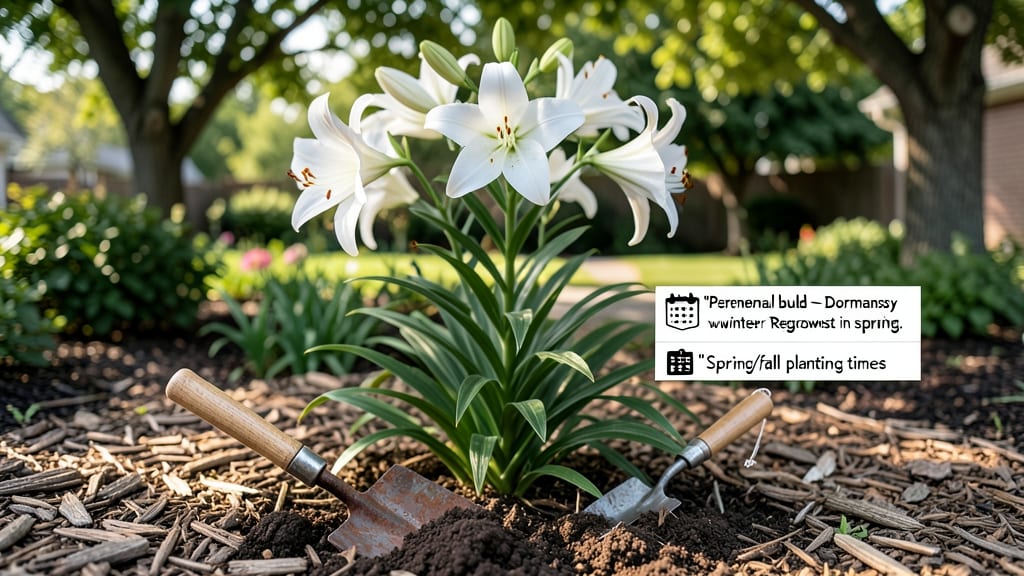
Yes, lilies are perennials that die back to the ground each fall, entering dormancy before regrowing from their underground bulbs in spring. Their survival depends on proper bulb care and winter protection in colder climates.
Lilies aren't just annual flowers—they're true perennials with a clever survival strategy. 🌱 During dormancy, these plants store energy in their bulbs, which act like natural batteries, fueling their regrowth when conditions improve.
The key difference from annuals is that lilies don't complete their life cycle in one season but instead cycle between growth and rest phases, making them low-maintenance once established. I've seen firsthand how lilies rebound beautifully each spring after proper winter care—it's like they're programmed to bounce back!
What sets lilies apart is their underground storage system. Unlike annuals that die completely after flowering, lily bulbs remain alive below ground, waiting for warmer temperatures to trigger new shoots. This built-in resilience makes them perfect for gardeners who want long-term beauty with minimal replanting.
The trade-off? They do need your help protecting those bulbs during harsh winters, especially in colder zones where freeze-thaw cycles can damage dormant roots.
💡 In This Article
- How Lily Bulbs Survive Winter Dormancy
- Best Practices for Protecting Lily Bulbs Over Winter
How lily bulbs survive winter dormancy
Lily bulbs enter dormancy as a biological survival mechanism when temperatures drop below 50°F in fall. This process begins when shorter daylight hours trigger hormonal changes that signal the plant to stop producing leaves and flowers.
The bulb itself acts as a living storage unit, converting excess carbohydrates from photosynthesis into insoluble starches that get stored in specialized cells within the bulb's scales.
This stored energy can sustain the bulb for months without active growth, much like how a bear's body converts food into fat for hibernation.
The dormancy cycle is tightly regulated by temperature and moisture levels. Lilies typically need a period of 6-8 weeks below 40°F to break their dormancy effectively, which is why they thrive in colder climates.
During this time, the bulb's metabolic rate drops dramatically—sometimes by up to 90%—reducing water loss and energy consumption. The outer scales of the bulb even develop a protective layer that prevents moisture loss, similar to how a seed's coat protects it from drying out.
This adaptation explains why lilies can survive buried in garden soil through winter's harshest conditions.
What's fascinating is how lilies time their regrowth perfectly. As soil temperatures rise above 55°F in spring, the bulb's cells begin converting stored starches back into sugars, fueling the emergence of new shoots.
The root system awakens first, establishing new connections to the soil before any visible growth appears above ground. This sequential activation ensures the plant has stable hydration before attempting photosynthesis, a critical survival strategy in unpredictable spring weather patterns.
However, not all lilies handle dormancy the same way. Hardy varieties like the Asiatic lilies can tolerate temperatures down to -20°F with proper care, while tropical species need protection above 32°F.
The difference lies in their natural growing zones and evolutionary adaptations—think of it like comparing a polar bear's thick fur to a desert fox's lightweight coat. This variation is why choosing the right lily species for your climate makes all the difference in their winter survival.
One common misconception is that dormant bulbs are completely inactive. In reality, they maintain just enough cellular activity to stay alive—like a computer in sleep mode rather than fully shut down.
This low-level activity allows the bulb to respond quickly to spring's warming temperatures, which is why you'll often see new shoots appear within 2-3 weeks of consistent above-freezing soil temperatures.
The speed of this response depends on how well the bulb was protected during winter and the stored energy reserves it accumulated during the growing season.
To visualize this process, imagine the lily bulb as a biological battery: during summer, it charges by storing energy from sunlight; in winter, it conserves that energy while waiting for the right conditions to recharge and grow again.
This cyclical pattern is what makes lilies true perennials rather than annuals—they're designed to live and thrive across multiple seasons with minimal intervention from gardeners. 🌱