
Plants
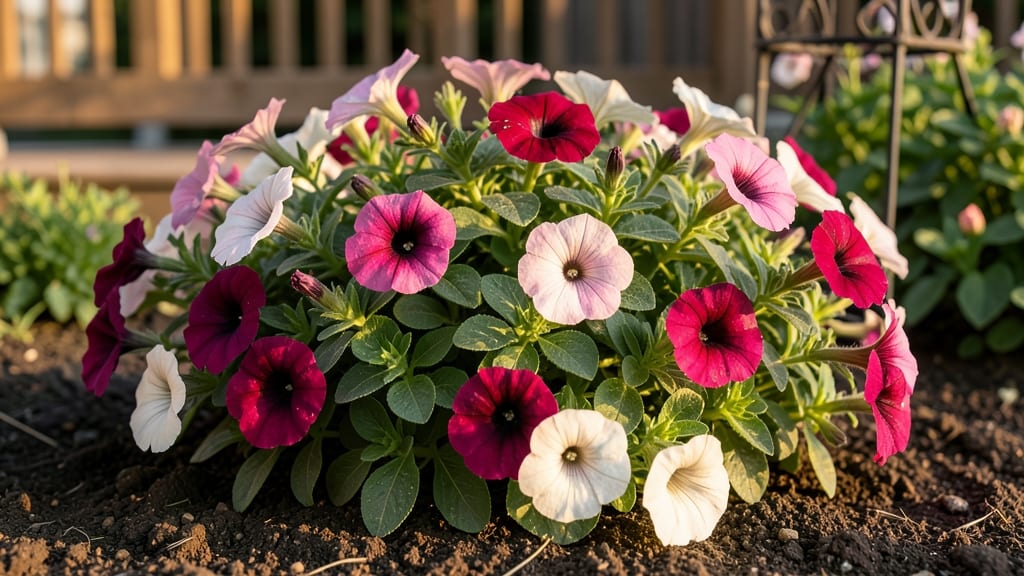
Petunias are not true perennials in most climates, dying back to the ground each winter but often returning from roots in mild zones. They thrive as annuals in colder regions, requiring replanting yearly for continuous blooms.
Petunias behave like perennials only in frost-free zones where their roots survive winter's chill. 🌱 In colder areas, they act as annuals because freezing temperatures kill their tops and often damage roots.
The key difference lies in their hardiness—while some varieties regrow from dormant roots in mild winters, most gardeners treat them as seasonal plants for reliable blooms.
This dieback cycle isn't a flaw—it's actually a survival strategy. Petunias store energy in their roots during warm seasons, allowing them to bounce back quickly in spring.
However, this only works if winter temperatures stay above 20°F. In frost-prone regions, gardeners must replant fresh seedlings each spring to maintain vibrant flower beds.
For those in marginal climates, protecting petunias with mulch or containers can sometimes extend their lifespan. But even then, they won't match true perennials like lavender or coneflowers that reliably return year after year without intervention.
💡 In This Article
- Petunia Lifespan: Why They Die Back in Winter
- Extending Petunia Blooms: Annual vs Perennial Care Tips
Petunia lifespan: why they die back in winter
Petunias exhibit a fascinating biological adaptation that makes them behave like perennials in warm climates. Their survival strategy hinges on storing carbohydrates in fibrous roots during the growing season. These roots can endure brief cold snaps down to 20°F, allowing regrowth when temperatures rise.
Think of it like a natural energy reserve—similar to how potatoes store starch in tubers, petunia roots stockpile nutrients for spring revival. 🌱
The critical threshold is 20°F—below this, root damage becomes severe. In frost-free zones (USDA zones 9-11), petunias often regrow from these hardened roots, creating the illusion of perennial behavior.
However, the roots themselves aren't true perennials—they lack the deep dormancy mechanisms of plants like hostas or daylilies. Their survival depends on consistent mild winters, not true cold hardiness.
In colder regions, the story changes dramatically. When temperatures drop below 20°F for extended periods, petunia roots suffer irreversible damage. The cell membranes rupture from ice crystal formation, and stored nutrients break down. This is why gardeners in zones 3-8 typically treat petunias as annuals—they can't rely on root survival.
The difference comes down to cellular resilience: true perennials have specialized proteins that protect their cells during freezing, while petunias lack these adaptations.
Even in mild climates, petunia roots don't last indefinitely. After 2-3 years of regrowth cycles, they become less vigorous, producing smaller flowers and weaker stems. This decline happens because the root system gradually depletes its stored energy reserves without proper replenishment.
The plant essentially "burns out" its own energy supply, much like how overused batteries lose capacity over time. 🔋
What most gardeners don't realize is that petunia varieties show significant hardiness differences. Grandiflora types (like 'Mitchell Diploid') typically have slightly more robust roots than multiflora varieties, but none approach true perennial hardiness.
The confusion stems from their rapid regrowth in spring—even from seemingly dead plants—which creates the false impression of perennial behavior when they're actually just exploiting their stored energy reserves.
Here's the key distinction: true perennials like peonies or black-eyed Susans have specialized underground structures (rhizomes, tubers) that can survive decades of freeze-thaw cycles. Petunia roots, while impressive in their temporary resilience, lack this long-term survival architecture.
Their lifespan is more akin to biennials that might survive one winter but ultimately require replanting for optimal performance.
The bottom line? Petunias are biological chameleons—they mimic perennials in warm climates but revert to annual behavior when faced with harsh winters. Their survival depends on a delicate balance of temperature, root health, and seasonal energy storage, making them more specialized than truly hardy perennials. 🌡️