
Plants
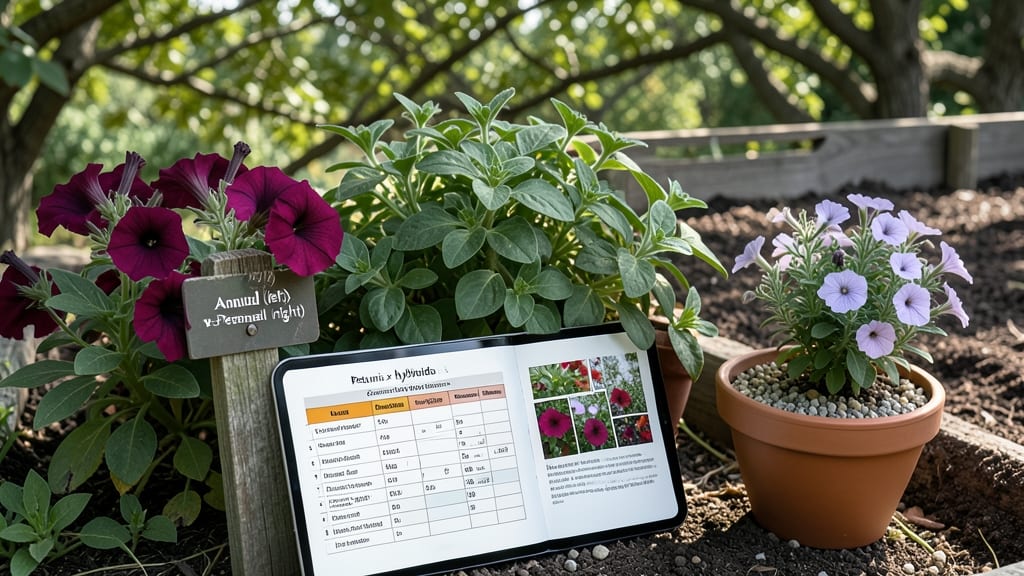
Petunias are not perennial plants in most climates, dying back to the ground each fall and requiring replanting annually. However, in USDA Zones 10-12, they may survive winter as true perennials with proper care and frost protection.
Most gardeners treat petunias as annuals because their delicate foliage can't withstand freezing temperatures. 🌱 In colder regions like Zones 3-9, petunias will freeze to the ground during winter, leaving only their roots alive for a short time before they die back completely.
The key difference comes in warmer climates where frost never occurs—petunias can continue growing year-round, returning with new blooms each season if given consistent moisture and protection from pests.
Even in frost-free zones, petunias still require attention to thrive long-term. I've found that regular pruning to encourage bushier growth and using slow-release fertilizers helps maintain their vigor.
The plant's natural dormancy period in cooler climates actually resets its energy, which explains why annual replanting often produces more robust blooms than struggling multi-year attempts in marginal zones.
💡 In This Article
- Petunia Growth Cycle: Annual vs Perennial Behavior Explained
- Extending Petunia Lifespan in Cold Climates: Overwintering Tips
Petunia growth cycle: annual vs perennial behavior explained
Petunias behave as annuals in most climates because their native South American habitat evolved without frost exposure. When temperatures drop below 32°F, their tender stems and leaves freeze solid, killing the entire plant above ground.
The roots may survive briefly, but without protection, they'll decompose within weeks. This cold sensitivity explains why gardeners in Zones 3-9 treat them as annuals—each spring brings fresh plants from seed or nursery stock.
The key difference in frost-free zones (10-12) lies in petunias' natural growth rhythm. In these areas, they experience no true dormancy cycle—they continue blooming year-round if given consistent moisture and protection from pests.
Their stems remain green and active, producing new flowers continuously. The plant's ability to persist stems from its tropical origins, where temperatures never drop below 40°F for extended periods.
What most gardeners don't realize is how petunias' life cycle adapts to light changes. In cooler climates, shorter daylight hours trigger a natural decline in growth by late summer, preparing the plant for winter dormancy.
This photoperiod response explains why petunias often fade in late fall even before frost arrives. In tropical zones, however, the consistent 12-hour daylight prevents this decline, allowing continuous growth.
The plant's tuberous roots play a crucial role in this behavior. In cold climates, these roots store minimal energy before freezing. But in warm zones, they develop more robust storage reserves, enabling regrowth after seasonal slowdowns.
This explains why petunias in Florida or Hawaii can return year after year without replanting—their roots maintain sufficient energy reserves.
Consider this comparison: A petunia in Zone 5 might produce vibrant blooms from May to October, then die back completely by November. The same variety in Zone 11 would continue flowering through December, then slow slightly in January before reblooming in February.
The difference comes down to temperature consistency rather than the plant's inherent growth pattern.
Here's what's actually happening at the cellular level: Cold temperatures cause ice crystals to form in petunia cells, rupturing their membranes. In frost-free zones, this cellular damage never occurs, allowing the plant's meristematic tissue (growth centers) to remain active year-round.
This biological difference explains why petunias act as perennials in warm climates but annuals elsewhere.
The bottom line is that petunias' perennial potential depends entirely on climate. In cooler regions, their tropical nature becomes their limitation, while in warm zones, they thrive as true perennials—given proper care, of course! 🌿