
Plants
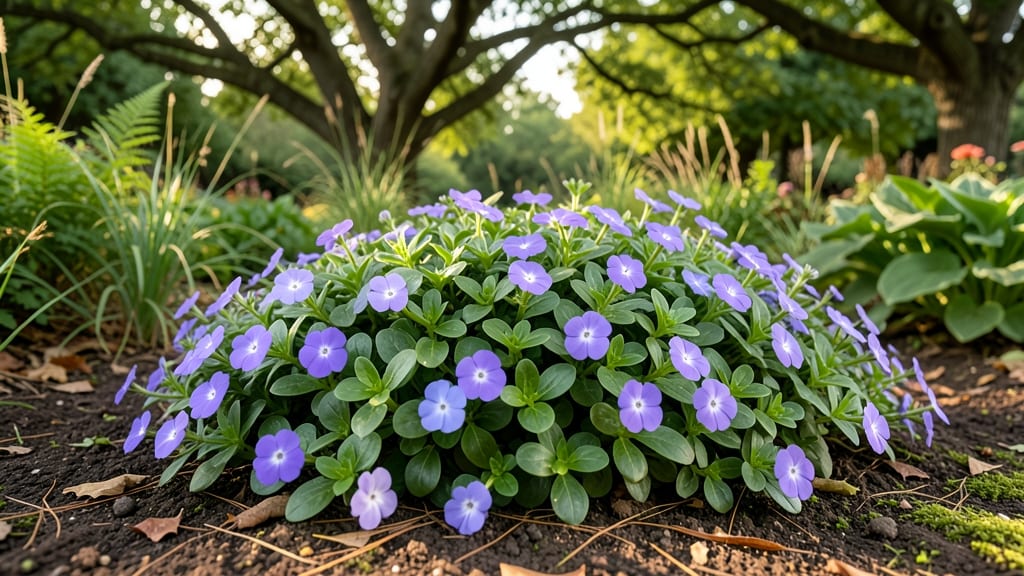
Periwinkles aren't true perennials—they go through a semi-evergreen dieback cycle, shedding leaves in winter but regrowing from the same roots each season, so they act like perennials in warm areas but die back completely in colder climates.
This dieback behavior is what sets periwinkles apart from classic perennials. 🌱 Unlike hardy perennials that maintain foliage year-round, periwinkles enter a dormant state when temperatures drop, only to burst back with fresh growth when spring arrives.
Their root systems remain active underground, storing energy for the next season's regrowth. This makes them perfect for gardeners in transitional climates where winters are mild but occasional frosts occur.
What's fascinating is how their growth patterns adapt to local conditions. In USDA zones 7-10, periwinkles often retain some foliage through winter, while in colder zones (5-6), they may look completely dead until warmer weather returns.
This adaptability is why many gardeners treat them as low-maintenance perennials—even though technically, they're more like "semi-perennials."
💡 In This Article
- Understanding Periwinkle’s Semi-Evergreen Dieback Cycle
- Climate-Specific Periwinkle Care for Year-Round Growth
Understanding periwinkle’s semi-evergreen dieback cycle
Periwinkles (Vinca spp.) undergo a fascinating biological process called semi-evergreen dieback, where they shed leaves in response to cold temperatures but preserve their root systems. This isn't true dormancy like bulbs—it's a survival mechanism where the plant conserves energy by dropping foliage while keeping roots alive underground.
The trigger is typically temperatures below 40°F, which signals the plant to halt photosynthesis and redirect resources to the roots, where starches are stored for regrowth.
The root system of periwinkles is remarkably resilient, capable of surviving 3-6 months of dormancy depending on climate. Studies show their fibrous roots can maintain viability even when soil temperatures drop to 32°F, though growth slows dramatically.
What's unique is how these roots contain specialized cells that act like biological batteries, storing up to 40% more carbohydrates than true perennials during peak summer growth to fuel spring regrowth.
This semi-evergreen behavior explains why periwinkles often look dead in winter but bounce back so vigorously in spring. The regrowth process begins when soil temperatures reach 50°F consistently, typically 4-8 weeks after the last frost.
New shoots emerge from the same root crown that survived winter, demonstrating why gardeners often mistake them for true perennials. The key difference from hardy perennials is that periwinkles don't maintain active foliage through winter—they're essentially "sleeping beauties" that prioritize root survival over leaf retention.
What makes this adaptation so clever is the plant's ability to time its dormancy precisely. Periwinkles native to Mediterranean climates (where they originally evolved) experience mild winters and hot summers, so their dieback cycle is finely tuned to conserve moisture while avoiding frost damage.
In colder climates, this same mechanism becomes their Achilles' heel—when temperatures drop below 15°F, even the roots can suffer irreversible damage, explaining why they act like annuals in frost-prone zones.
Visually, this cycle creates a dramatic transformation: lush green mats in summer become skeletal stems by winter, only to erupt with fresh purple or white blossoms by spring. The contrast between their winter-bare appearance and spring rebirth is what often confuses gardeners about their true perennial status.
Unlike hostas that maintain evergreen foliage or daylilies that stay semi-dormant, periwinkles make a complete visual exit before their comeback.
This semi-evergreen strategy gives periwinkles a competitive edge in transitional climates. They can handle occasional light frosts that would kill tender perennials, yet they're not as hardy as true perennials like peonies or coneflowers.
Their ability to "reset" each season while maintaining genetic continuity through roots is what makes them such reliable garden workhorses—just don't expect them to behave exactly like your classic perennial favorites.