
Vegetables
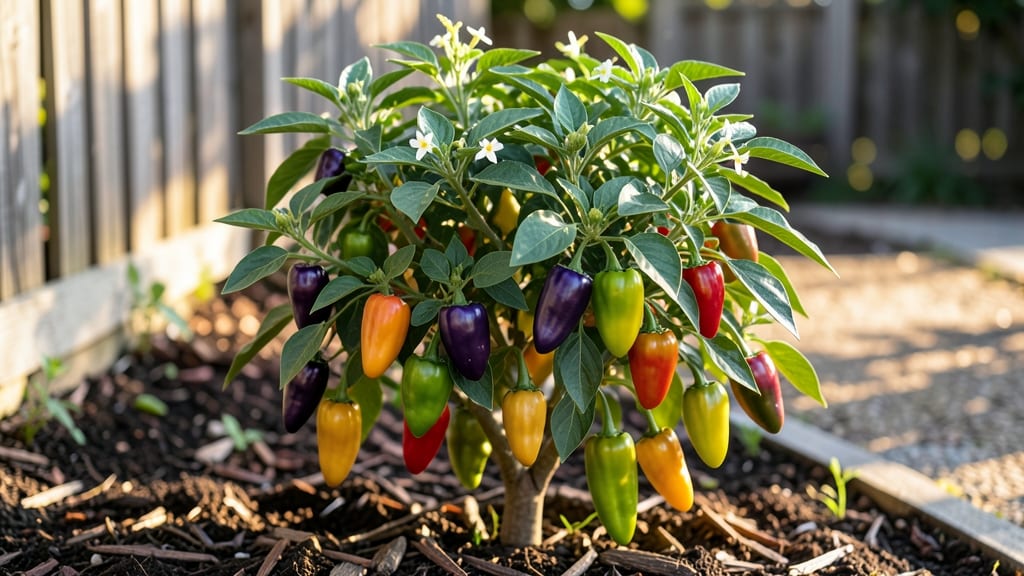
Ornamental peppers are NOT perennial in most climates, dying back to the ground after frost. In warmer USDA Zones 9-11, they may survive mild winters as tender perennials, but cold zones (3-8) require replanting annually or overwintering indoors. Hardy varieties like 'Jalapeño' or 'Poblano' can persist with protection, but most ornamental types need seasonal care.
Ornamental peppers, with their vibrant colors and decorative foliage, originate from tropical regions where temperatures rarely drop below freezing. 🌱 When exposed to frost, their delicate tissues rupture, leading to irreversible damage.
While some culinary varieties like 'Jalapeño' or 'Poblano' can endure brief cold snaps with protection, most ornamental types lack the hardiness to survive winter outdoors in colder zones. The key to extending their lifespan lies in understanding their tropical nature and providing appropriate seasonal care.
In colder regions, gardeners often treat ornamental peppers as annuals, replanting each spring. However, with proper techniques—such as potting plants before frost or using protective covers—you can sometimes coax them through winter.
For those in transitional zones, overwintering indoors with supplemental light and controlled temperatures can help preserve your plants year-round.
💡 In This Article
- Why Ornamental Peppers Die in Cold Climates
- Overwintering Ornamental Peppers in Cold Zones
Why ornamental peppers die in cold climates
Ornamental peppers trace their origins to tropical and subtropical regions where temperatures rarely drop below 50°F. Their cells lack the antifreeze proteins found in cold-hardy plants like kale or rhubarb, making them highly sensitive to frost.
When temperatures hit 32°F, ice crystals form in their cell walls, rupturing membranes and causing irreversible damage. 🌱 This is why even a light frost can kill ornamental peppers—unlike their culinary cousins, which often have thicker stems and deeper root systems.
The damage starts at the leaves, where frost causes brown, mushy spots that spread rapidly. Within 24-48 hours, the entire plant may collapse as water moves out of damaged cells through a process called "osmotic shock."
In USDA Zones 9-11, where winters rarely dip below 20°F, ornamental peppers can survive as tender perennials, but in Zones 3-8, even a 10°F drop can be fatal. Soil insulation plays a critical role—bare ground freezes faster than mulched areas, which can add 4-6°F of protection.
Root systems are particularly vulnerable. Ornamental peppers develop shallow roots that struggle in cold, compacted soil. When ground temperatures fall below 40°F, roots lose their ability to absorb water, leading to wilting even before above-ground damage appears.
This is why gardeners in colder zones often see plants appear healthy one day and dead the next after an unexpected frost. 💫 The lack of cold acclimation strategies—like those in woody perennials—means ornamental peppers have no natural defense against winter.
Comparing ornamental peppers to hardy varieties like 'Jalapeño' or 'Poblano' highlights the difference. Culinary peppers can tolerate brief cold snaps down to 25°F with protection, thanks to thicker stems and deeper taproots. Ornamental types, bred for showy foliage and fruit rather than survival, simply don't have these adaptations.
Their vibrant colors—ranging from deep purples to fiery reds—are a visual reminder of their tropical heritage and limited cold tolerance.
What most gardeners don't realize is how quickly ornamental peppers can recover from mild cold exposure—if the damage isn't severe. A plant that looks dead after a 28°F night might regrow from the base if the roots survived.
This is why some gardeners in marginal zones (like Zone 8) take risks, using thick mulch or frost blankets to protect their plants. However, the moment temperatures drop below 20°F, even these precautions often fail. 🔥
The key takeaway is that ornamental peppers are biological time bombs in cold climates. Their entire life cycle is geared toward warm conditions, and any deviation from that triggers a cascade of cellular damage.
Understanding this helps gardeners make informed decisions about whether to treat them as annuals or invest in overwintering strategies—both of which we'll explore in the next section.