
Plants
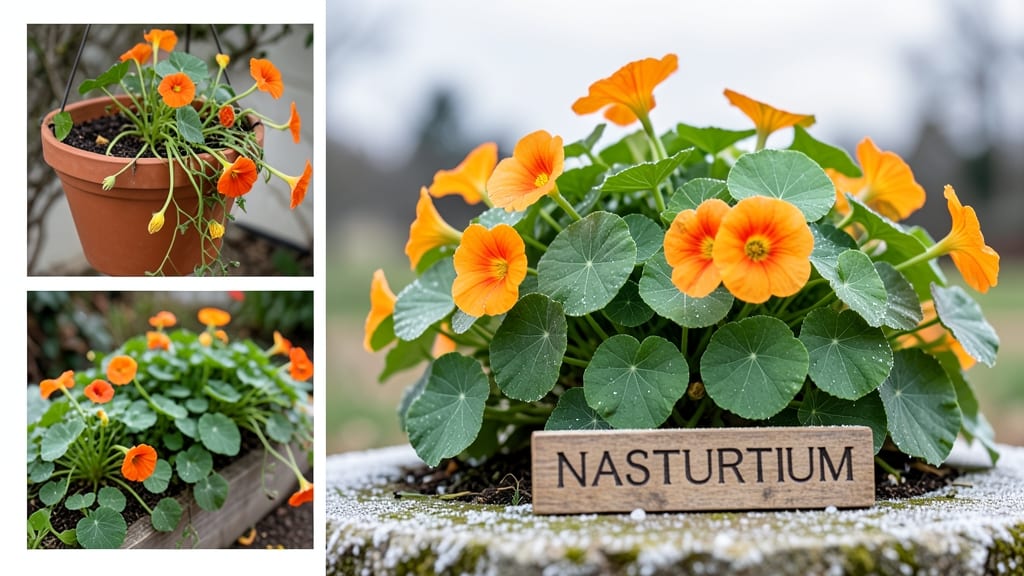
These nasturtiums are perennial only in warmer USDA zones 9-11, completing their life cycle each year from seed to frost elsewhere as annuals, though they may self-sow prolifically.
This behavior actually stems from their natural adaptation to frost-free regions—most nasturtium varieties evolved where winter freezes never occur. 🌱 The confusion arises because they often reseed aggressively, creating the illusion of perennial growth.
In colder zones, gardeners can extend their season by saving seeds or using cold frames, but true overwintering requires zone 9's mild temperatures.
What's fascinating is how different species handle cold: Tropaeolum majus (common nasturtium) is the most cold-sensitive, while Tropaeolum tuberosum (Inca wheat) shows slightly better hardiness. The key to success in marginal zones lies in protecting the roots—whether through thick mulch or container growing—while letting the foliage die back naturally.
💡 In This Article
- Nasturtiums’ Growth Cycle: Annual vs Perennial Behavior
- Extending Nasturtium Lifespan in Cold Climates
Nasturtiums’ growth cycle: annual vs perennial behavior
Nasturtiums (Tropaeolum spp.) are technically classified as annuals or short-lived perennials because their growth habit depends entirely on temperature. In colder climates (USDA zones 3-8), their life cycle resets each spring from seeds dropped the previous year.
The plants complete their full growth—from seed germination to flowering, seed production, and death—within a single growing season. This is why they appear to "disappear" in winter: their above-ground parts freeze, but the seeds often remain viable in the soil until warm temperatures trigger germination again.
The key difference lies in their cold tolerance thresholds. Tropaeolum majus, the common garden nasturtium, typically survives only to 28°F (-2°C) before suffering frost damage. Its roots may linger slightly longer in protected microclimates, but true overwintering requires consistent soil temperatures above 32°F (0°C).
Meanwhile, Tropaeolum tuberosum (Inca wheat) shows marginally better hardiness, tolerating brief dips to 25°F (-4°C) due to its tuberous roots, which store energy for regrowth. However, neither species can endure prolonged freezing or sub-zero temperatures without protection.
What makes this fascinating is the plant's dormancy mechanism. When temperatures drop below 50°F (10°C), nasturtiums trigger a natural senescence process—leaves yellow and die back, while energy reserves shift to roots or seeds. This is an evolutionary adaptation to avoid wasting resources during winter.
In zones 9-11, where winters rarely drop below 40°F (4°C), this dormancy becomes less pronounced, allowing some varieties to persist as short-lived perennials by regrowing from the same root system year after year.
Here's how the growth cycle plays out in different zones:
- Zones 3-7: Complete annual cycle; seeds germinate in spring, plants die back by first frost (typically 28-32°F (-2 to 0°C))
- Zones 8-9: May self-sow prolifically; some roots survive mild winters (32-40°F (0-4°C))
- Zones 10-11: Act as short-lived perennials, often regrowing from the same base
The confusion between annual and perennial behavior stems from their aggressive self-seeding habit. A single plant can produce 50-100 seeds, which scatter widely and remain dormant for years until conditions are right.
This creates dense patches that look like perennial growth, but each plant is technically completing its life cycle independently. The seeds' viability is another survival trick—some can remain dormant for 3-5 years while waiting for optimal germination conditions.
For gardeners in colder zones, understanding this cycle explains why nasturtiums often "come back" year after year without human intervention. The plants aren't truly overwintering—they're relying on their seed bank to repopulate.
This self-sufficiency is part of what makes them such resilient garden workhorses, even when they don't qualify as true perennials in botanical terms.