
Flowers
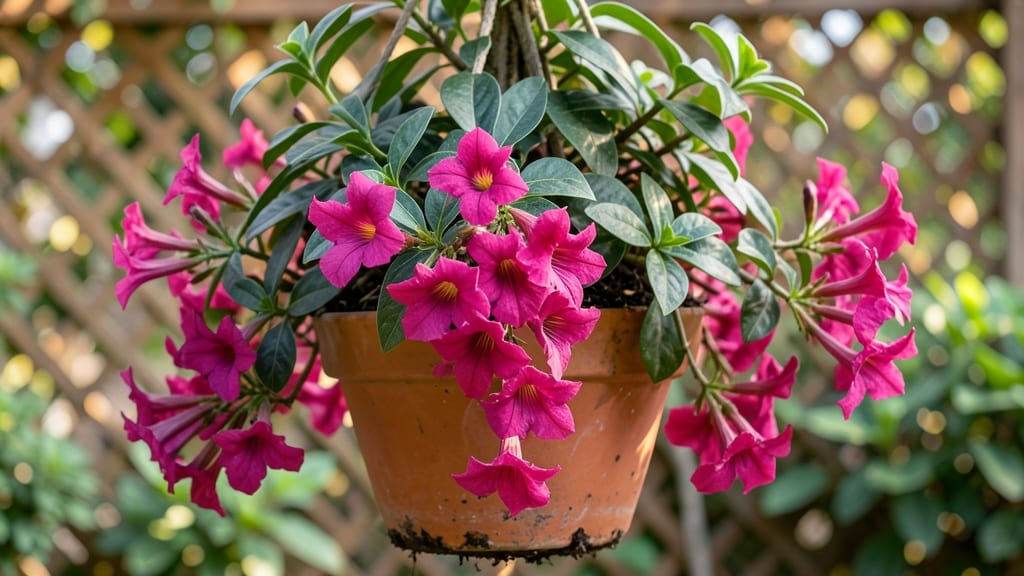
Deciding whether mandevilla flowers are annual or perennial depends on your climate: they thrive as perennials in frost-free USDA zones 9-11 but die back in colder regions, requiring annual replanting or winter protection. Only cold-hardy hybrids like Mandevilla × amabilis can tolerate brief chills, while most varieties need indoor overwintering or frost barriers.
Mandevilla's tropical roots explain why it behaves like a seasonal plant in cooler areas. 🌡️ The moment temperatures dip below 32°F, the plant's delicate stems and leaves freeze, but the roots often survive if protected.
In zones 8 and below, gardeners treat mandevilla as an annual unless they take steps to overwinter it indoors or in insulated containers. What's fascinating is how these plants can bounce back—given proper care, they'll produce even more vibrant blooms the following season.
The key difference between annual and perennial treatment comes down to root survival. While most mandevillas won't survive outdoor winters, their roots can persist underground if insulated with mulch or buried deeper.
This is why many gardeners in marginal zones try to "trick" the plant into dormancy—by cutting back growth and providing protection, you're essentially giving it a second chance at perennial behavior.
💡 In This Article
- How Mandevilla Flowers Survive Winter in Cold Climates
- Overwintering Mandevilla: Step-by-Step Cold-Zone Care Guide
How mandevilla flowers survive winter in cold climates
Mandevilla's tropical heritage means it lacks the natural cold resistance of temperate plants. The plant's growth stops when temperatures drop below 50°F, triggering a survival mechanism called dormancy.
Unlike hardy perennials that develop protective layers in their stems, mandevilla's thin, fleshy stems contain 90% water, making them freeze at 32°F or lower. The roots, however, can survive slightly longer—down to 25°F—if protected, which explains why some gardeners in marginal zones see regrowth in spring.
What makes mandevilla particularly vulnerable is its cambium layer, the growth tissue responsible for producing new stems and leaves.
This layer freezes solid at 20°F, effectively killing the plant's ability to regenerate. 🌡️ Cold-hardy varieties like Mandevilla × amabilis have evolved slightly thicker stems with higher sugar content, which acts as a natural antifreeze—similar to how maple trees survive winter.
These hybrids can tolerate brief dips to 25°F for short periods, but prolonged exposure still causes damage.
The plant's survival strategy relies on its epiphytic roots, which cling to surfaces and absorb moisture efficiently. In ideal conditions, these roots can store enough nutrients to spur new growth when temperatures rise. However, in cold climates, this process is disrupted unless the roots are insulated.
Gardeners in zones 8-9 often bury pots 6-12 inches deep or wrap them in burlap and straw to mimic the plant's natural tropical environment where roots stay warm and moist year-round.
Here's where things get interesting: while mandevilla can't survive freezing temperatures, its seedlings often emerge from protected roots in spring, proving the plant's resilience. This explains why some gardeners report "volunteer" mandevilla plants appearing each year—even when they didn't intentionally overwinter the plant.
The key is maintaining consistent moisture around the roots during dormancy, which prevents them from drying out and dying completely.
For comparison, consider how oleander (a related plant) survives winters in zones 8-10 by producing woody stems that store water. Mandevilla, lacking this adaptation, relies entirely on human intervention to survive cold winters.
This is why gardeners in colder regions must choose between treating it as an annual or investing in overwintering techniques—there's no middle ground with this tropical beauty.
Understanding this biology helps explain why mandevilla thrives as a perennial in frost-free zones but struggles elsewhere. The plant's entire lifecycle is adapted to warm climates where temperatures rarely drop below 50°F at night.
When you bring it into colder zones, you're essentially asking it to perform outside its evolutionary comfort zone—hence the need for artificial protection.