
Orchid Care
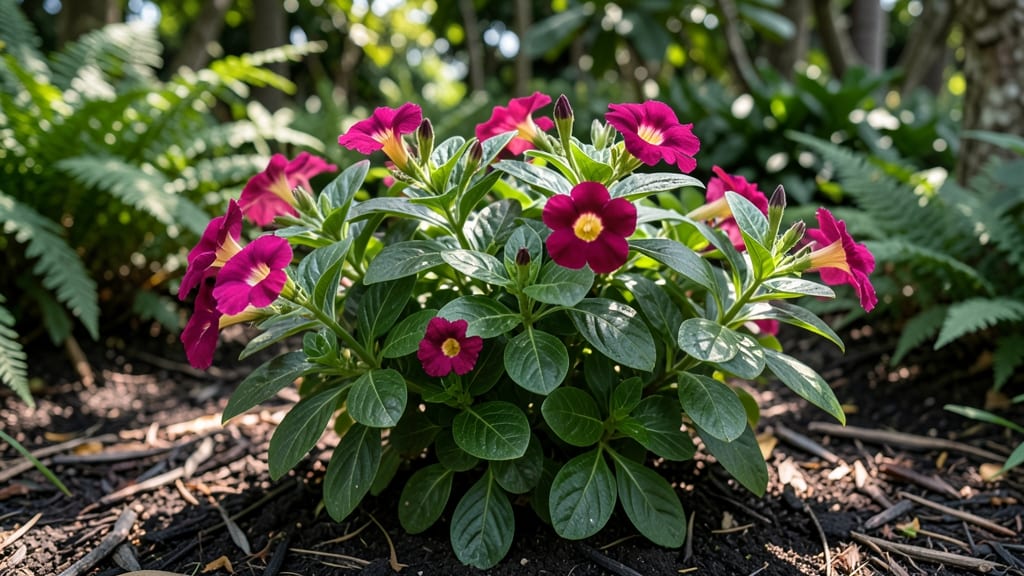
New Guinea impatiens are not perennials in most climates—they thrive as annuals or tender perennials only in USDA Zones 10-12, where frost never occurs. In colder regions, they die back with frost and must be replanted yearly for seasonal color.
These tropical beauties originated in the highland forests of New Guinea and Papua New Guinea, where they evolved to thrive in warm, humid conditions year-round. 🌿 Without frost protection, their delicate foliage and shallow roots simply can't survive freezing temperatures—even a light frost will cause irreversible damage.
That's why gardeners in colder zones treat them as seasonal annuals, replanting fresh starts each spring for vibrant summer displays.
What makes this especially tricky is their stunning foliage—often variegated with deep purples, silvers, or rich greens—that gardeners adore. The trade-off?
Their inability to overwinter in most of the U.S. means you'll need to either start new plants annually or get creative with indoor overwintering techniques if you want to keep them beyond one season.
💡 In This Article
- New Guinea Impatiens Cold Tolerance Limits and Growth Habits
- Year-Round New Guinea Impatiens: Container Gardening Hacks for Cold Climates
New Guinea impatiens cold tolerance limits and growth habits
New Guinea impatiens (Impatiens × hawkeri) trace their origins to the highland rainforests of Papua New Guinea, where they evolved to thrive in consistently warm, humid conditions between 60-80°F.
Their foliage—often glossy, thick, and variegated—lacks the protective waxy coating found in hardier plants, making it highly susceptible to frost damage.
Even a single night below 32°F causes cellular damage in their leaves, leading to blackened, mushy foliage that never recovers. 🌿 The real vulnerability lies in their shallow root systems, which can't insulate against temperature swings like deeper-rooted perennials.
Their tropical nature contrasts sharply with their more cold-tolerant cousin, Impatiens walleriana (common garden impatiens), which can survive light frosts down to 25°F when established. New Guinea types simply can't match this hardiness—their ideal growing window is strictly summer in most U.S. regions.
This is why they're classified as "tender perennials" only in frost-free zones (USDA 10-12), where they can theoretically persist year-round with perfect conditions. Outside these zones, they behave like annuals, completing their life cycle in a single growing season.
What makes this especially frustrating for gardeners is how their stunning foliage—often featuring deep purples, silvers, or chartreuse patterns—makes them irresistible for seasonal containers.
The trade-off is that their non-hardy nature means you'll need to either:
- Start fresh plants each spring, or
- Implement costly overwintering strategies if you want to preserve them beyond one season.
Their shallow roots also make them particularly sensitive to soil temperature fluctuations, which is why they perform best in consistently warm microclimates like patio containers or greenhouse settings. 🌡️
Here's the science behind their frost sensitivity: New Guinea impatiens lack the ability to produce antifreeze proteins that hardy plants use to protect cellular structures during freezing. Instead, their cells contain high moisture content that crystallizes when exposed to cold, causing irreversible damage.
This is why even a "light frost" warning (typically 32-36°F) can be catastrophic for these plants—whereas hardy impatiens can often bounce back from similar conditions. The contrast in cold tolerance is so pronounced that some gardeners joke these tropical beauties would rather "take a vacation" than endure winter!
For those in colder climates, understanding this biological limitation is key to managing expectations. While they won't survive winter outdoors in most of the U.S., their vibrant foliage makes them worth the annual investment for summer containers.
The good news? Their fast growth rate means you can often get multiple generations of plants from a single spring sowing, making them more economical than their appearance suggests. 💡
One fascinating adaptation worth noting is their ability to handle humidity fluctuations better than many tropical plants—this is why they thrive in hanging baskets where air circulation prevents fungal issues.
However, this humidity tolerance doesn't extend to cold: their metabolic processes simply shut down when temperatures drop below their ideal range. This biological constraint is what fundamentally limits their perennial status in temperate climates.