
Flowers
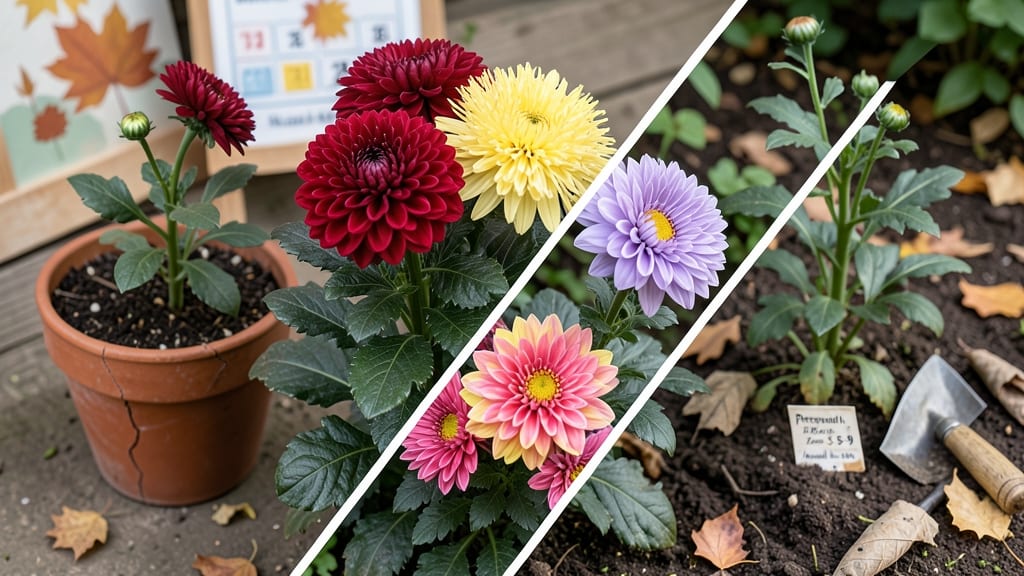
Mums (chrysanthemums) are perennial flowers but often treated as annuals because cold climates kill their foliage back to the ground each winter. Their hardiness varies by zone, with some varieties surviving winters in milder regions while others need replanting in colder areas.
This dual nature comes down to their natural growth cycle and climate tolerance. 🌱 In USDA zones 7-11, mums thrive as true perennials, sending up fresh growth each spring from their roots. However, in colder zones (3-6), frost kills the above-ground parts, making them appear annual.
The key difference lies in how gardeners handle overwintering—whether through protective mulch, container moves, or simply replanting new tubers each year.
What's interesting is how this affects garden planning. Many nurseries sell mums as annuals because they focus on immediate blooms rather than long-term care. But with the right techniques—like cutting back stems in fall and insulating the crown—you can coax perennial behavior even in chilly climates.
The trade-off? It requires more effort upfront for that second-year payoff.
💡 In This Article
- Why Mums Act Like Annuals in Cold Climates
- How to Overwinter Mums for Year-Round Growth
Why mums act like annuals in cold climates
Mums (chrysanthemums) are hardy perennials in their native East Asia, where mild winters allow them to thrive year-round. However, their behavior shifts dramatically in colder climates due to their USDA hardiness zone range of 5-9.
The critical threshold is 20°F—when temperatures drop below this, the plant's above-ground growth freezes solid, while the roots remain dormant underground. This dieback creates the illusion of annual behavior, even though the root system persists.
The key biological mechanism is their dormancy cycle. Mums enter a natural rest period in fall, shedding leaves to conserve energy. In warm zones (7-11), they regrow from the same roots each spring. But in colder zones (3-6), frost penetrates deeper, killing the crown—where new growth emerges—unless protected.
This is why gardeners in zone 5 or colder often replant tubers yearly, while those in zone 7+ see perennial regrowth without intervention. 🌡️
Another factor is their cold sensitivity during dormancy. Even established roots can suffer if soil temperatures stay below 10°F for extended periods. The plant's survival strategy relies on insulating the crown with mulch or soil—something that fails in exposed garden beds during harsh winters.
This explains why container-grown mums often survive better: their roots stay warmer and more protected from extreme cold.
Consider this comparison: A mum in zone 8 might return reliably each spring with minimal care, while one in zone 4 needs heavy mulching or container overwintering to survive. The difference isn't just about temperature tolerance—it's about how quickly the plant can recover from winter stress.
Mums in marginal zones often produce weaker regrowth because their energy reserves were depleted fighting frost damage. 🌱
What most gardeners don't realize is that even "annual" mums sold in nurseries are often perennial tubers that were dug up and replanted for convenience. The industry treats them as annuals because it's cheaper than educating customers about overwintering techniques.
This creates a feedback loop where gardeners assume mums can't survive winter, when in reality, they just need the right conditions to thrive as perennials.
The science behind this involves cold acclimation. Mums gradually harden off in fall, increasing their frost tolerance. But this process takes time—about 6-8 weeks of cooling temperatures.
If frost hits early, the plant isn't prepared, leading to complete dieback. This is why late-summer plantings rarely survive winter, even in zone 6.