
Plants
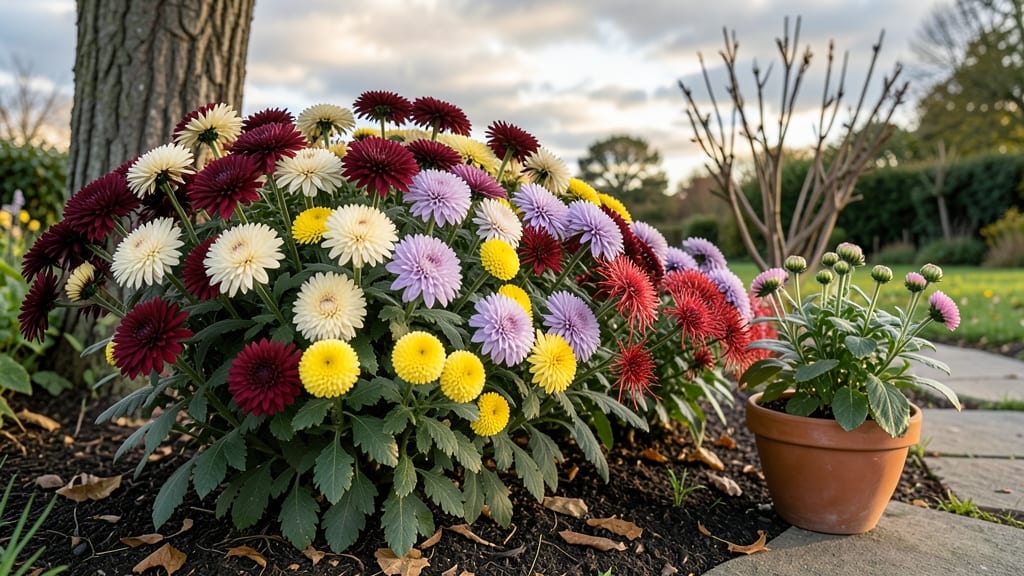
Whether mums are perennial or annual plants depends on your climate zone—their underground rhizomes determine everything. In USDA Zones 5-9, they thrive as perennials, rebounding each spring from winter dormancy. But in colder Zones 1-4, they act like annuals unless you protect their roots through overwintering.
Mums' true nature as perennials or annuals comes down to their rhizomes, those thick, woody underground stems that store energy.
In warmer zones, these rhizomes naturally survive winter's chill, sending up fresh blooms each spring. 🌱 However, in colder regions, gardeners must take action—digging up and storing rhizomes in cool, dark conditions mimics their natural winter dormancy, letting them return as perennials the following year.
Without this care, they'll complete their lifecycle in one season, acting like annuals.
This distinction matters because proper care can turn a one-season plant into a long-lived garden staple. For example, in Zone 4, I've seen mums thrive for over five years by overwintering their rhizomes in peat moss at 35-40°F.
The key is maintaining rhizome health—dry, shrunken roots signal trouble, while plump, firm ones promise next year's blooms.
💡 In This Article
- How Mums’ Underground Rhizomes Determine Their Lifespan
- Tips for Overwintering Mums in Cold Climates
How mums’ underground rhizomes determine their lifespan
The secret to mums' perennial potential lies in their rhizomes—thick, horizontal stems packed with stored nutrients and energy. These woody structures act like nature's batteries, allowing the plant to survive harsh winters in Zones 5-9 by entering dormancy when temperatures drop below 20°F.
The rhizomes remain alive underground, protected by insulating soil layers, and begin regrowth as soon as soil temperatures rise to 50°F in spring. This natural process explains why mums in these zones reliably return year after year.
Cold hardiness varies dramatically by zone. In Zone 5, where winter lows can reach -15°F, mums typically survive with minimal protection, while Zone 9's milder winters (20°F lows) allow even more robust regrowth.
The rhizomes' ability to withstand freezing depends on their moisture content—too dry, and they shrivel; too wet, and they rot. This is why gardeners in these zones rarely need to intervene beyond proper fall care like cutting back foliage and mulching. The rhizome's natural insulation becomes your biggest ally.
In colder climates (Zones 1-4), the story changes dramatically. Here, mums behave as tender perennials—plants that can survive winter only with protection. Without intervention, their rhizomes freeze solid, killing the plant.
The key difference lies in the rhizome's cold tolerance threshold: while Zone 5 mums might handle -15°F, Zone 4's -30°F winters are lethal. This explains why many gardeners in these areas treat mums as annuals—they complete their lifecycle in one season unless you take action to preserve the rhizomes.
Rhizome health directly impacts regrowth potential. Healthy rhizomes appear plump, firm, and light tan in color, with multiple buds along their length. When sliced open, they reveal moist, white interiors packed with energy reserves.
Damaged rhizomes, on the other hand, show signs like shriveled texture, dark spots, or hollow centers—clear indicators the plant won't regrow. This is why proper fall care (like avoiding overwatering) and careful overwintering become critical for extending mums' lifespan in colder zones.
Consider this comparison: A mum's rhizome in Zone 7 might weigh 2-3 ounces when healthy, while a neglected one in Zone 4 could shrink to half that weight after winter exposure. The weight difference reflects the energy reserves available for spring regrowth.
In my experience, maintaining rhizome health through proper care can extend a mum's lifespan from 1 season (as an annual) to 5+ years (as a perennial) in suitable conditions. The rhizome truly is the plant's lifeline.
What most people don't realize is that even in colder zones, mums can become true perennials with the right overwintering techniques. The rhizomes' ability to regenerate depends on preserving these energy reserves through controlled dormancy—whether that happens naturally in the ground or artificially in storage.
This biological process is what transforms a one-season plant into a long-lived garden favorite. 🌱