
Flowers
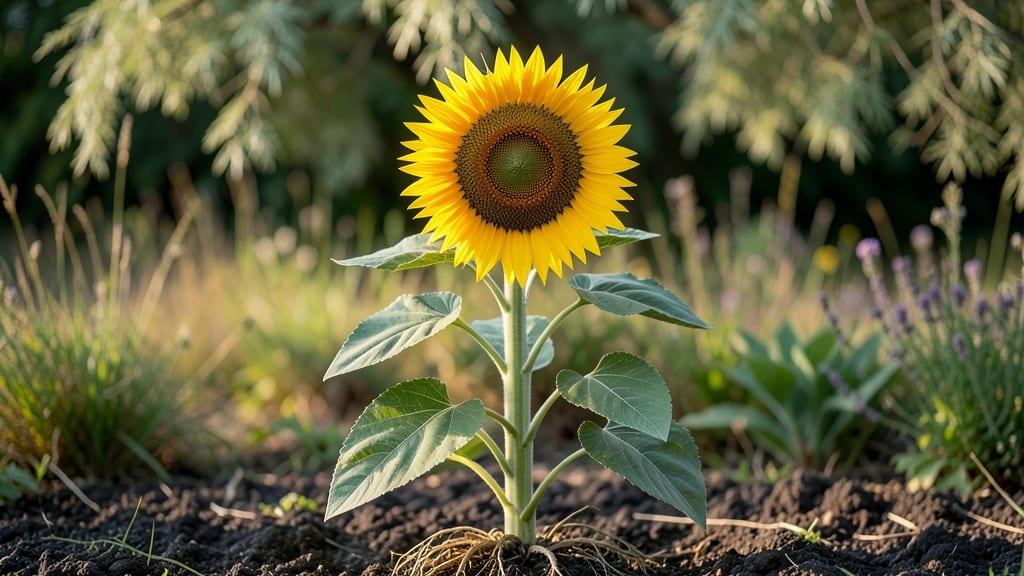
Mammoth sunflowers aren't true perennials—they act like hardy biennials because their deep taproots persist through winter, allowing new growth each spring in suitable climates.
This unique behavior stems from their robust root systems, which store energy to fuel regrowth when conditions improve. 🌱 Unlike true perennials that keep foliage year-round, mammoth sunflowers retreat underground but bounce back reliably in zones 3-9.
The key difference lies in their overwintering strategy—while they die back completely, their roots remain dormant yet viable, ready to sprout when temperatures rise. This makes them more resilient than annuals but technically distinct from classic perennials like peonies or hostas.
For gardeners, this means you can treat them like perennials in practice, though their botanical classification differs. The trade-off is their stunning summer blooms come at the cost of winter dormancy, but their ability to return year after year makes them a favorite for large-scale displays and pollinator gardens.
💡 In This Article
- Why Mammoth Sunflowers Act Like Perennials
- How to Encourage Mammoth Sunflowers to Return Year After Year
Why mammoth sunflowers act like perennials
The secret behind mammoth sunflowers' perennial-like behavior lies in their massive, deep taproots that can extend 3-5 feet into the soil. Unlike true perennials that maintain above-ground growth year-round, mammoth sunflowers store energy in these roots as starches and sugars during their first growing season.
This stored energy acts like a biological battery, fueling new stem growth when spring arrives—even after the plant appears completely dead in winter. 🌱
Botanically, they're classified as hardy biennials because their life cycle spans two years: the first year focuses on root and leaf development, while the second produces those iconic 6-12 foot flower stalks.
The key difference from true perennials is their lack of persistent stems or woody growth—just that remarkable root system. In USDA zones 3-9, these roots can survive winters with temperatures as low as -30°F, though their cold tolerance depends on soil insulation and moisture levels.
What makes this adaptation so clever is how the roots prioritize survival over immediate growth. They allocate energy to maintaining cellular integrity during dormancy rather than producing new shoots. This strategy allows them to "wait out" harsh conditions while true annuals would perish entirely.
The trade-off? Their first-year growth is all about building that root foundation—you won't see those dramatic flower stalks until the second summer. 💫
Comparing to true perennials like peonies reveals another fascinating difference: peonies develop underground tubers that store energy AND produce new shoots annually, while mammoth sunflowers rely solely on their taproot's reserves. This makes them more vulnerable to soil disturbances—their roots can't regenerate if damaged.
The sweet spot for their survival is well-drained soil with 2-3 inches of mulch protecting the roots during winter.
Here's where climate plays a critical role: in warmer zones (7-9), they may return reliably for 3-5 years, while in colder zones (3-5), their roots might weaken after just 2 seasons without proper winter protection.
The root's ability to regenerate new stems depends on maintaining a core temperature above 40°F—below that, cellular damage occurs. This explains why some gardeners see them return annually while others struggle—it's not just about the plant, but the microclimate you provide. ✨
The real magic happens at spring's first warm rains. When soil temperatures reach 55-60°F, those dormant roots detect the moisture and begin metabolizing stored starches into sugars that trigger new stem growth.
This process can take 2-4 weeks depending on your climate, which is why early spring gardeners sometimes see them emerge before other perennials. The result? A second summer of those breathtaking 12-foot stalks that make them garden superstars. 🌟